Hakuba Valley, Japan: Family Ski Guide
10 resorts, one pass, hot springs between runs.
Last updated: June 2026
Japan
Hakuba Valley
Book in Hakuba village for the best restaurant access, or Happo for direct lift access. If you want deeper powder, fly to Hokkaido for Niseko Furano or Rusutsu. If you want a single contained resort, Appi Kogen is simpler. Nozawa Onsen and Myoko Kogen are other excellent Honshu options. Book accommodation in Happo-one village for the best combination of terrain, English-language ski school, and restaurant access. Buy the Hakuba Valley pass for multi-resort flexibility. Peak powder runs late January through mid-February. The Nagano Shinkansen from Tokyo takes 80 minutes, then a 60-minute bus to Hakuba.
Is Hakuba Valley Good for Families?
Hakuba is Japan's biggest ski area on Honshu: 10 resorts across one valley with terrain from beginner to expert. The 1998 Olympics were held here and the infrastructure shows. More terrain variety than any single Hokkaido resort, though the powder is not as deep or dry. The valley has an international community, good English support, and izakaya-filled streets.
If Niseko is Hokkaido's answer, Hakuba is Honshu's.
¥3,120–¥4,160
/week for family of 4
You have toddlers who need supervised care while you ski
Biggest tradeoff
What's the Skiing Like for Families?
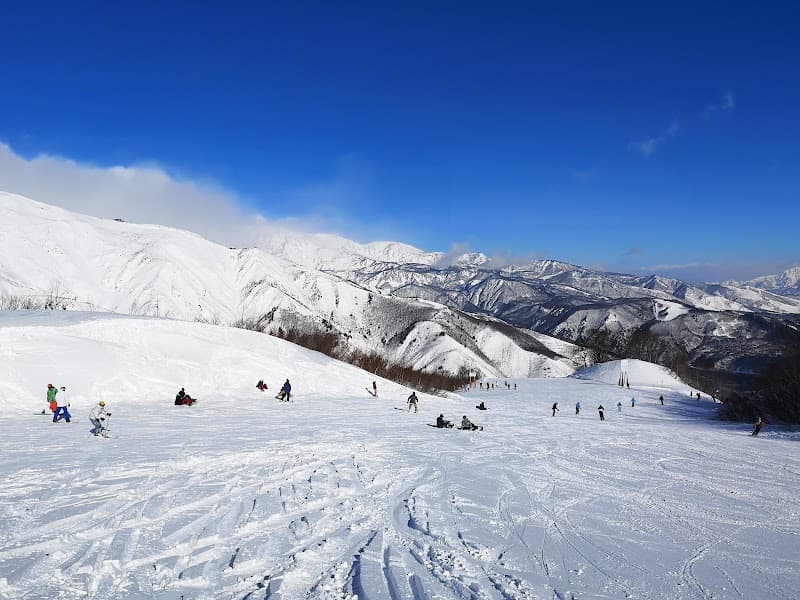
Skiing Hakuba Valley with kids feels less like visiting a resort and more like unlocking an entire mountain region. Ten interconnected ski areas spread across Japan's Northern Alps, all accessible with a single lift pass, which means you can match each day's terrain to your family's energy and ability levels.
You'll find 148 runs across the valley: 57 beginner, 52 intermediate, and the rest for more advanced skiers. Happo One (the flagship mountain that hosted the 1998 Winter Olympics) offers everything from gentle learning slopes to serious steeps. Cortina and Norikura at the northern end catch the deepest powder, but Norikura also hides surprisingly mellow beginner terrain most visitors overlook.
Where Your Kids Will Thrive
Jigatake Snow Resort is purpose-built for first-timers with wide, cruisy runs and a mellow atmosphere. Tsugaike Kogen is a beginner's paradise where gentle greens run from summit to base, plus there's a dedicated kodomo hiroba (kids' play area) and a foot onsen at the gondola base where the whole family can soak tired feet.
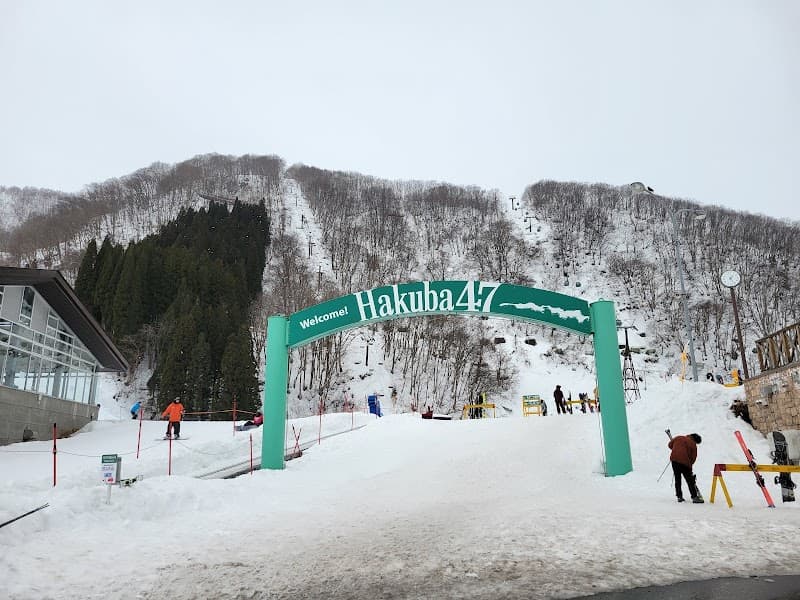
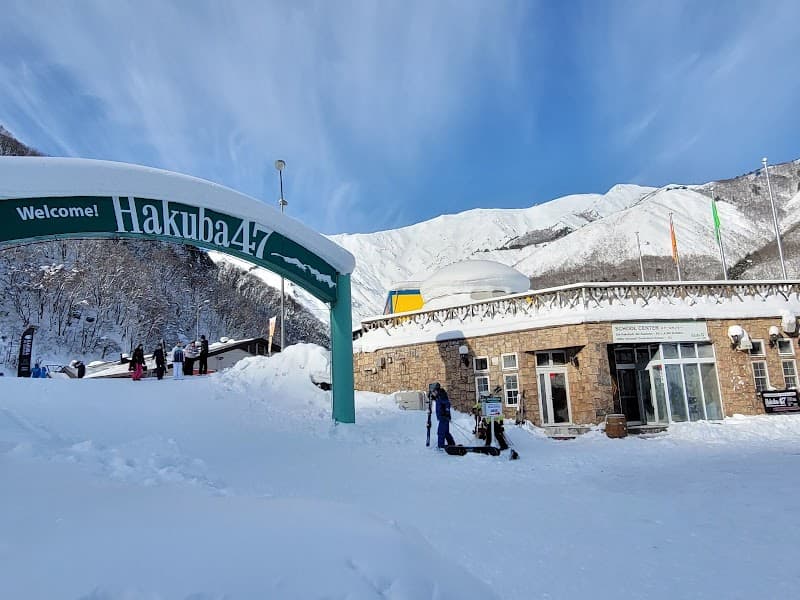
Iimori Snow Resort is small and quiet, ideal for young ones who'd be intimidated by big-mountain crowds. Hakuba 47 and Goryu connect at the summit and offer good variety for mixed-ability families, with gentle terrain at the base and natural progression runs higher up.
Ski School
Hakuba Snow Sports School runs kids' group lessons (ages 5 to 12) out of Iimori, with a maximum of 8 kids per group. Expect around ¥10,000 (roughly $65 USD) for a half-day. Frontier Hakuba operates at Norikura with patient instructors who excel with nervous first-timers.Evergreen International Ski School at Happo One offers hotel pickup via their bus service, a genuine convenience when you're wrangling kids and gear in the morning.
On-Mountain Dining
Think steaming bowls of ramen, warming curry rice with katsu, and surprisingly good gyudon at base lodges. Tsugaike has a Burger King at the gondola mid-station for picky eaters.
For a proper sit-down lunch, head to Escal Plaza at Goryu's base, which has multiple restaurants and space to spread out with exhausted children.
Trail Map
Full CoverageTerrain by Difficulty
Based on 143 classified runs out of 148 total
© OpenStreetMap contributors, ODbL
📊The Numbers
| Metric | Value |
|---|---|
Family Score | 6.6Good |
Best Age Range | — |
Kid-Friendly Terrain | — |
Childcare Available | Yes † |
Ski School Min Age | 5 years † |
Kids Ski Free | Under 6 † |
Score Breakdown
Value for Money
Convenience
Things to Do
Parent Experience
Childcare & Learning
How Much Are Lift Tickets?
Hakuba Valley lift tickets cost roughly half what you'd pay at major North American resorts, making it one of the best values for families skiing excellent terrain. Expect to pay around ¥10,400 (approximately $70 USD) for an adult day pass covering all 10 resorts in the valley, a price that would barely get you a half-day at Vail or Whistler.
Valley Pass Pricing
The Hakuba Valley All-Mountain Pass unlocks every resort with a single ticket. For a family spending a week here, the savings compound quickly:
- 1-day: Expect to pay ¥10,400 adult, ¥6,000 child (ages 6 to 12)
- 3-day: Expect to pay ¥30,200 adult, ¥17,000 child
- 5-day: Expect to pay ¥50,000 adult, ¥27,900 child
- 7-day: Expect to pay ¥69,800 adult, ¥39,100 child
Children under 6 ski free at most individual resorts, though you'll want to confirm at the ticket window. The multi-day passes include a flexibility bonus worth noting: a 5-day pass is valid over any 10 days, so you can take rest days without burning tickets.
Single-Resort Alternative
If your family plans to stick to one area, individual resort tickets save money. Happo-One the valley's largest and most famous resort, charges ¥9,500 adult and ¥4,500 child per day. Cortina and Norikura at the northern end run even cheaper at ¥6,200 adult and ¥3,500 child. The catch?Once you're hopping between two resorts in a day (which families often do to match terrain to ability levels), the valley pass becomes the better deal.
Best Value Strategy
The move: buy multi-day passes online before you arrive. Web pricing typically runs 10 to 15% below window rates, and you'll skip the morning ticket line entirely.
You'll need to purchase an IC lift card (RFID) on your first visit, around ¥500, which then works across all valley resorts and can be reloaded for future trips.
For a family of four doing five days, expect to pay roughly ¥156,000 (around $1,050 USD) for lift tickets. That's less than three days would cost at many Colorado resorts, and you're getting access to 148 runs across ten interconnected mountains.
Available Passes
Planning Your Trip
🏠Where Should Your Family Stay?
Hakuba Valley's lodging stretches across multiple villages, so your base matters more here than at a typical single-mountain resort. Most family-friendly options cluster around Happo Village and Echoland, both with easy shuttle access to all 10 resorts.
Slopeside Picks
Hotel Marillen sits steps from Happo One's Sakka lifts, your kids will be clicking into bindings within minutes of walking out the door. For families chasing powder at the valley's northern end, Hotel Green Plaza Cortina puts you right at the base of Cortina, where the deepest snow falls.Expect ¥15,000 to ¥25,000 per night, roughly half what comparable slopeside lodging costs in Colorado.
Budget-Friendly Picks
Echoland offers the best value, with pensions and small lodges starting around ¥8,000 to ¥12,000 per night. The Yellow House sleeps four and works well for families who don't mind a 10-minute shuttle ride in exchange for significant savings.
Mid-Range Family Favorites
Wadano Forest Hotel and Apartments has modern studios to three-bedroom units within walking distance of Happo One's Sakka lifts, booking 90+ days out saves 10%. Powder Tracks Family Lodge sits 100 meters from Goryu's Escal Plaza gondola, with a dedicated kids' bunk room sleeping eight with its own TV and Netflix.
Best for Young Kids
Tsugaike village is a strong choice for the under-seven crowd, wide cruiser runs, multilingual ski schools, and a foot onsen at the gondola base where exhausted parents can soak while kids wind down.The Goryu and Hakuba 47 area delivers excellent beginner slopes right at the base, with Escal Plaza's facilities simplifying the mid-day chaos of ski boots and hungry children.
✈️How Do You Get to Hakuba Valley?
Most families fly into Tokyo Narita Airport (NRT) or Tokyo Haneda Airport (HND) with Haneda being closer to central Tokyo and generally easier for connections.
The Shinkansen Route (The Way to Go)
Skip the car rental desk. From Tokyo Station, the Hokuriku Shinkansen reaches Nagano Station in about 90 minutes, spacious seats, clean bathrooms, snack carts rolling through. Infinitely better than white-knuckling winter mountain roads with jet-lagged children.
From Nagano Station, catch an Alpico Bus direct to Hakuba, roughly 60 to 75 minutes. The bus terminal sits just outside the station with restrooms and a convenience store. Total travel time from central Tokyo: around 4 hours door to door, comparable to driving without the stress.
Should You Rent a Car?
For most families, no. The free Hakuba Valley Shuttle connects all 10 resorts and is included with your lift pass. Winter mountain driving requires comfort with narrow roads, Japanese signage, and conditions that can turn serious quickly.
The exception: day trips beyond the valley, like the Snow Monkey Park near Yudanaka. If you do rent, pick up in Nagano rather than Tokyo, skip highway tolls and city driving. Request an English GPS and confirm snow tires are included.
Private Transfers
Several hotels arrange private transfers from Nagano Station, worth the splurge if arriving with multiple bags, small children, or both. Expect ¥15,000 to ¥25,000 (roughly $100 to $170 USD). Hakuba Shuttle and Hakuba Transport are reliable operators. Book in advance during peak weeks.
☕What's There to Do Off the Slopes?
Hakuba Valley is a collection of real Japanese communities that happen to have excellent skiing, which means your off-mountain hours will feel authentically Japanese in a way that's increasingly rare.
Non-Ski Activities Worth Your Time
Onsen (hot spring baths) are woven into daily life here. Happo Onsen and Mimizuku-no-Yu are family-friendly public baths with indoor and outdoor pools, rotenburo style. Yes, everyone bathes nude, it takes about five minutes to feel completely normal. Expect ¥600 to ¥800 per person. There's also a foot onsen at Tsugaike's gondola base requiring no undressing whatsoever.
For younger children, Iimori Snow Resort has a dedicated snow play area with tubing and sledding zones separate from the ski slopes. Escal Plaza at Goryu's base has an indoor play area for brutal weather days.
Where to Eat
Mimi's in Echoland serves Western comfort food, burgers, pasta, familiar enough for picky eaters. Sharaku in Happo delivers excellent ramen with picture menus so kids can point at what looks good. Sounds Like Cafe handles breakfast beautifully with solid coffee and pastries.
Convenience store food in Japan is legitimately excellent. 7-Eleven Lawson and FamilyMart stock fresh onigiri, hot nikuman, bento boxes, and sandwiches that make easy lunches. Don't think of it as settling, it's how Japanese families actually eat.
When to Go
Season at a glance — color-coded by family score
💬What Do Other Parents Think?
Your kids will likely remember the train as part of the adventure, not just transit.
Families also highlight the food as a genuine trip highlight: ramen shops, katsu curry, and convenience store onigiri give kids familiar options while parents explore izakayas after bedtime.
The post-ski onsen routine gets mentioned in nearly every review as the best wind-down after a day on the mountain.
Families on the Slopes
(8 photos)Photos from Google Places. Posted by visitors.
Common Questions
Everything families ask about this resort
Have a question we didn't cover? We'd love to add it to our guide.
The Bottom Line
Would we recommend Hakuba Valley?
What It Actually Costs
The Hakuba Valley pass covering all 10 resorts runs around ¥6,200/day adult and ¥3,500/day child. Equipment rental from village shops runs ¥4,500-6,000/day for adults, ¥3,000-4,000/day for kids. Accommodation ranges from ¥8,000/night for village lodges to ¥30,000+ for higher-end hotels. The valley offers the widest range of accommodation styles and price points of any Japanese ski destination.
A budget family of four skiing five days in Hakuba village: plan ¥350,000-480,000 (~$2,300-3,200 USD). That is mid-range for Japan, cheaper than Niseko, pricier than Myoko or Nozawa Onsen. The free shuttle bus system connecting all 10 resorts eliminates any transport costs once you arrive.
A comfortable family in a mid-range hotel with ski school, equipment rental, and restaurant dining: ¥500,000-700,000 (~$3,300-4,650 USD). The restaurant scene in Hakuba village is strong and growing, with good variety from ramen shops to international options.
Compare to Niseko (¥600,000+/week, more consistent powder, higher prices), Myoko Kogen (¥250,000-380,000/week, smaller but cheaper and more authentic), or Nozawa Onsen (¥250,000-400,000/week, better cultural experience, less terrain). Hakuba's 10-resort valley pass gives the most terrain variety in Japan.
Your smartest money move: Buy the valley pass, stay in Hakuba village (best restaurant access and moderate pricing), and pick a different resort each day based on conditions. The free shuttle system between resorts makes this effortless.
The Honest Tradeoffs
If simplicity matters, Appi or a single Hokkaido resort is easier. The snow is also wetter and heavier than Hokkaido's famous dry powder.
The 11 resorts spread across a wide valley with no single lift pass covering all of them. Families must choose areas daily or buy individual passes, which adds planning friction.
If the fit feels off, look at Myoko Kogen for similar powder quality with lower prices and fewer crowds.
Would we recommend Hakuba Valley?
Book in Hakuba village for the best restaurant access, or Happo for direct lift access. If you want deeper powder, fly to Hokkaido for Niseko Furano or Rusutsu. If you want a single contained resort, Appi Kogen is simpler. Nozawa Onsen and Myoko Kogen are other excellent Honshu options.
Book accommodation in Happo-one village for the best combination of terrain, English-language ski school, and restaurant access. Buy the Hakuba Valley pass for multi-resort flexibility. Peak powder runs late January through mid-February. The Nagano Shinkansen from Tokyo takes 80 minutes, then a 60-minute bus to Hakuba.
Similar Resorts
Families who loved Hakuba Valley also enjoyed these
Rusutsu
Kiroro
Sun Peaks
Alta Badia
Shiga Kogen
Tomamu
Transparency note: This content was created with AI assistance and reviewed by Tom Meredith, our editor. Prices, dates, and availability may change. We recommend confirming details directly with the resort before booking.