Alta Badia, Italy: Family Ski Guide
Four valleys, one loop, limestone turns pink-orange every clear evening.
Last updated: June 2026
Alta Badia
Italy
Alta Badia
Book in La Villa or Corvara for the best lift access. Buy a Dolomiti Superski pass. If Alta Badia is too gentle for your advanced teens, Arabba (next valley) has steeper terrain. If you want a bigger town experience, Cortina has more shops and nightlife. For families with small kids, Kronplatz is a single-mountain alternative that is easier to navigate. Book a family hotel in La Villa or Corvara for the best gondola access. Buy the Dolomiti Superski pass for full Sella Ronda circuit access. The Ladin cuisine in mountain refugios is a culinary highlight, book Rifugio Scotoni for lunch. Bolzano airport is small; Venice and Innsbruck (2 hours each) have better international connections.
Is Alta Badia Good for Families?
Alta Badia is the Dolomites' most refined ski area. Perfect grooming, Michelin-quality mountain restaurants, and terrain that flatters intermediate skiers without boring them. Less dramatic than Cortina, more polished than Selva, and connected to the Sella Ronda circuit. If your family wants to combine excellent skiing with outstanding mountain food, no other Dolomite area matches Alta Badia's restaurant scene.
€3,120–€4,160
/week for family of 4
You want a compact, walkable single-village base where everything is ski-in/ski-out
Biggest tradeoff
What's the Skiing Like for Families?
Your child will gain skiing confidence faster here than almost anywhere else in the Alps. Nearly 70% of Alta Badia's piste map is built for learners and cruisers, with 146 of 212 marked runs rated easy or novice. This is confidence-building paradise where your mixed-ability family can ski together for a full week without anyone feeling dragged along.
Beginner Areas
The beginner zones sit right at village level in Corvara, La Villa, and Badia. No hauling a crying four-year-old onto a gondola before the lesson starts. La Crusc (Holy Cross) in Badia features a Kids Fun Line with tunnel, seesaw bridge, trampoline jump pad, and a giant xylophone your kids ski past on their way down.Over in La Villa, the gentle slopes at the base of the Piz La Ila gondola give first-timers room to breathe without faster skiers carving through their snowplow turns.
For families ready to explore,
47 intermediate runs connect seamlessly into the Sella Ronda circuit, the iconic 26km loop around the Sella massif that your confident intermediate teenager will want to lap all day.
The circuit takes 5 to 6 hours at a comfortable pace with lunch stops, making it a full family adventure day.
On-Mountain Lunch
Your family will eat better here than at most resort restaurants anywhere. The rifugio (mountain hut) dining runs on handmade Casunziei (beetroot-filled ravioli), Kaiserschmarrn (shredded pancakes with berry compote), and venison ragù spooned over creamy polenta. Budget EUR 15 to 25 per person for a proper sit-down mountain lunch, roughly half of what Swiss resorts charge for worse food.The Club Moritzino at Plan de Corones serves the famous lobster spaghetti at 2,275m elevation.
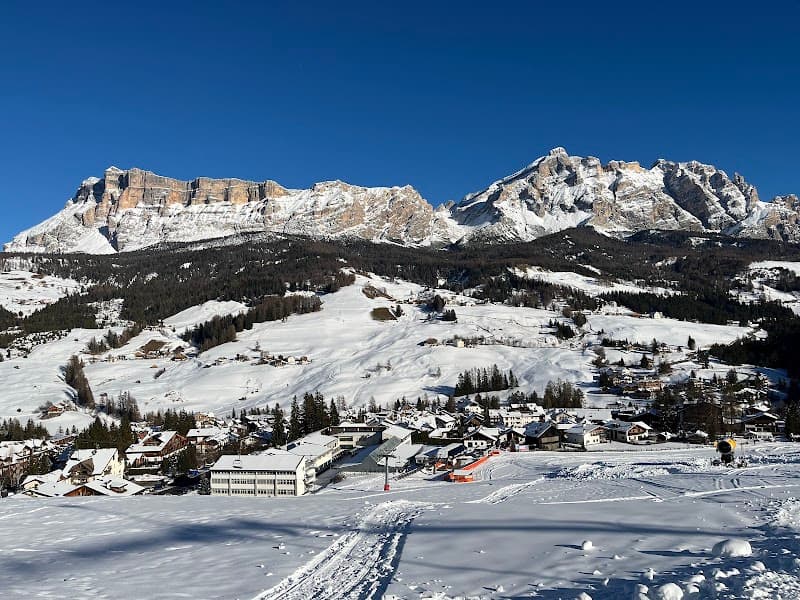
Trail Map
Full CoverageTerrain by Difficulty
Based on 210 classified runs out of 212 total
© OpenStreetMap contributors, ODbL
📊The Numbers
| Metric | Value |
|---|---|
Family Score | 7.8Very Good |
Best Age Range | 2–17 |
Kid-Friendly Terrain | — |
Childcare Available | Yes †From 24 months |
Ski School Min Age | 2 years † |
Kids Ski Free | Under 7 † |
Magic Carpet | Yes |
Local Terrain | 212 |
Score Breakdown
Value for Money
Convenience
Things to Do
Parent Experience
Childcare & Learning
Planning Your Trip
🏠Where Should Your Family Stay?
This purpose-built family apartment-hotel delivers exactly what exhausted parents need: an indoor Acqua Fun World with water slides and splash zones, dedicated family sauna, rooftop terrace, and playrooms organized by floor (each themed after different Alpine animals).
You get a proper kitchen in your apartment for snack emergencies and bottle prep, plus all the hotel services you'd miss in a standalone rental. Hotel Rezia in La Villa hits the mid-range sweet spot for families wanting traditional Ladin hospitality without four-star prices.
Rooms run €99 to €134 per person per night with half board, and children's reductions are generous: kids under 7 pay just €26/day, ages 4 to 6 are €62, and 7 to 12 cost €71.
The Crazzolara family runs it with personal attention that disappears above 50 rooms.
For your splurge option, Kolfuschgerhof Mountain Resort in Colfosco sits at the top of most family rankings.
Two nights with included ski pass start at €786 per person, but your kids will press their faces against dining room windows watching the last light turn the Sassongher pink while you finish a glass of Lagrein.
Budget-conscious families should look at Garni properties in Badia or La Val, where €70 to €85/night gets you clean rooms with mountain views and legendary South Tyrolean breakfast spreads.
💬What Do Other Parents Think?
When your five-year-old is eating fresh spinach Knödel at a sun-drenched terrace with UNESCO-listed peaks behind her, something shifts in your understanding of what a ski lunch can be.
With 146 easy and intermediate runs out of 212 total, Alta Badia is overwhelmingly gentle. Families with kids under 7 love it.The Ladin culture adds a layer of authenticity that purpose-built resorts cannot replicate: your family is staying in a real community with its own language, food traditions, and century-old hospitality.
The complaints center on cost (Dolomiti Superski passes are not cheap at EUR 77 to 86 per adult per day) and the fact that advanced skiers exhaust the challenging terrain quickly.
Families also note that the resort is spread across multiple villages, making your base choice important: Corvara for convenience, La Villa for quiet, San Cassiano for food.
Families on the Slopes
(16 photos)Photos from Google Places. Posted by visitors.
How Much Are Lift Tickets?
Alta Badia offers two pass tiers that matter. The local area pass covers 130km and 53 lifts across Alta Badia's own slopes. If your kids want to ski the Sella Ronda circuit (and they absolutely should), you need the broader Dolomiti Superski pass with 1,200km across 12 connected resorts.
Dolomiti Superski Rates (2026/27)
- Adults: EUR 77 to 86 per day depending on season
- Children (8 to 17): EUR 54 to 60 per day
- Young children (3 to 7): EUR 39 to 43 per day
- Under 3: Free
- Family of four (peak): EUR 262 to 292 per day total
Multi-Day Savings
The per-day cost drops meaningfully on multi-day passes. A 6-day Dolomiti Superski pass runs about EUR 380 to 430 adult, EUR 266 to 301 child, saving roughly 18% over daily rates. For families committed to a full week, the 6-day pass is the clear play.
No Epic or Ikon affiliation. Dolomiti Superski operates independently. Buy passes online at dolomitisuperski.com for a small advance-purchase discount. The local Alta Badia pass costs about EUR 58 to 65 per day adult and makes sense if your family stays within the 130km local area.
Beginners can save further with sector-specific passes covering just the learning areas at EUR 25 to 30 per day.
Planning Your Trip
☕What's There to Do Off the Slopes?
Most families gravitate toward traditional Stube restaurants where EUR 25 to 40 per adult gets you proper Südtiroler portions: Knödel bread dumplings, Schlutzkrapfen half-moon ravioli, and Kaiserschmarrn that your six-year-old will request every single night.
You have been warned.
Evening Activities
Corvara and La Villa both have small but genuine village centers where you can walk to dinner, browse local craft shops selling carved wooden figures and hand-knit woolens, and pick up fresh strudel from the bakery for the next morning.The cross-country skiing network in the valley floor gives families a change of pace from downhill runs.
Ice skating rinks operate in several villages through the winter season.
The indoor sport centers in Corvara and San Cassiano have swimming pools and wellness areas for post-ski recovery when tired legs need a day off the slopes.
For a special night, Stüa de Michil in Corvara holds a Michelin star with refined Ladin cuisine starting at EUR 120 per person.
Restaurant La Siriola in San Cassiano earns its own Michelin star with Dolomite views that justify the splurge.
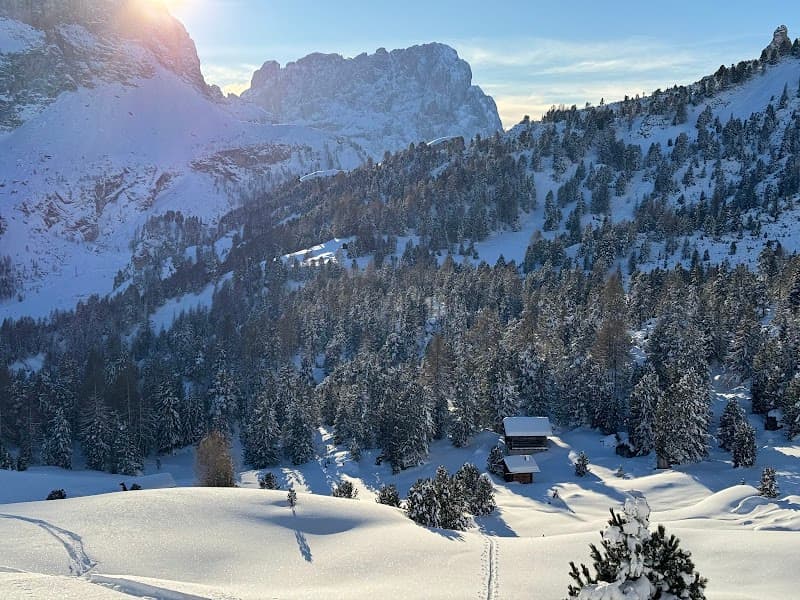
When to Go
Season at a glance — color-coded by family score
✈️How Do You Get to Alta Badia?
It's the kind of drive that makes you pull over for a photo, then realize you've been holding up traffic.
Your closest gateway is Innsbruck Airport (INN) just 2 hours north across the Brenner Pass. Yes, you're heading to Italy, but Austria is closer.
Innsbruck Airport handles budget carriers like easyJet and Eurowings, which means flights from London or Amsterdam land you in the Alps by lunchtime.
Venice Marco Polo Airport (VCE) works too, but adds an hour and a mountain pass. Munich Airport (MUC) gives you the widest flight options at 3.5 hours, while Verona Airport (VRN) sits 3 hours south on faster motorways.
Don't want to drive? Train to Brunico (Bruneck) station works, 40 minutes east of Corvara by bus. SAD Trasporto Locale runs regular valley buses, and many hotels offer station pickups if you ask when booking.
The smart move for families: rent a car. Alta Badia's villages (Corvara, La Villa, San Cassiano, Colfosco) spread across the valley, and having your own wheels means freedom for rifugio lunches and those inevitable "forgot the snacks" supermarket runs. With car seats, ski bags, and naptime schedules, a rental beats the free ski bus every time.
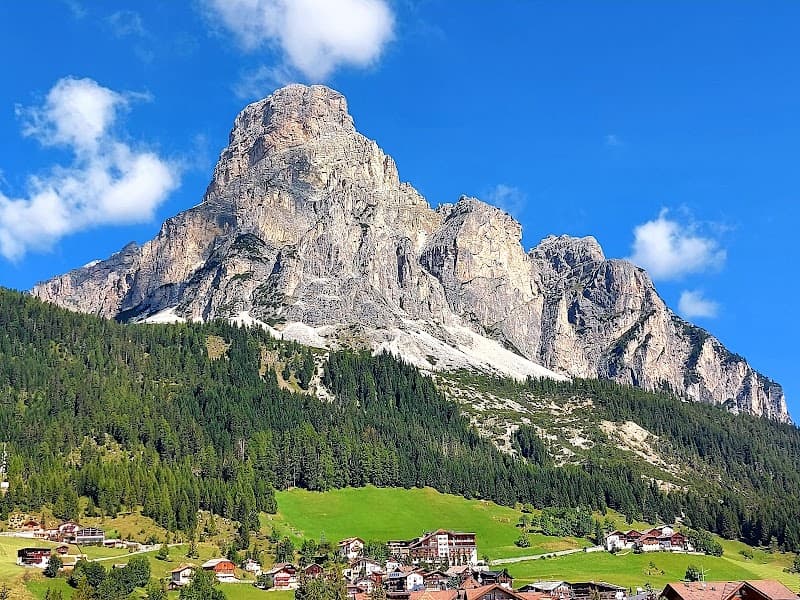
What Does a Week at Alta Badia Look Like?
Which Families Is Alta Badia Best For?
[ { "type": "The First-Timer Family", "match": "good", "description": "With 140 of 212 runs graded easy and seven ski schools offering snow nurseries from age 2, there is no shortage of gentle terrain or patient instructors here. The catch is that Alta Badia sprawls across multiple villages connected by lifts and linking runs, which can feel overwhelming when your family is still working on snowplow turns. Stick to one village zone for the first few days and you'll be golden; try to explore the full network too early and the navigation adds unnecessary stress.", "recommendation": "Stay in La Villa and keep your first days on the wide, mellow runs off the Piz La Ila gondola, where ski school meeting points sit right in the village center and you never need to take a bus." }, { "type": "The Mixed-Ability Crew", "match": "great", "description": "This is Alta Badia's home turf. Confident skiers can disappear onto the 40km Sella Ronda circuit for the day while beginners cruise the blues without ever feeling abandoned, and toddlers land in full-day nursery care so both parents actually
Common Questions
Everything families ask about this resort
Have a question we didn't cover? We'd love to add it to our guide.
The Bottom Line
Would we recommend Alta Badia?
What It Actually Costs
Alta Badia sits in the upper range of Dolomiti Superski pricing, not because the pass is different (EUR 350/adult, EUR 245/child, same everywhere), but because the mountain restaurants are outstanding and you will spend more eating on the mountain than anywhere else in the Dolomites.
The budget family in a 3-star half-board hotel in La Villa or San Cassiano, packing some mountain picnics: a week for four runs EUR 3,200-3,800. Half-board keeps dinner costs predictable.
The comfortable family with a 4-star hotel, daily rifugio lunches at places like Club Moritzino or Las Vegas, and ski school: EUR 5,000-6,500. The mountain dining here is Michelin-level, three rifugi hold Michelin stars.
Weekly breakdown for a family of four (budget tier): Half-board hotel EUR 1,600-2,200, lift passes EUR 1,190 (2 adults + 2 children), ski school EUR 300-400, mountain lunches EUR 300-500, Innsbruck or Bolzano transfer EUR 120-200. Total: EUR 3,500-4,500 for the full week.
For context: Campitello di Fassa saves 25-30% on accommodation with the same pass but is further from these slopes. Val Gardena (Selva/Santa Cristina) costs similar but is oriented toward the Sella Ronda circuit rather than Alta Badia's gentle, food-focused skiing. Plan de Corones is cheaper with better beginner terrain but lacks the dining.
Your smartest money move: Book half-board in La Villa (cheaper than Corvara), eat at the rifugi for lunch (this is where the best food is), and reserve one Michelin-starred rifugio meal in advance, they book out weeks ahead in February.
The Honest Tradeoffs
The Ladin villages (La Villa, San Cassiano, Corvara) are small and quiet after dinner, with limited evening entertainment beyond hotel restaurants.If your family wants vibrant nightlife and a busy town centre, Cortina d'Ampezzo or Madonna di Campiglio are livelier options. The Sella Ronda circuit can be crowded during Italian school holidays (Christmas, Carnival week), creating bottlenecks at key lift connections.
If the fit feels off, look at Corvara for a more compact, walkable village base within the same Dolomiti Superski area.
Would we recommend Alta Badia?
Book in La Villa or Corvara for the best lift access. Buy a Dolomiti Superski pass. If Alta Badia is too gentle for your advanced teens, Arabba (next valley) has steeper terrain. If you want a bigger town experience, Cortina has more shops and nightlife. For families with small kids, Kronplatz is a single-mountain alternative that is easier to navigate.
Book a family hotel in La Villa or Corvara for the best gondola access. Buy the Dolomiti Superski pass for full Sella Ronda circuit access. The Ladin cuisine in mountain refugios is a culinary highlight, book Rifugio Scotoni for lunch. Bolzano airport is small; Venice and Innsbruck (2 hours each) have better international connections.
Similar Resorts
Families who loved Alta Badia also enjoyed these
Selva Val Gardena
Val Thorens
Val d'Isère
Cortina d'Ampezzo
Sauze dOulx
Lech-Zürs
Transparency note: This content was created with AI assistance and reviewed by Tom Meredith, our editor. Prices, dates, and availability may change. We recommend confirming details directly with the resort before booking.