Cortina d'Ampezzo, Italy: Family Ski Guide
€200+ nights, 2026 Olympics, bus between ski areas.
Last updated: June 2026
Italy
Cortina d'Ampezzo
Book a hotel in Cortina town and buy a Dolomiti Superski pass. If Cortina's disconnected ski areas frustrate you, Selva Val Gardena has better on-mountain connectivity. If you want the best terrain in the Dolomites, the Sella Ronda from Corvara or Arabba is superior. For a quieter, cheaper Dolomite base, Kronplatz or San Vigilio are excellent. Book a family hotel in Cortina town centre for bus access to all five ski areas. Buy the Dolomiti Superski pass for maximum terrain flexibility. The 2026 Winter Olympics brought improved lift infrastructure. Venice airport (2 hours) has the best international connections. The Corso Italia shopping street is a genuine highlight for non-ski days.
Is Cortina d'Ampezzo Good for Families?
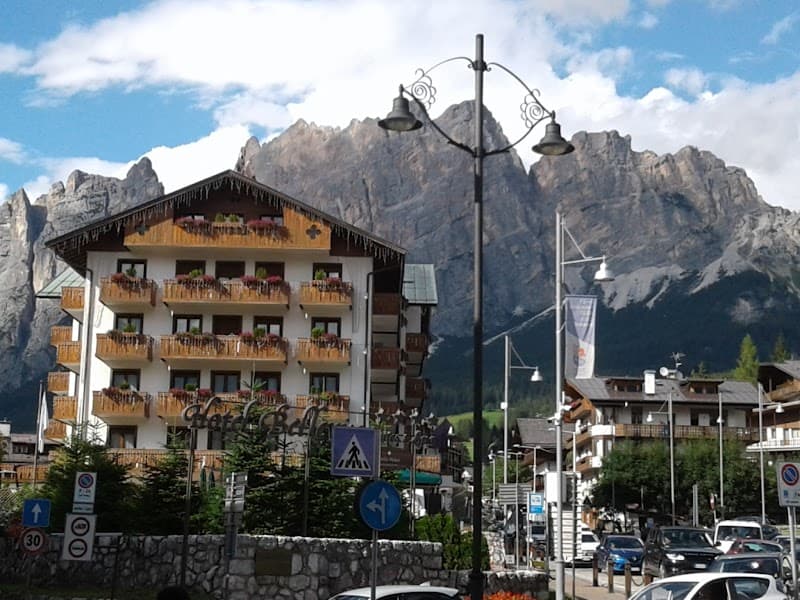
Cortina is the Dolomites' most glamorous resort and host of the 2026 Winter Olympics. The town is stunning, the shopping is high-end, and the terrain spans five separate ski areas connected by ski bus and the Dolomiti Superski pass. More town than slope compared to Selva or Corvara, but the off-mountain experience is unmatched in the Dolomites.
Best for families who want Italian elegance with their skiing.
$3,120–$4,160
/week for family of 4
You have beginners under 7 who need gentle learning terrain and ski school proximity
Biggest tradeoff
What's the Skiing Like for Families?
Skiing Cortina d'Ampezzo means navigating three separate, unlinked ski areas connected by bus, not chairlift. That sounds like a hassle, and with young kids it can be, but it also means each area stays intimate and uncrowded. For families still building confidence, that simplicity is a gift.
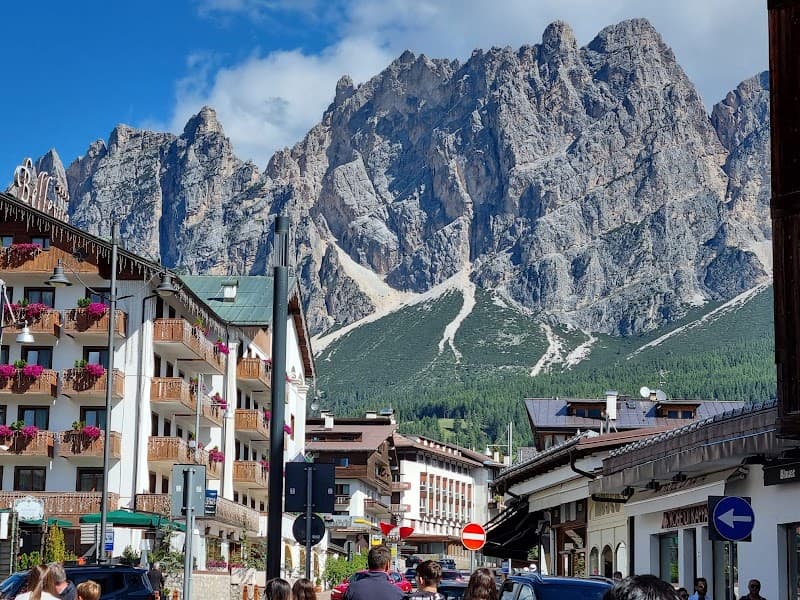
The terrain skews heavily toward cruising. The split runs roughly 86 easy runs, 49 intermediate, and just 18 advanced or expert. That's a lot of wide, forgiving blues and greens for kids working on their pizza-to-parallel progression. The Dolomite scenery, those dramatic pink-tinged rock spires, makes even the gentler runs feel cinematic.
Where Beginners Should Start
The Socrepes area is your home base for first-timers and little ones. It's a dedicated beginner zone near town with gentle slopes and a magic carpet, perfect for building confidence without the intimidation of sharing runs with faster skiers.Once they're linking turns confidently, graduate to the Tofana area (Freccia nel Cielo), where wide, forgiving blues let them build speed without panic. The progression feels natural because each area has its own character, your family will talk about "Tofana days" and "Faloria days" like they're different adventures.
Ski Schools That Specialize in Kids
Cortina has six ski schools competing for your business, which keeps quality high. Scuola Sci Cristallo has earned a reputation for getting young skiers from snowplow to parallel with minimal tears. Scuola Sci Azzurra takes a similar approach, with instructors who speak English, German, and French.
Scuola Sci Cortina rounds out the main options with solid group classes.
Expect to pay around €55 to €95 per hour for private lessons, with group lessons for kids starting around €350 for five days of three-hour sessions. Book ahead, especially for February and Christmas. The move: ask specifically about their progression programs rather than just booking generic lessons.
Trail Map
Full CoverageTerrain by Difficulty
Based on 165 classified runs out of 196 total
© OpenStreetMap contributors, ODbL
How Much Are Lift Tickets?
Cortina d'Ampezzo lift tickets run about €71 to €80 per day for adults in high season, putting it squarely in premium European territory, roughly 15% cheaper than Switzerland's top resorts but notably pricier than most Austrian alternatives. The good news: there's a useful family discount that can offset the sting.
Current Pricing (2026-27 Season)
Cortina's local pass covers all three ski areas (Tofana Faloria-Cristallo and Cinque Torri). Expect to pay around €80 per day for adults during high season (December 21 to January 10, February 1 to March 21), dropping to around €72 in shoulder periods. Children ages 8 to 17 pay approximately €56, while ages 3 to 7 come in around €50.For a family of four with two school-age children, you're looking at roughly €520 per day at peak times.
Multi-Day Discounts
A 6-day adult pass runs around €429 in high season, bringing your daily rate to about €67, a 16% savings over single-day tickets.
The same pattern holds for kids: expect around €300 for a 6-day junior pass versus €336 buying six individual days. The sweet spot is the 6-day option; shorter passes don't discount as aggressively.
Kids Ski Free Deal
Here's where Cortina gets interesting for families. One child pass (matching type and duration) comes free with each paying adult pass when purchased together. The catch? You need to buy these as parent-child combos at the Cortina Skipass Office, not online. For a family with two adults and two kids, this effectively cuts your lift ticket costs in half.
Regional Pass Options
The Dolomiti Superski pass unlocks 460 lifts across the entire Dolomites region at around €77 to €86 per day. It makes sense for day trips to other areas, but for families staying put in Cortina, the local pass offers better value. Cortina isn't part of Epic or Ikon, so North American pass holders won't find reciprocal benefits here.
Planning Your Trip
🏠Where Should Your Family Stay?
Hotel Villa Argentina at Pocol sits directly on the slopes with Tofana area access, the closest you'll get to door-to-piste in Cortina. The tradeoff: you're above town, so groceries and restaurants require a car. €200 to €350 per night.
Ciasa Lorenzi works for families wanting town convenience. Run by the family behind Rifugio Scoiattoli, near ski bus stops with an on-site restaurant for easy dinners when the kids hit the wall at 6pm.
Budget-Friendly Options
Hotel Olimpia offers affordable rooms right in the centre, walking distance to shops, restaurants, and ski bus stops. €120 to €180 per night. Self-catering apartments through Stayincortina provide kitchen facilities and breathing room, making your own breakfast saves €15 to €20 per person daily.
Mid-Range Family Picks
Hotel Menardi earns consistent praise from families for its relaxed feel and staff who remember names. €180 to €280 per night. Parc Hotel Victoria in central Cortina positions you for evening passeggiata strolls, your kids will love the freedom of a flat, pedestrianised main street after dinner.
With three separate ski areas requiring bus transfers, stay central along Corso Italia. Every minute saved on transportation is a minute your four-year-old isn't melting down before the lifts.
✈️How Do You Get to Cortina d'Ampezzo?
Innsbruck Airport (INN) in Austria offers a similar drive time and sometimes better flight deals if you're coming from northern Europe or the UK. Rent a car. This isn't optional advice. Cortina's three ski areas aren't connected, and while ski buses run between them, having your own wheels transforms the experience.
You'll want to explore mountain refugios for lunch, make grocery runs without checking schedules, and maybe sneak in a day trip to another Dolomiti Superski resort.
Most major rental companies operate out of both airports, and expect to pay EUR 200 to 350 per week for a compact SUV or wagon with winter tires included. One detail that catches families off guard: the A27 motorway from Venice ends at Belluno, and the final 40 km into Cortina is a two-lane road through the Boite valley.
In good conditions this adds 45 minutes; on a Saturday changeover day in February, expect closer to 90 minutes with traffic.
Aim to clear Belluno before 3 PM to avoid the worst of it. The road is well-maintained and rarely requires chains, but carry them anyway because Italian law mandates snow equipment from November to April on mountain roads.
☕What's There to Do Off the Slopes?
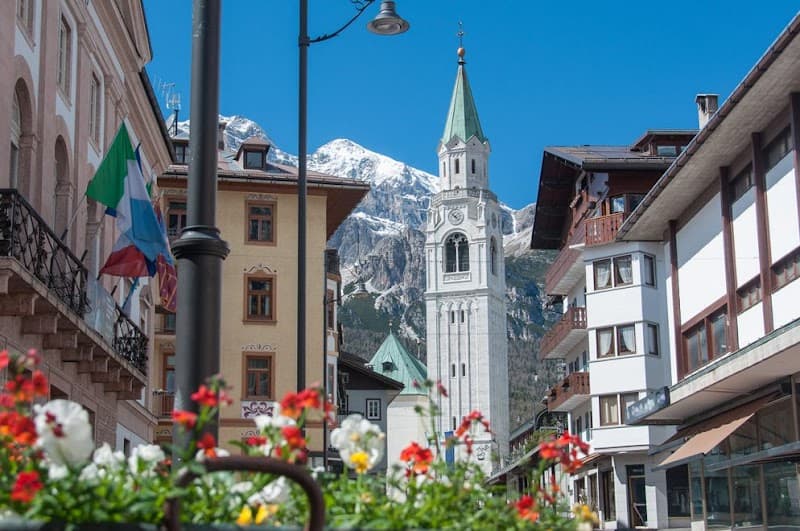
The kilometer-long main drag is flat, well-lit, and car-free, making it pleasant rather than just tolerable with children in tow.
Non-Ski Activities
You'll find ice skating at the Olympic Ice Stadium the actual venue from the 1956 Winter Games. Your kids will love the Olympic connection, and public sessions run throughout the season.Expect to pay around €10 to €15 per person including skate rental.
There's a dedicated sledding area at Pian de ra Bigontina that draws families looking for an afternoon off skis, with sled rentals available locally if you haven't packed your own.
The Freccia nel Cielo (Arrow in the Sky) cable car takes non-skiers up to Ra Valles at 2,475 meters, where panoramic terraces offer Dolomite views that justify the trip even if nobody in your group clicks into bindings. Expect to pay €33 for adults and €17 for children ages 7 to 14, with kids under 6 riding free.
Several hotels open their pools to outside guests for a fee when everyone needs a snow-free afternoon.
Family-Friendly Restaurants
Rifugio Scoiattoli run by the Lorenzi family (who also operate Ciasa Lorenzi hotel in town), hosts live music events and serves excellent mountain food in an atmosphere that welcomes kids rather than merely tolerating them.Baita Fraina delivers traditional Dolomite cuisine in a cozy setting: think polenta with rich ragù, grilled meats, and casunziei (local half-moon ravioli with beet or spinach filling). When everyone just wants something simple, Pizzeria Vienna in the town center handles the job reliably. For a nicer family dinner that isn't stuffy, Il Ponte does local specialties well.
Expect to pay €40 to €60 for a family of four at casual spots, €80 to €120 at the nicer restaurants.
When to Go
Season at a glance — color-coded by family score
💬What Do Other Parents Think?
The honest complaints center on Cortina's fragmented layout. Three separate, unlinked ski areas mean bus transfers between zones, which adds friction to the day, especially with younger kids who tire easily.
Parents with beginners report adequate terrain but note that families wanting to stick to one area all week may feel limited.
And the Gucci and Dior storefronts along the main drag aren't just for show. Budget-conscious families consistently mention this isn't the resort for pinching pennies.
Common Questions
Everything families ask about this resort
Have a question we didn't cover? We'd love to add it to our guide.
The Bottom Line
Would we recommend Cortina d'Ampezzo?
What It Actually Costs
Cortina is the most expensive base in the Dolomites, hotel and restaurant prices reflect the town's luxury positioning, Olympic heritage, and Dolce Vita character. The Dolomiti Superski 6-day pass costs EUR 350/adult and EUR 245/child, same as everywhere, but accommodation can cost 50-80% more than Corvara or Campitello.
The budget family in a self-catering apartment with a kitchen, packing mountain lunches, eating rifugio dinners in town sparingly: a week for four runs EUR 3,800-4,500. That is more than a comfortable week at most other Dolomite bases.
The comfortable family with a 4-star hotel, daily mountain restaurant lunches, and the full Cortina experience: EUR 5,500-7,500. February pricing can push that higher.
Weekly breakdown for a family of four (budget tier): Self-catering apartment EUR 1,800-2,400, lift passes EUR 1,190 (2 adults + 2 children), ski school EUR 350-500, food EUR 400-600, Venice or Innsbruck transfer EUR 200-350. Total: EUR 3,900-5,000 for the full week.
For context: Corvara costs 30-40% less on accommodation with better Sella Ronda access. Campitello di Fassa saves 40-50% on lodging. San Vigilio is less than half the accommodation cost. The new Olympic infrastructure (2026 Games) will add runs and facilities but is unlikely to lower prices.Cortina is where families go when the town experience matters as much as the skiing.
Your smartest money move: If you insist on Cortina, book an apartment with a kitchen and eat the famous mountain hut lunches, the food is better and cheaper on the mountain than in town.
Or save 40% by basing in a quieter Dolomite valley (Campitello, San Vigilio) and day-tripping to Cortina for the passeggiata and town experience.
The Honest Tradeoffs
The ski areas do not connect on-mountain. You need buses between them, which burns time with kids. Cortina is also the most expensive Dolomite resort: accommodation, dining, and shopping are premium-priced. If seamless skiing matters, base in Selva Val Gardena or Corvara where you can ski all day without removing your boots. If budget matters, Cortina is the wrong base.
The 2026 Winter Olympics infrastructure upgrades have improved access but also increased accommodation pricing by 15-20% compared to pre-2026 levels. Italian holiday weeks pack the slopes, and the five separate ski areas require bus connections that add 20-30 minutes between zones. Dolomiti Superski passes cost EUR 76/adult per day.
If this one gives you pause, consider Kronplatz for better family infrastructure and more consistent grooming at lower prices.
Would we recommend Cortina d'Ampezzo?
Book a hotel in Cortina town and buy a Dolomiti Superski pass. If Cortina's disconnected ski areas frustrate you, Selva Val Gardena has better on-mountain connectivity. If you want the best terrain in the Dolomites, the Sella Ronda from Corvara or Arabba is superior. For a quieter, cheaper Dolomite base, Kronplatz or San Vigilio are excellent.
Book a family hotel in Cortina town centre for bus access to all five ski areas. Buy the Dolomiti Superski pass for maximum terrain flexibility. The 2026 Winter Olympics brought improved lift infrastructure. Venice airport (2 hours) has the best international connections. The Corso Italia shopping street is a genuine highlight for non-ski days.
Similar Resorts
Families who loved Cortina d'Ampezzo also enjoyed these
Alta Badia
Sauze dOulx
Sölden
Courmayeur
Cervinia
Bardonecchia
Transparency note: This content was created with AI assistance and reviewed by Tom Meredith, our editor. Prices, dates, and availability may change. We recommend confirming details directly with the resort before booking.