Veneto, Italy

Arabba, Italy: Family Ski Guide

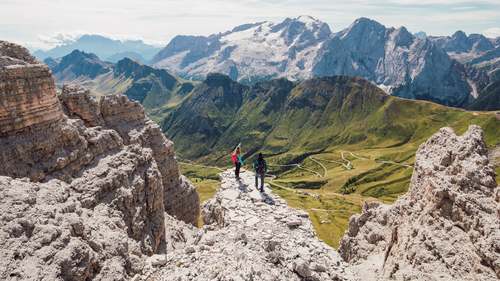
Dolomites backdrop, 1,200km Superski pass, legs done by lunch.

Family Score: 7.5/10
Ages 4-14
Arabba - official image
7.5/10 Family Score
🎯

Is Arabba Good for Families?

Arabba is a tiny, quiet Dolomite village that punches absurdly above its weight. From a walkable hamlet of a few hundred people, your family can access 1,200km of Dolomiti Superski terrain, including the legendary Sella Ronda circuit. Kids under 8 ski free with an adult pass (otherwise €53 per day for a child, €75 for adults). Best for ages 4 to 14. The catch? After 9pm, the village basically rolls up the sidewalks. But those limestone peaks turning flame-orange at sunset (locals call it "enrosadira") will make you forget you wanted a restaurant.

7.5
/10

Is Arabba Good for Families?

The Quick Take

Arabba is a tiny, quiet Dolomite village that punches absurdly above its weight. From a walkable hamlet of a few hundred people, your family can access 1,200km of Dolomiti Superski terrain, including the legendary Sella Ronda circuit. Kids under 8 ski free with an adult pass (otherwise €53 per day for a child, €75 for adults). Best for ages 4 to 14. The catch? After 9pm, the village basically rolls up the sidewalks. But those limestone peaks turning flame-orange at sunset (locals call it "enrosadira") will make you forget you wanted a restaurant.

Your family wants a lively resort town with multiple restaurants, bars, and evening entertainment. Arabba is essentially one street.

Biggest tradeoff

Moderate confidence

47 data pts

Perfect if...

  • Your kids are 4 to 14 and you want access to the world's largest linked ski area without the crowds of bigger Dolomite resorts
  • You have children under 8 and want to save real money on lift passes while skiing serious terrain
  • Your family is happy with quiet hotel evenings and doesn't need shopping, nightlife, or a dozen dining options
  • You want older kids to experience the full-day Sella Ronda circuit with UNESCO-level Dolomite scenery as the backdrop

Maybe skip if...

  • Your family wants a lively resort town with multiple restaurants, bars, and evening entertainment. Arabba is essentially one street.
  • You're looking for a big, self-contained beginner area. 30% beginner terrain is decent, but the real draw here is the vast interconnected network, which suits intermediates and up.
  • Your kids are under 4 and you need extensive childcare variety or a dedicated toddler snow garden scene

The Numbers

What families need to know

MetricValue
Family Score
7.5
Best Age Range
4–14 years
Kid-Friendly Terrain
30%
Childcare Available
YesFrom 24 months
Ski School Min Age
4 years
Kids Ski Free
Under 8

⛷️What’s the Skiing Like for Families?

Arabba is the quiet kid in the Dolomites who happens to hold the keys to the biggest linked ski area on Earth. The village sits at 1,602m, plugged directly into the Sella Ronda circuit and the wider Dolomiti Superski network: 500km of linked pistes around the Sella massif alone, 1,200km if you count the full Superski domain. Your kids won't grasp those numbers. What they will grasp is the moment they step off the Portavescovo gondola and realize the pale limestone towers are so close they look like someone left the movie screen on.

The Terrain, Honestly

Arabba's local ski area, Portavescovo, covers 63km of pistes served by 25 lifts. The breakdown across the broader connected network skews generous for learners: 236 easy runs, 202 intermediate, 41 advanced. That 30% beginner terrain is real and usable, not a couple of token greens tucked behind a parking lot. The nursery slopes sit right in the village, which means your four-year-old's first pizza-wedge attempts happen with the Sella Group as a backdrop.

Move beyond the village nursery area, though, and Arabba's own slopes tilt toward intermediate and expert territory. The reds descending from Portavescovo are long, confidence-building cruisers for parents, but the jump from village greens to those upper mountain runs is steeper than at purpose-built beginner resorts like Serfaus or Obergurgl. Kids who can link turns comfortably will thrive. True first-timers need a few days in ski school before they're ready to venture up.

That's the honest tradeoff. You get access to an absurd amount of terrain, but Arabba rewards families who've at least clipped into bindings before.

Ski Schools That Earn Their Reviews

Arabba has two certified Italian ski schools, and both take kids from age 4. Scuola di Sci Arabba (also listed as Scuola Italiana Sci Arabba on booking platforms) is the larger operation, running group courses for children ages 4 to 14 across all levels. Their weekly group course runs Sunday through Friday, 23 hours total, and costs €300 in high season, €280 in value weeks. Full-day courses (10am to 4pm, Monday through Friday, intermediate and above) are €400 per week.

One parent review on CheckYeti nailed it: "My daughter couldn't speak one word of Italian and can understand very little English. But it all went perfect." Small groups, patient instructors, genuine warmth. That's the pattern across multiple reviews.

Scuola di Sci Dolomites Rèba is the second school, based on Via Boè, with identical age requirements and similar pricing. Their weekly children's course runs €280 to €300 depending on season, with the same €400 full-day option. Rèba sweetens the deal with a 15% family discount for the second child, saving you €42 to €45. The week culminates in a Friday race with cups, medals, and Loacker chocolate prizes (your kid will remember that podium moment longer than any black run).

Private lessons through either school start from €40 per session via CheckYeti, making Arabba one of the more affordable private lesson markets in the Dolomites. For context, private lessons in Val Gardena or Cortina frequently start at €60 to €80 per hour.

The language concern is real but overblown. Both schools employ multilingual instructors, and the universal language of pointing downhill and making snowplow shapes translates perfectly. English-speaking instructors are available if you request them at booking. German is widely spoken too, given Arabba's position in the Ladino-speaking Fodom valley where Italian, German, and Ladin all coexist.

Childcare for the Little Ones

The Folly Club takes children from age 2 (24 months minimum) up to 12, offering indoor play, sledging, and supervised activities near the slopes. This is the detail that unlocks Arabba for families with mixed-age kids: your toddler goes to Folly Club, your four-year-old goes to ski school, and you spend the morning carving reds on Portavescovo without a shred of guilt. Book ahead in peak weeks. Arabba is a small village and spots fill.

On-Mountain Eating

The Dolomites do on-mountain dining better than anywhere in the Alps. You'll sit on a sun terrace at 2,000m eating food that would cost twice as much and taste half as good at a French resort. Arabba's rifugi (mountain huts) serve proper Italian mountain cooking: canederli (bread dumplings in broth), casunziei (beetroot-filled half-moon pasta), speck with warm polenta. Your kids will demolish a plate of Kaiserschmarrn (shredded pancake with powdered sugar) the size of their head.

Rifugio Bec de Roces, perched on the ridgeline above Arabba, serves some of the best canederli on the Sella circuit with views that make you forget you still have an afternoon of skiing ahead. Rifugio Fodom, accessible from the Portavescovo sector, is a family-friendly stop where the portions are generous and the terrace catches afternoon sun. Along the Sella Ronda circuit, you'll pass dozens more rifugi in the Alta Badia and Val Gardena sectors, each competing to outdo the last.

Lunch on the mountain in Arabba runs €12 to €20 per person for a full plate and drink. Roughly half what you'd pay in St. Moritz for something less memorable.

The Sella Ronda Circuit

Arabba is one of four valley entry points to the Sella Ronda, a 40km loop around the Sella massif linking Arabba, Alta Badia, Val Gardena, and Val di Fassa. Confident intermediate kids (age 10 and up, solidly on red runs) can complete the full circuit in a day. You ski clockwise or counter-clockwise, village to village, pass to pass, each valley revealing a different face of the Dolomites. The whole loop takes 5 to 6 hours with lunch and stops. It's the kind of skiing adventure that turns a holiday into a story.
Locals know: the counter-clockwise "orange" direction gets less traffic and more sustained descents. Start early from Arabba's Porta Vescovo gondola, and you'll be ahead of the Alta Badia crowds all day.

Lift Pass Savings for Families

Children under 8 ski free when a parent buys an adult pass on the Dolomiti Superski system. That's a genuine money-saver: adult day passes run €75, and you'd otherwise pay €53 per day for a child's ticket. For a six-day holiday with two kids under 8, that's over €600 saved.

Families with a child under 3 can get transferable multi-day passes so parents take turns skiing and minding the little one. Buy your Dolomiti Superski pass online at least two days ahead for a 5% discount via the My Dolomiti Card, free to set up.

Rental Gear

Scuola di Sci Dolomites Rèba offers equipment rental alongside their lessons, which simplifies the morning logistics of getting kids kitted out and into class in one stop. Several sport shops along Arabba's main street (Via Mesdì) rent full junior packages. Pre-booking online through either ski school's website is the move: you'll skip the 8am scrum at the rental counter and your kid's boots will already be sized and waiting.

What Your Kid Will Remember

It won't be the piste map statistics or the lift count. It'll be skiing through a valley where the rock towers glow pink at sunset, eating pancakes bigger than their helmet, and the Friday race medal still sitting on their bedside table in April. Arabba doesn't try to dazzle you with waterparks or mascot parades. It lets the mountains do the work, and honestly, these mountains don't need any help.

User photo of Arabba - unknown

Trail Map

Full Coverage
Trail stats are being verified. Check the interactive map below for current trail info.

© OpenStreetMap contributors, ODbL


🏠Where Should Your Family Stay?

Arabba is a village where you can walk from your hotel to the lifts in the time it takes to zip up a jacket. That's the luxury here. The entire town stretches along a single road at 1,602m, so almost every property puts you within a few minutes of the slopes, and several deliver genuine ski-in/ski-out. No mega-resorts or sprawling condo complexes. Just family-run Italian hospitality, half-board dinners that make the trip feel like a steal, and that particular Dolomite silence when the lifts stop turning.

If I'm booking for a family, I'm looking at Sporthotel Arabba first. It's a four-star with direct access to the Burz trails (which connect to the Sella Ronda circuit), so you're clicking into bindings steps from the door. Rated 9.0 on Booking.com from 323 reviews, it comes with a wellness centre, sauna, kids' play area, and a heated boot room that saves your mornings. Half-board runs from €259 per night, and the dinners are legitimately good. Not hotel-buffet-good. Dolomites-Italian-good: local cheeses, polenta, and a wine list that justifies an extra glass. Rooms book fast for February peak weeks, so commit early.

Hotel B&B Marilena is the family-specific pick that deserves more attention. It sits 100 metres from the pistes, with dedicated family rooms (including suites with lofts that give parents and kids separate sleeping areas), a small wellness corner with sauna and hot tub, and genuinely helpful owners who run the place themselves. Doubles start at €160 per night in March, climbing to €210 in high season. Kids under 6 stay free, and 6 to 11 year olds get a 50% discount. That math matters when you're feeding a family for a week. No pets allowed, which honestly makes it quieter for families with young kids.

For budget-conscious families who'd rather spend money on extra ski days than marble lobbies, Garnì Serena is a B&B run by Lara and Simon with the kind of personal warmth you simply don't get at chain properties. A stone's throw from the slopes, it offers a wellness centre and gym (surprisingly good for a garni) and welcomes dogs if your family travels with a four-legged member. Rooms start from the low €100s per night in quieter periods. Breakfast is included and generous, the kind of spread where you're building enough fuel for a full morning on the mountain before lunch.

The self-catering route makes sense here too, especially for families with toddlers who need flexibility around nap schedules. Appartamenti Home Service Arabba ranks as TripAdvisor's top family accommodation in the village, and apartments across Arabba generally start from €148 per night. You'll get a kitchen (critical when your three-year-old decides at 5pm that they only eat pasta), and you're still walking distance to everything. The village has a small supermarket for essentials, though don't expect Whole Foods. Stock up on the drive in.

Families with kids in ski school should know that both Scuola Sci Arabba and Scuola Dolomites Rèba operate from the village centre, so proximity to lessons is never an issue regardless of where you stay. The Folly Club childcare for ages 2 to 12 is also centrally located. In a village this compact, "wrong location" essentially doesn't exist.

The honest tradeoff with Arabba's accommodation: you're choosing character over choice. There are 20-odd properties total, not 200. You won't find a waterpark hotel or an all-inclusive mega-lodge. What you get instead is a family hotel where the owner remembers your kid's name by day two, half-board dinners with actual regional cooking, and a pillow that smells faintly of pine instead of industrial laundry. If that sounds limiting, Arabba might not be your village. If it sounds like exactly what a ski holiday should feel like, book the Sporthotel and stop scrolling.


💬What Do Other Parents Think?

Arabba's parent reviews tell a remarkably consistent story: families come for the Dolomite scenery and quiet village atmosphere, then leave raving about both while quietly wishing for one more restaurant. The praise is genuine. The complaints are predictable. The overall verdict lands exactly where you'd expect for a small Italian mountain village that punches above its weight on skiing and below it on nightlife.

What Families Love

The ski school praise is the loudest signal in the noise. Parents consistently single out Scuola Italiana Sci Arabba and Scuola di Sci Dolomites Rèba for small group sizes and instructors who genuinely connect with kids, even across a language gap. One Swedish parent on CheckYeti put it perfectly: "My daughter couldn't speak one word of Italian and can understand very little English. But it all went perfect."

That review captures what multiple families confirm: Arabba's instructors teach through demonstration, patience, and play rather than complex verbal instruction. Your four-year-old doesn't need to conjugate Italian verbs to learn a snowplow.

The village's compact size gets consistent praise from parents with young children. Everything in Arabba is walkable. You're never more than a few minutes from lifts, ski school meeting points, or your hotel, and that matters enormously when you're carrying a toddler and two pairs of skis. Families coming from sprawling French mega-resorts consistently mention the relief of not needing shuttle buses or timing complicated connections.

The scenery gets mentioned in nearly every parent review, and honestly, it deserves it. The Dolomites don't photograph like the Alps. They photograph better. Your kids will stare at those jagged limestone towers from the chairlift and forget they were complaining about cold fingers five seconds ago.

The Honest Complaints

Arabba's limited dining and evening options come up in almost every family review longer than a paragraph. "The village has everything you need for a peaceful family vacation," one guide diplomatically puts it. Translation: there are a handful of restaurants, a couple of bars, and that's your evening sorted.

Parents who've done Val Gardena or Cortina will feel the difference. If your family's definition of après involves anything beyond hot chocolate and early bedtime, Arabba will test your patience by day three.

The transition from beginner slopes to the wider ski area gets flagged by families with progressing kids. Arabba has nursery slopes in the village, and 30% of the broader terrain counts as beginner-friendly, but several parents note the jump from village greens to the mountain above is steeper than expected. The terrain up on Portavescovo skews intermediate and expert, leaving a gap where a newly confident six-year-old might feel suddenly out of their depth. Worth knowing before you promise them a "big mountain day."

Where Parent Experience Contradicts the Brochure

Arabba markets itself as part of the enormous Dolomiti Superski network with 1,200 km of slopes. Parents with kids under 10 consistently report that this selling point is irrelevant to their actual vacation. You're not dragging a seven-year-old around the Sella Ronda circuit.

Families with younger children realistically ski the local Arabba/Marmolada area and maybe venture to neighboring Alta Badia on one ambitious day. The mega-network matters for parents skiing solo or with teenagers, not for the family unit as a whole. That's the biggest gap between marketing and reality for families considering Arabba.

The free lift pass for children under 8 (when purchased with an adult pass) gets surprisingly little attention in parent reviews, which tells me people either don't know about it or take it for granted. At €75/day for an adult Dolomiti Superski pass, getting your five-year-old on for free is a meaningful saving that adds up fast over a week.

Tips from Parents Who've Been

  • Book half-board. Multiple families at Sporthotel Arabba and Hotel Evaldo say the dinner included in half-board packages exceeded expectations and solved the limited-restaurant problem entirely. Several parents specifically wished they hadn't planned to eat out, because there just aren't many places to eat out at.
  • The 15% sibling discount at Scuola di Sci Dolomites Rèba applies to your second child's group lessons. With weekly courses running €280 to €300, that's a €40+ saving that doesn't require a coupon code or special request.
  • Getting there takes commitment. Arabba sits 2+ hours from the nearest major airports (Innsbruck, Venice, Verona), and the final stretch involves mountain passes. North American families should plan an overnight near the airport rather than attempting a same-day arrival. The drive is gorgeous but not something you want to do jet-lagged in the dark.
  • Buy lift passes online at least two days ahead for a 5% discount through the Dolomiti Superski portal, and get a My Dolomiti Card to skip ticket office queues entirely.

My honest take? Arabba's parent reviews confirm exactly what you'd guess from looking at the village on a map. Small, quiet, genuinely family-friendly, with exceptional skiing and minimal entertainment options. Parents who go in expecting a cozy Italian mountain week with incredible terrain come back thrilled. Parents expecting resort-town energy come back disappointed. That's not a flaw in Arabba. It's a sorting question, and it should be answered before you book, not after.


🎟️How Much Do Lift Tickets Cost at Arabba?

Arabba's lift ticket pricing is genuinely fair for what you're getting: a day pass unlocks not just the local 63km of Arabba/Marmolada slopes but, if you opt for the Dolomiti Superski pass, 1,200km of interconnected terrain across 12 resorts. Adult day passes run €75 in peak season (February and March) and drop to €66 during value periods in early December and January. That's less than a day at Vail, and you're skiing UNESCO World Heritage scenery instead of I-70 traffic fumes.

Children aged 8 to 15 pay €53 per day, which lands in the standard 70% range for European resorts. Kids under 8 ski free when a parent buys an adult pass. Free. That alone can save a family of four with young children hundreds of euros over a week, and it's the kind of policy that makes you wonder why more resorts don't do it.

Multi-day passes are where the math gets interesting. A 6-day adult Dolomiti Superski pass costs €324 to €387 depending on season, which works out to €54 to €65 per day. Buy online at least two days ahead and you'll shave 5% off automatically through the My Dolomiti Card system. For a family skiing a full week, that online discount alone covers a nice rifugio lunch.

  • Pro tip: Arabba also sells a local-only Arabba/Marmolada pass that's cheaper than the full Dolomiti Superski version. If you're staying put and not doing the Sella Ronda circuit, it saves real money. But honestly? The Sella Ronda alone is worth the upgrade.
  • Families with a child under 3 can get transferable multi-day passes, so parents take turns on the slopes while one stays with the little one. Clever and rare.

Arabba isn't part of Epic, Ikon, or any North American mega-pass network. No shortcuts here. You're buying Dolomiti Superski passes directly, either online or at the skipass office on Via Boè. The season runs early December through mid-April, and those value-period windows in early January and late March are the sweet spot: lower pass prices, thinner crowds, and the Dolomite light at golden hour will make you forget what you paid entirely.


✈️How Do You Get to Arabba?

The drive to Arabba is the trip. You'll wind through the Dolomites on roads that make your passengers go quiet, not from car sickness (though pack those bags just in case), but because the limestone spires framing every switchback look like they were designed by someone showing off. Arabba sits deep in the Italian Dolomites, tucked into the Livinallongo valley at 1,602m, and getting there requires commitment. Worth it? Absolutely. Easy? No.

Your best bet is Innsbruck Airport (INN), 2 hours by car through the Brenner Pass and over into Italy. Venice Marco Polo Airport (VCE) is the other strong option at 2.5 hours, with cheaper flights from more international hubs. Munich Airport (MUC) works at 3.5 hours, and Verona Airport (VRN) clocks in at 3 hours with solid budget airline coverage. North American families will likely connect through Munich or Venice.

Renting a car is the way to go. Arabba doesn't have a train station, and the nearest rail links at Brunico (Bruneck) or Bolzano still leave you 60 to 90 minutes from the village by road. A car gives you freedom to stock up on groceries in Belluno or Brunico on the way in (Italian supermarket prices will feel like a revelation after a week in Switzerland), and you'll want it if you plan to explore the Sella Ronda valley towns. Bus connections exist but run infrequently. Wrangling ski gear plus kids onto regional Italian buses is a special kind of adventure nobody asked for.

Winter tires or snow chains are legally required in Italy from November 15 through April 15, and on the mountain passes leading to Arabba, that's not a suggestion. The roads over Passo Campolongo and Passo Pordoi close periodically in heavy snow. Your rental car company will fit winter tires if you request them, but confirm at booking because the surcharge varies wildly. If you're flying into Venice, the A27 motorway north is straightforward until you leave it, then it's winding mountain roads for the final hour. Beautiful, but slow.

💡
PRO TIP
Buy your Dolomiti Superski pass online at least two days before arrival for a 5% discount, and register for a free My Dolomiti Card so you skip the ticket office entirely on day one. That first morning, everyone else is queuing and you're already on the gondola.
User photo of Arabba - unknown

What Can You Do Off the Slopes?

Arabba after dark is one street, a handful of hotel bars, and the kind of silence where you can actually hear snow sliding off rooftops. If you need nightlife, wrong valley. But if your ideal ski evening involves a plate of casunziei (half-moon beetroot ravioli) and kids asleep by 8:30 so you can finally finish a glass of wine, this village delivers exactly that.

Where to Eat

Arabba's dining scene is small but genuinely good, anchored by hotel restaurants that take food seriously. Ristorante Al Tablé at the Sporthotel Arabba serves refined Ladin and Tyrolean dishes, think speck dumplings, venison ragù, and polenta concia drowning in local cheese. Half-board at most hotels runs €30 to €50 per person on top of room rates, and honestly, that's the smartest move in a village this size. You'll eat better than you would hunting for standalone restaurants, and the kids won't need to put boots back on.

Hotel Evaldo has one of the better restaurants open to non-guests, with a menu that leans into Dolomite comfort food. Stube Ladina offers a more intimate setting with traditional Ladin specialties. A family dinner for four at a sit-down restaurant runs €80 to €120, which is remarkably civilized by Dolomite standards. In Cortina, that same meal runs €150 without blinking.

For lunch on the mountain, the rifugi (mountain huts) are where Arabba truly punches above its weight. You'll pay €12 to €15 for a plate of pasta with views that would cost triple on an Austrian mountaintop. The food is better than it has any right to be at 2,400 meters.

Self-Catering and Supplies

Arabba has a small Coop grocery store on the main road through the village, stocked with the essentials plus surprisingly good local cheeses, fresh bread, and Italian wine at supermarket prices. No hypermarket, so if you're self-catering for a full week, do a bigger shop in Brunico or Bolzano on the way in. A bottle of decent Lagrein for €7 and some local speck from the Coop is all you need for a balcony aperitivo while the kids demolish their pasta.

Off-Snow Activities

Arabba won't win awards for its activity menu, but what exists is genuine and family-friendly. There's a Rodelbahn (toboggan run) near the village that your kids will lose their minds over, sledging under Dolomite spires with snow spraying behind them. Sled rental runs €5 to €10. That's the moment they'll be talking about at school on Monday.

Snowshoeing excursions (ciaspolate) leave from the village and cost €15 to €25 per person with a guide. Several hotels, including Sporthotel Arabba, have wellness centers with saunas, steam rooms, and small pools, perfect for post-ski recovery when the kids have burned through their energy reserves. The Folly Club mini club also runs some afternoon indoor activities for ages 2 to 12, so you can squeeze in a sauna session without guilt.
Village Walkability

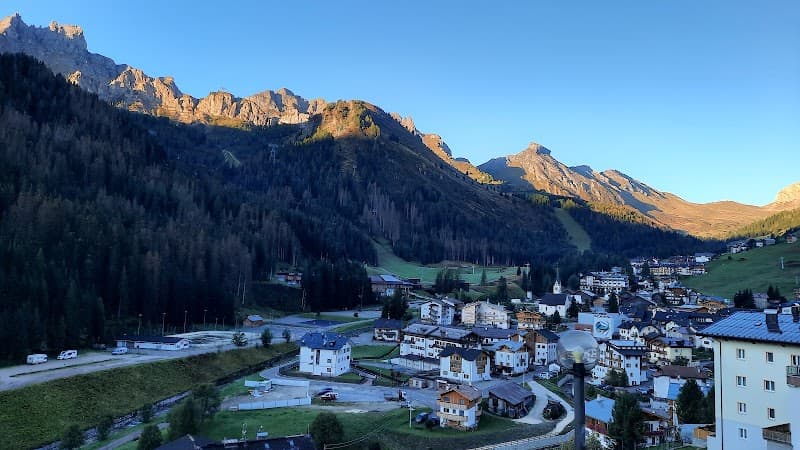
Arabba is tiny enough that walkability isn't really a question. Everything sits along Via Mesdì, the single road threading through the village, with ski lifts, restaurants, and shops all within a 5-minute stroll. You won't need a car once you've arrived. Pavements can get icy after dark, so pack proper boots for the kids (and yourself).

No getting lost here. No confusing shuttle systems, no "which end of town are we in?" panic. With a toddler in a carrier or a six-year-old dawdling over every snow pile, the compact layout is genuinely liberating.

Evening Vibe

Let's be honest: Arabba's nightlife peaks at a grappa in a wood-panelled hotel bar while someone's toddler sleeps upstairs on a baby monitor. Hotel Al Forte has a cozy bar area popular with families winding down. A couple of small bars along the main street serve aperitivi and local craft beers, but nothing stays open past 11pm with any conviction. This is a feature, not a bug. You'll ski harder because you slept better, and nobody's dragging themselves to the lift at 9am nursing a hangover.

The language barrier that worries some families (especially those traveling from North America) is genuinely minimal in practice. Hotel staff speak English, ski school instructors communicate well across languages, and Italian hospitality fills in the gaps. One parent review noted their child "couldn't speak one word of Italian" and the ski instructors made it work beautifully. Point at a menu, smile, say "grazie." You'll be fine.

User photo of Arabba - unknown

When to Go

Snow conditions, crowd levels, and family scores by month

Best for families: JanuaryPost-holiday lull with solid snowpack; excellent value and fewer families mid-month.
Monthly ski conditions, crowd levels, and family scores
Month
Snow
Crowds
Family Score
Notes
Dec
GoodBusy5Christmas holidays mean peak crowds; snowmaking supplements early-season snow cover.
JanBest
GreatModerate8Post-holiday lull with solid snowpack; excellent value and fewer families mid-month.
Feb
GreatBusy6European school holidays bring crowds but consistent snow; book accommodations early.
Mar
GreatModerate8Spring conditions improving; Easter crowds build late month; early March is ideal.
Apr
OkayQuiet3Season end with slushy conditions; only early April worthwhile for younger skiers.

Family score considers snow quality, crowd levels, pricing, and school holidays.

Common Questions

Everything families ask about this resort

It's solid for families with kids 4 and up, that's when ski school kicks in, and children under 8 ski free with an adult pass purchase. Childcare at the Folly Club takes kids from age 2, so parents with toddlers can still get full ski days. Just know that Arabba is a quiet one-street village, not a buzzing resort town, so bring your own evening entertainment.

Adult day passes run €75 and kids (8-15) pay €53 on the Dolomiti Superski pass, children under 8 are free with a parent's pass. A week of group ski school for kids costs €280-€300 depending on season (€400 for full-day). Hotels start at €148/night, with solid family-friendly options like B&B Hotel Marilena offering kids under 5 free and half-price for ages 6-11. Buy passes online 2+ days ahead for a 5% discount.

Fly into Venice (2.5 hours by car), Innsbruck (2 hours), or Verona (3 hours) and rent a car or arrange a transfer. There's no train station in Arabba, you're driving the final stretch through Dolomite passes no matter what. The roads are well-maintained but pack chains in winter. It's remote, which is part of the charm and also the main logistical hurdle.

About 30% of terrain is beginner-friendly, with gentle nursery slopes right in the village. The real magic is for intermediates: Arabba sits on the Sella Ronda circuit, giving you access to 500km of linked pistes across four valleys. The jump from village greens to the wider mountain can feel steep, though, so invest in a few ski school days before turning kids loose on the network.

Mid-January through early February gives you the sweet spot: reliable snow, lower prices (€280/week for kids' ski school vs. €300 in peak), and shorter lift lines. The season runs early December through mid-April. Avoid Christmas/New Year week unless you love crowds and peak pricing, and late March onward offers sunshine skiing with spring deals.

Yes, but it's the Italian Dolomites, so English fluency varies by instructor. The main ski schools, Scuola Sci Arabba and Dolomites Rèba, both advertise English-speaking instructors and get strong reviews from international families. One parent noted her daughter spoke zero Italian and "it all went perfect." Book early in peak weeks to lock in an English-speaking instructor for your kids.

Have a question we didn't cover? We'd love to add it to our guide.