Campitello di Fassa, Italy: Family Ski Guide
Your kid gets a trophy. 55% beginner terrain. Real Ladin village.
Last updated: March 2026
Italy
Campitello di Fassa
Book a family hotel in Campitello and buy a Dolomiti Superski pass. If you want a livelier village, Selva Val Gardena has more restaurants and shops. If you want the most refined Dolomite experience, Corvara in Alta Badia is the upgrade. For beginners, Alpe di Siusi is gentler and more scenic. Book a family hotel in Campitello for Col Rodella gondola access to the Sella Ronda. Buy the Dolomiti Superski pass for the full network. Peak weeks are Italian Carnival and Austrian Faschingsferien. The Fassa valley bus is free with a guest card and connects all villages. Canazei (3km) has better supermarket and restaurant options.
Is Campitello di Fassa Good for Families?
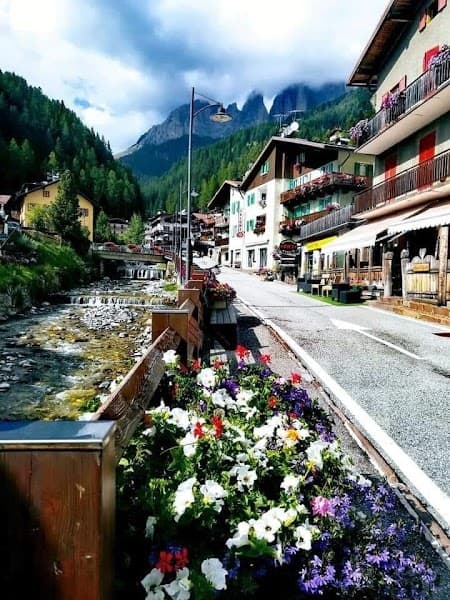
Campitello di Fassa sits in the Val di Fassa with direct Sella Ronda access and a friendly village atmosphere. Less polished than Corvara, less crowded than Selva, and the gondola from town takes you straight into the circuit. The valley views are classic Dolomites and the Italian hospitality is genuine.
Best for families who want Sella Ronda access from a quieter, more affordable base than the Alta Badia or Val Gardena villages.
The local ski area is modest at around 36km, and the full Dolomiti Superski pass needed to access the wider network is among Italy's more expensive options — making this poor value for families who will stay on beginner terrain all week.
Biggest tradeoff
What's the Skiing Like for Families?
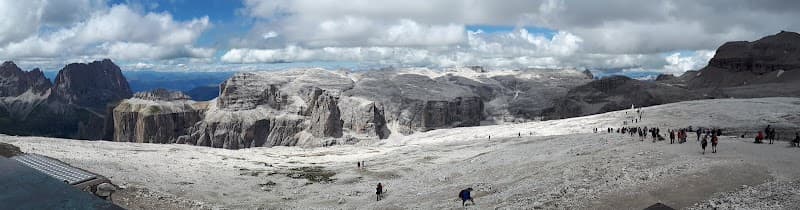
At the top, at 2,485m, the Dolomites' pale limestone towers fill the skyline in every direction, and the family splits along ability lines without drama. Beginners and young children peel off toward the Pradel plateau, where gentle blues and greens run wide and sunlit across an area distinctly separated from the faster traffic descending from the Sella Ronda circuit.
This is where the Vajolet Ski School runs the Marmots programme and where, according to a parent reviewer on Own the Trail, a six-year-old progressed from basic snowplough to confident blue-run skiing in a single week. The gradient is forgiving. The views are not, even the nursery slopes here look out at the Sassolungo massif.
For intermediate families ready to explore, the Col Rodella summit connects directly to the Sella Ronda, a 40km loop circling the Sella massif through four Dolomite valleys.
A confident intermediate can complete the full loop in about five hours, but families with mixed abilities do better picking a single direction (clockwise toward Arabba is generally easier) and turning back after two or three lifts.
The run from Col Rodella down to Canazei via the Belvedere sector covers 1,000 vertical metres on well-groomed red terrain, with a mid-station restaurant where you can regroup. Lunch on the mountain is a genuine highlight and not the afterthought it becomes at many resorts.
Rifugio Salei perched at 2,100m on the Pradel plateau, serves polenta with venison ragù and house-made apple strudel. Budget €12-€18 per adult main course.
The terrace faces south toward the Marmolada glacier, and on clear days in February or March, families linger here for an hour without guilt. Kids under 8 eat from a dedicated menu at reduced prices.
The altitude profile is the quiet advantage. Campitello's skiing sits between 1,450m and 2,485m, with most of the family-friendly terrain above 2,000m.
Snow reliability into late March and early April is consistently better than lower-altitude Val di Fassa villages like Moena (1,184m base), making Campitello the stronger choice for Easter bookings.
Trail Map
Limited DataTerrain by Difficulty
© OpenStreetMap contributors, ODbL
📊The Numbers
| Metric | Value |
|---|---|
Family Score | 7.2Good |
Best Age Range | 3–14 |
Kid-Friendly Terrain | 0%Limited for beginners |
Childcare Available | Yes † |
Ski School Min Age | — |
Kids Ski Free | — |
Kids Terrain Park | Yes |
Local Terrain | 1 |
Score Breakdown
Value for Money
Convenience
Things to Do
Parent Experience
Childcare & Learning
Planning Your Trip
🏠Where Should Your Family Stay?
Campitello is a small village, and the primary accommodation question is simple: how close to the Col Rodella gondola base station can you get? Most of the village sits within a ten-minute walk, but with young children in ski gear, every minute matters on a cold morning.
We have limited verified data on specific properties in Campitello, our accommodation sourcing for this resort is ongoing, and we'd rather flag the gap than invent recommendations. What we can confirm: the village offers a mix of traditional family-run hotels, apartment rentals, and some chalet-style properties.Budget accommodation starts from approximately €135 per night based on available data, though this varies significantly by season and booking window.
Italian and German families dominate the guest mix, particularly during February half-term and Italian school holidays, the settimana bianca, typically falling in February or March. Booking early for these weeks matters more here than at larger resorts.
Campitello has limited bed capacity and fills.
If Campitello is booked out, neighbouring Canazei a short drive or valley bus ride, offers a broader range of accommodation with slightly more commercial infrastructure. You'll trade some of Campitello's village intimacy for more options.For the Kowalskis: self-catered apartments in either village allow you to cook breakfasts and pack lunches, leaning into the excellent local supermarkets where Italian ingredients make even budget cooking feel like an upgrade from home.
💬What Do Other Parents Think?
What Parents Love
- Pradel plateau keeps beginners completely separate from Sella Ronda traffic nervous parents appreciate that their 5-year-olds aren't sharing slopes with circuit skiers bombing through
- Vajolet Ski School's Marmots program accepts kids up to 11 unusual age ceiling means families don't split between different ski schools for different aged children
- Village afternoon pace feels authentically Italian parents love the 4pm gelato ritual and absence of thumping umbrella bars
What Parents Flag
- Less polish than Alta Badia neighbors some accommodations and restaurants feel more basic compared to Corvara or La Villa
- Limited non-ski activities rainy day options are fewer than in larger resort towns
- Can feel quiet in low season some services and restaurants operate reduced hours outside peak weeks
What families remember most is that specific moment when the Col Rodella gondola crests the ridge and the entire Sella massif spreads out ahead, children pressed against the glass, parents reaching for phones, and everyone suddenly understanding why the Dolomites are different from any other mountains in the Alps.
Families on the Slopes
(4 photos)Photos from Google Places. Posted by visitors.
How Much Are Lift Tickets?
LIFT PASSES AND SAVING MONEY
The single most important money decision at Campitello is which lift pass to buy. The Val di Fassa/Carezza pass covers six ski areas, Ciampac Belvedere Col Rodella, Buffaure/Aloch, Catinaccio, and Carezza, connected by the Skitour Panorama route.For families with children on green and blue runs, this is more than enough terrain for a full week and costs meaningfully less than the full Dolomiti Superski upgrade.
Daily rates on the Val di Fassa/Carezza pass run approximately €48 per adult and €34 per child.
Multi-day passes reduce the per-day cost, check fassa.com for current multi-day pricing, and buy online before you arrive. The Campitello skipass office on Strèda de Ischia 3 works fine, but the Monday morning queue is time better spent skiing.
For families who'll only ski the Col Rodella area directly above Campitello, an even cheaper option exists: point-to-point tickets. According to valdifassalift.it, the Canazei-Pecol sector offers 5 return lift tickets for €60, indicating granular local pricing tiers below the valley-wide pass.Ask at the ticket office about single-sector options if your children are in ski school all morning and you're only skiing half days.
The Vajolet Marmots programme at €205 for four mornings plus one full day works out to roughly €41 per session, competitive against comparable children's group lessons in the Austrian Tirol, where €50-€60 per half day is common.
One note for budget families: if you're self-catering and disciplined about not upgrading to the full Dolomiti Superski pass, Campitello is one of the more affordable ways to put an Italian Dolomites ski holiday together. The moment you buy the system pass for terrain your children won't use, the economics collapse.
Planning Your Trip
✈️How Do You Get to Campitello di Fassa?
Winter tyres are legally required in Italy from November to April. Carry chains as a precaution, though the valley road is well-maintained. Families flying from the UK or Northern Europe will find Innsbruck the most practical airport, 90 minutes by road via the Brenner Pass. The route is motorway nearly the entire way.
Bolzano's small airport sits about an hour from Campitello but has very limited scheduled service.
Verona Villafranca offers the widest choice of low-cost carriers, Ryanair and others serve it from multiple UK airports, but adds 2.5 hours of driving through the Adige valley. Budget roughly €15-€20 each way for Italian motorway tolls on the A22. Train is viable with patience. Direct services reach Bolzano or Trento, where valley bus connections continue to Campitello.
The transfer adds complexity with ski equipment and small children, but eliminates the rental car, and the Val di Fassa bus service is typically included with lift passes.
A car gives you flexibility to explore the valley's other ski areas and reach supermarkets easily, but if you're content to stay in Campitello for the week, it's not strictly essential.
Parking in the village is limited. Confirm arrangements with your accommodation before you arrive.
☕What's There to Do Off the Slopes?
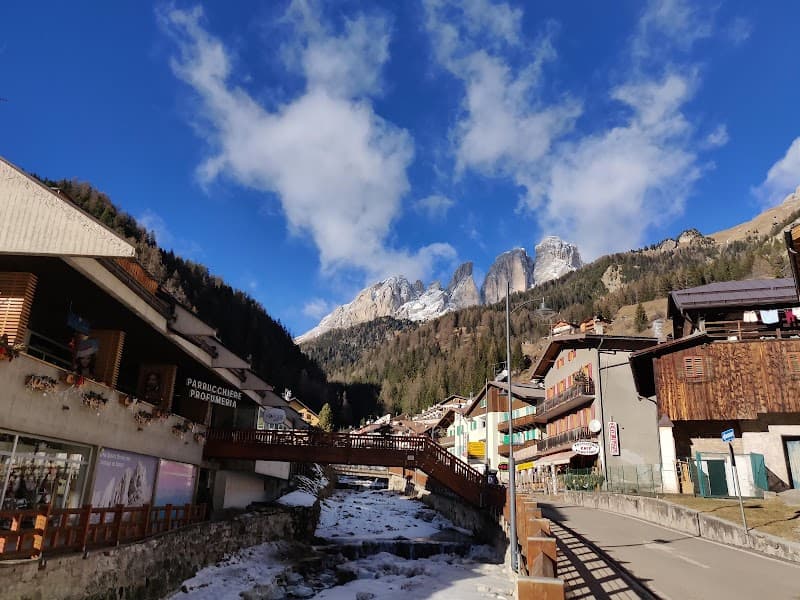
The main street is short, walkable end-to-end in ten minutes, and by late afternoon it fills with families in various states of post-ski dishevelment, children dragging boots, the smell of coffee and baking from the bars along the road.
There's no thumping umbrella bar, no DJ, no queue for overpriced glühwein.
What there is: a few cafés with outdoor tables catching the last sun, a gelateria or two, and the particular Italian talent for making a hot chocolate last forty-five minutes while children decompress. For families with young children, this pace is the point.
Miniclubs in Campitello accept children up to age 11, an unusually high ceiling that means your nine-year-old who's decided skiing is boring today has somewhere structured to go while you take one more afternoon run. Across the valley, 51km of cross-country trails offer a different rhythm for parents who want a quiet morning while children are in ski school.The trails follow the valley floor with the Dolomite walls rising on either side, flat enough for beginners, dramatic enough to feel like an event.
Evenings revolve around dinner. Restaurants open from around 7pm, children are welcomed everywhere without the slightest hesitation, and bedtime comes easily after a day at altitude. Nobody is looking for a club at 11pm.
Everyone is asleep.
LOCAL FOOD AND CULTURE
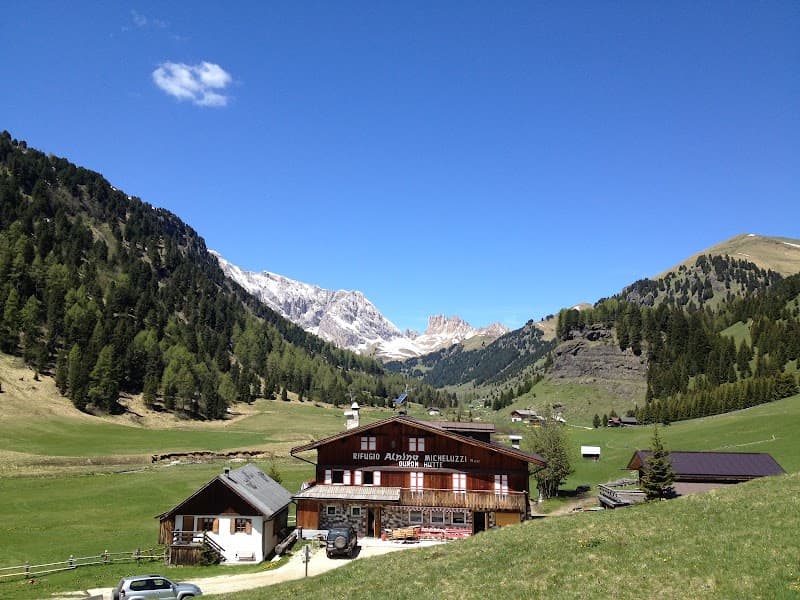
At altitude, rifugios serve full sit-down meals rather than the cafeteria trays of French mega-resorts. Picture a wooden-beamed dining room at 2,200m, your children eating apple strudel while the Sassolungo turns pink outside the window.We don't have verified names and prices for specific mountain restaurants above Campitello, this is a gap in our data, but the format is consistent across the Dolomites: table service, handwritten menus, mains typically priced between €10 and €18.
When to Go
Season at a glance — color-coded by family score
Common Questions
Everything families ask about this resort
Have a question we didn't cover? We'd love to add it to our guide.
The Bottom Line
Would we recommend Campitello di Fassa?
What It Actually Costs
Campitello di Fassa is one of the best-value bases for Dolomiti Superski, noticeably cheaper than Val Gardena or Alta Badia on accommodation and dining, with the same EUR 350/adult and EUR 245/child 6-day pass giving identical terrain access to all 1,200km.
The budget family in a 3-star half-board hotel: a week for four runs EUR 2,600-3,200. That is 25-30% less than equivalent accommodation in Corvara or Selva, for the same lift pass.
The comfortable family with a 4-star hotel, daily mountain restaurant lunches, and ski school: EUR 3,800-4,800. The Val di Fassa restaurants are excellent Italian cooking at lower Dolomite prices.
Weekly breakdown for a family of four (budget tier): Half-board hotel EUR 1,200-1,700, lift passes EUR 1,190 (2 adults + 2 children), ski school EUR 250-350, mountain lunches EUR 150-250, Bolzano or Innsbruck transfer EUR 100-180. Total: EUR 2,900-3,700 for the full week.
For context: Corvara costs 25-30% more on accommodation for better Sella Ronda positioning. Selva costs 20-25% more for direct circuit access. Canazei is similarly priced but busier. Campitello is quieter, cheaper, and still close enough to the Sella Ronda that you can complete the circuit in a day without rushing.
Your smartest money move: Base in Campitello, ski everywhere on the Dolomiti Superski pass, and spend the 25-30% accommodation savings on the excellent mountain restaurants. Half-board covers dinners; put your discretionary budget toward rifugio lunches.
The Honest Tradeoffs
The village is small and quiet. If your family wants evening entertainment, Campitello will feel sleepy after dinner. The local terrain (Fassa side) is less extensive than Val Gardena or Alta Badia, though the Sella Ronda connection opens everything up. If you are not planning to ski the circuit, a base in Selva or Corvara gives you more immediate terrain.
The village is charming but small, with only a handful of restaurants and one small supermarket. The Sella Ronda circuit starts from here but takes a full day, making it impractical for families with children under 10.
If the fit feels off, look at Selva Val Gardena for more terrain variety and a bigger village with more amenities.
Would we recommend Campitello di Fassa?
Book a family hotel in Campitello and buy a Dolomiti Superski pass. If you want a livelier village, Selva Val Gardena has more restaurants and shops. If you want the most refined Dolomite experience, Corvara in Alta Badia is the upgrade. For beginners, Alpe di Siusi is gentler and more scenic.
Book a family hotel in Campitello for Col Rodella gondola access to the Sella Ronda. Buy the Dolomiti Superski pass for the full network. Peak weeks are Italian Carnival and Austrian Faschingsferien. The Fassa valley bus is free with a guest card and connects all villages. Canazei (3km) has better supermarket and restaurant options.
Similar Resorts
Families who loved Campitello di Fassa also enjoyed these
Livigno
Alpe di Siusi
Kronplatz
Arabba
Ellmau
Pila
Transparency note: This content was created with AI assistance and reviewed by Tom Meredith, our editor. Prices, dates, and availability may change. We recommend confirming details directly with the resort before booking.