Alpe di Siusi, Italy: Family Ski Guide
Europe's largest alpine plateau, gondola to 6,000 feet, toddlers roam freely.

Is Alpe di Siusi Good for Families?
Alpe di Siusi isn't really a ski resort. It's Europe's largest alpine plateau, 56 square kilometers of car-free, gentle terrain where your 3-to-10-year-old will toddle between mountain huts, ride the Cabinovia gondola up from the valley, and ski slopes that are 85% beginner-friendly. The real flex? Clean public toilets with changing tables scattered across the plateau at 6,000-plus feet. You won't find that anywhere else. The catch is that advanced skiers will be bored by lunch, and accommodation sits in the valley below, so you're commuting by gondola every morning.
Is Alpe di Siusi Good for Families?
Alpe di Siusi isn't really a ski resort. It's Europe's largest alpine plateau, 56 square kilometers of car-free, gentle terrain where your 3-to-10-year-old will toddle between mountain huts, ride the Cabinovia gondola up from the valley, and ski slopes that are 85% beginner-friendly. The real flex? Clean public toilets with changing tables scattered across the plateau at 6,000-plus feet. You won't find that anywhere else. The catch is that advanced skiers will be bored by lunch, and accommodation sits in the valley below, so you're commuting by gondola every morning.
Anyone in your group skis intermediate or above and expects to stay challenged for a full week
Biggest tradeoff
Limited data
20 data pts
Perfect if...
- Your kids are under 10 and you'd rather they explore meadows and mountain huts than conquer steep runs
- You've got a toddler in tow and need genuine changing-table infrastructure at altitude, not just a promise
- You want a car-free alpine environment where little ones can roam without you white-knuckling near traffic
- You love South Tyrolean food and are happy trading big ski terrain for long lunches with Dolomite views
Maybe skip if...
- Anyone in your group skis intermediate or above and expects to stay challenged for a full week
- You want slope-side, ski-in/ski-out lodging rather than a daily gondola commute from the valley
- Your teenagers need terrain parks, moguls, or any real vertical to stay engaged
The Numbers
What families need to know
| Metric | Value |
|---|---|
Family Score | 6 |
Best Age Range | 3β12 years |
Kid-Friendly Terrain | 85% |
Ski School Min Age | β |
Kids Ski Free | β |
βοΈHow Do You Get to Alpe di Siusi?
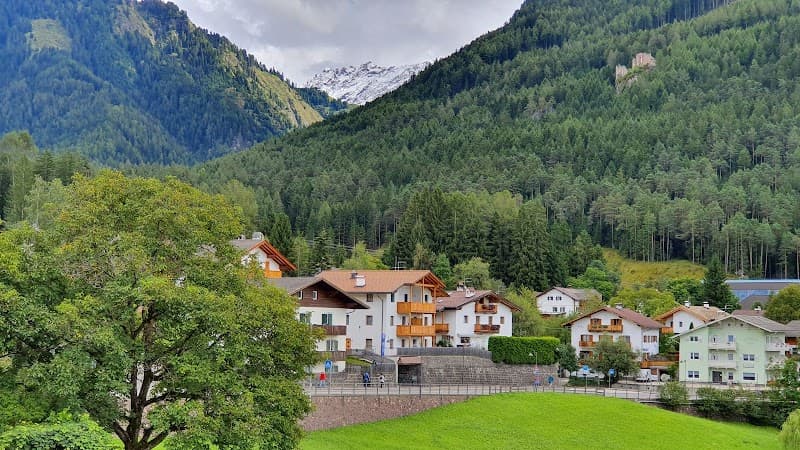
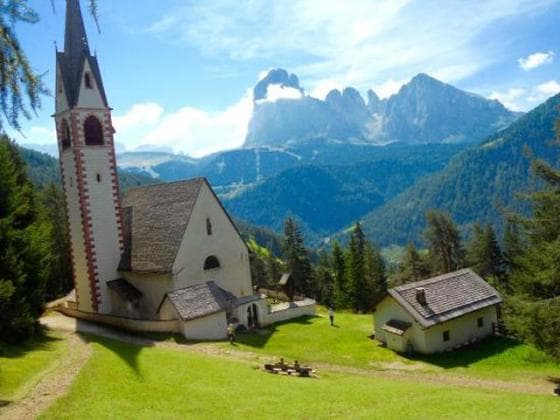
The drive into Alpe di Siusi is the kind that makes you pull over for photos and forget you're supposed to be checking into your hotel. You'll wind through South Tyrol's apple orchards, past church steeples that look like they were placed by a set designer, and then suddenly the Dolomites rear up like a wall of pale stone. Your kids will be pointing out the window instead of at a screen. That's the reward for choosing this corner of Italy over the easier, blander options.
Your closest major airport is Innsbruck Airport (INN), just 90 minutes north across the Brenner Pass. It's compact, efficient, and rarely chaotic, but flight options from the UK and North America are limited. Verona Airport (VRN) sits 2 hours south and has far better connections, especially budget carriers like Ryanair and easyJet. Munich Airport (MUC) is the workhorse option at 3 hours, with the widest route network and the most competitive fares. Bolzano Airport (BZO) technically exists 20 minutes away, but it handles so few commercial flights that it's barely worth mentioning.
A rental car is the move for families headed to Alpe di Siusi. You'll want it for the grocery runs, the day trips to Ortisei or Castelrotto, and the flexibility to stop at every roadside Gasthof (inn) that catches your eye. The A22 motorway from Verona or Innsbruck funnels you to the Bolzano Nord exit, and from there it's 25 minutes of winding valley road through Siusi allo Sciliar up toward the plateau. Winter tires or snow chains are mandatory in South Tyrol from November through April, and rental agencies at Italian airports will fit winter tires if you request them at booking. Don't wait until the counter.
One critical detail that catches families off guard: private cars are banned on the road up to Alpe di Siusi (Seiser Alm) between 9am and 5pm during ski season. You'll need to park in Siusi allo Sciliar and take the Seiser Alm Bahn cable car up to the plateau at Compatsch, which costs β¬26.50 return per adult. The gondola ride itself is gorgeous, and your kids will love it, but it means you should plan to arrive either before 9am or accept the cable car as part of your daily routine. Most families based in Castelrotto or Siusi allo Sciliar treat the gondola as a non-negotiable part of the day. It runs every few minutes and takes 15 minutes to the top.
If you'd rather skip the car entirely, Alpe di Siusi is surprisingly reachable by train. Take the Trenitalia service to Bolzano station, then hop on SAD bus line 170 to Siusi allo Sciliar (35 minutes). From there, Bus 10 or the cable car delivers you to the plateau. It's a workable option if you're staying in the valley towns. Holders of the South Tyrol Guest Card (GΓ€stekarte), which most hotels provide free at check-in, ride all local buses at no extra charge. That alone saves a family of four β¬10 to β¬15 per day in bus fares.

π Where Should Your Family Stay?
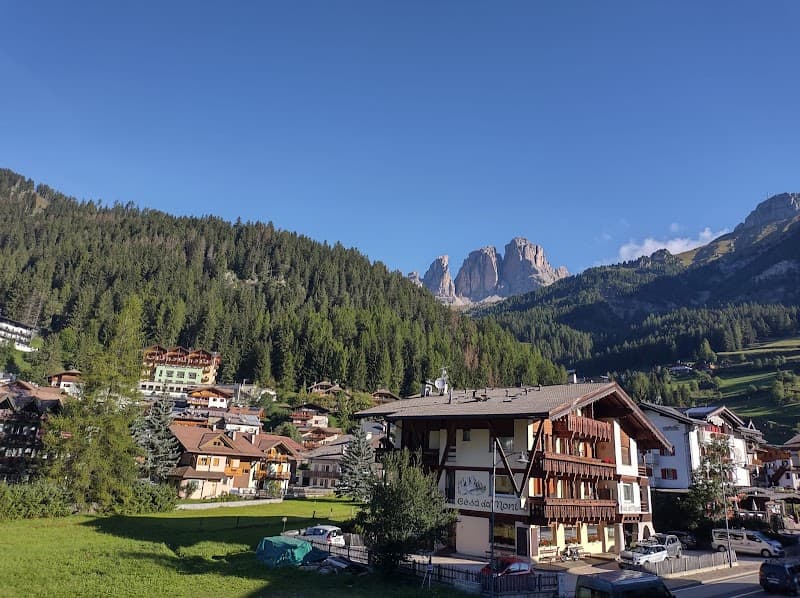
Alpe di Siusi's lodging scene splits into two distinct worlds, and which one you pick changes the entire feel of your trip. You can stay up on the plateau itself, where a handful of hotels sit right on the snow with ski-in/ski-out access and that magical isolation of waking up at 1,800 meters. Or you can stay in the charming South Tyrolean towns below (Castelrotto, Siusi allo Sciliar) and ride the gondola or bus up each morning. I'd choose the towns for a family trip. They're prettier, livelier, significantly cheaper, and the daily gondola ride becomes a highlight your kids will actually look forward to.
Up on the Plateau
Sporthotel Sonne is the property families talk about most on the Alpe di Siusi plateau. It sits directly on the ski slope, genuine ski-in/ski-out in a region where that's rare. You clip into your bindings at the front door and you're gone. The hotel has 40 rooms finished in warm larch wood, a wellness area, and half-board dining that leans into South Tyrolean comfort food. Alpine Suites start at β¬184/night for two, with family suites running β¬233/night for up to four people. That's steep compared to the valley, but you're paying for the privilege of rolling out of bed onto Europe's largest high-alpine meadow with the Dolomite peaks turning pink at sunrise. Worth every cent if your priority is minimizing morning logistics with small kids.
COMO Alpina Dolomites occupies the luxury tier up on the plateau, all striking glass facades and a spa with indoor and outdoor pools framed by those absurd Dolomite views. This is a five-star COMO property, so think polished minimalism meets alpine warmth. Nightly rates climb past β¬400 in peak season. For families, the pool alone justifies a splurge night or two, especially when your four-year-old has had enough skiing by 1pm and needs somewhere gorgeous to decompress. The catch? It's an adults-oriented atmosphere. Not unwelcoming to kids, but you won't find a dedicated playroom or the bustling family energy of the mid-range options below.
In the Valley Towns
Parc Hotel Tyrol in Castelrotto is the family pick I keep coming back to. It's a solid three-star-superior with family rooms, a swimming pool, a playground, and both breakfast and dinner included. The location works beautifully: perched just above the village center, close to the bus stop that runs directly to the plateau. Seven-night packages start at β¬649 per person with half board during value weeks, which for the Dolomites is a genuine bargain. Your kids get the pool after skiing, you get a glass of local Lagrein at dinner, and nobody has to cook. That's the play.
For something with more personality and a smaller footprint, BinterHof Bio in Castelrotto charms families with its traditional Tyrolean decor, farm animals on site (goats, chickens, the whole scene your under-eights will lose their minds over), and a lovely buffet breakfast that leans organic. It's a quieter, more intimate stay, perfect if your crew prefers agriturismo vibes over hotel polish. Rates hover in the β¬90 to β¬130/night range for a family room with breakfast, making it one of the best value-to-character ratios in the area.
Apartments and Ferienwohnungen (holiday apartments) round out the budget tier across Castelrotto, Siusi allo Sciliar, and FiΓ¨ allo Sciliar. You'll find well-kept two-bedroom units with kitchens for β¬80 to β¬120/night, which lets you stockpile Speck, bread, and apple strudel from the village bakeries and save significantly on meals. Self-catering families take note: South Tyrolean groceries are excellent and the local produce punches way above its weight class. A kitchen here isn't a compromise, it's a feature.
The Decision That Matters
If your kids are under six, stay in the valley. The daily gondola from Siusi allo Sciliar costs β¬26.50 return per adult (less for children), and the ride itself is a thrill for little ones. Valley towns have playgrounds, bakeries, the local sports center for rainy days, and the kind of walkable village life that makes evenings feel like a holiday instead of a hotel room. If your crew is older and serious about maximizing slope time, spring for Sporthotel Sonne on the plateau and skip the commute entirely. But for most families with young kids? Castelrotto is the sweet spot of charm, convenience, and value. You'll spend your evenings wandering cobblestone lanes with gelato while the mountains glow overhead, and that's a memory no ski-in/ski-out hotel can replicate.
ποΈHow Much Do Lift Tickets Cost at Alpe di Siusi?
Alpe di Siusi is genuinely good value for a Dolomites resort, and the pricing structure rewards families who plan ahead. An adult day pass on the Val Gardena/Alpe di Siusi regional pass runs β¬80 in high season (based on 2025/26 pricing), which covers 79 lifts and 181 km of groomed runs. That's the same sticker price as Kronplatz or Alta Badia, but you're getting Europe's largest high-altitude plateau with 85% beginner and intermediate terrain. For families, that ratio of easy skiing to euros spent is hard to beat anywhere in the Italian Alps.
Children aged 8 to 17 pay β¬56 for a high season day pass, which is 70% of the adult rate. Kids born 2018 to 2022 (roughly ages 3 to 7) get an even deeper cut at β¬50 per day in peak periods. Seniors born 1960 and before pay β¬72. No formal "kids ski free" program exists here, but that sub-β¬50 rate for tiny ones softens the blow, especially since your 4-year-old is going to spend half the day in the Kiddyland practice area anyway.
Multi-day passes at Alpe di Siusi are where the math starts smiling at you. A 6-day adult pass costs β¬404 in high season, dropping the effective daily rate to β¬67. That's a 16% discount over six single-day tickets. The 3-day option lands at β¬230 for adults and β¬161 for juniors. Shoulder season (early December and late March) shaves prices further: a 6-day adult pass drops to β¬364, and kids pay β¬255. If your school calendar allows a late-season trip, those March sunshine weeks on the plateau are the sweet spot of the entire Dolomites calendar.
The Dolomiti Superski Question
The Val Gardena/Alpe di Siusi pass is the local option, and for most families with kids under 12, it's all you need. But if you want access to the full Dolomiti Superski network (1,200 km of pistes across 12 valleys, including the Sella Ronda circuit), that upgrade exists. Expect to pay more, and honestly, unless you've got a confident teenager itching to explore Corvara or Canazei, the local pass delivers more than enough terrain for a week. No Epic or Ikon affiliations here. The Dolomites play by their own rules.
The half-day afternoon ticket (valid from noon) deserves a shout: β¬60 for adults and β¬42 for juniors in high season. If you're planning a morning of sledding or snowshoeing on the plateau, then clipping into skis after lunch, that's a smart way to keep costs down on mixed-activity days. Your kids won't know the difference, and your wallet will.
Season passes for the local Val Gardena/Alpe di Siusi area run β¬820 for adults, β¬590 for teens, and β¬270 for the youngest skiers. If you're making two or more week-long trips in a season, the season pass pays for itself fast. That β¬820 adult price is less than half what a Trois VallΓ©es season pass costs in France, and you're skiing under the Dolomite spires instead of in a lift queue behind 400 Parisians.
The honest tension? Alpe di Siusi's lift ticket pricing is mid-range for the Dolomites and genuinely fair for what you get. You're not getting a bargain-bin deal like some lesser-known Austrian valleys, but you're paying Dolomite prices for Dolomite scenery, and your family will spend every euro on wide, sunny groomers with the Sciliar massif filling the frame behind your kids' helmets. Worth every cent.
β·οΈWhatβs the Skiing Like for Families?
Alpe di Siusi (Seiser Alm in German) is the gentlest ski introduction your kids will ever get. Europe's largest high-alpine plateau sits between 1,227m and 2,220m, and the terrain feels like it was designed by someone who really, genuinely likes small children. Wide, sunny meadows. Mellow gradients. Views of Dolomite spires that look airbrushed. Of the 82 easy runs and 83 intermediate pistes, the vast majority roll across open terrain with the kind of forgiving pitch that lets a 4-year-old snowplough without anyone's heart rate spiking. Skiresort.info gave Alpe di Siusi a perfect 5 out of 5 for families and children, and having seen the place, that score feels earned.
The catch? If anyone in your group skis beyond confident intermediate, they'll run out of mountain in two days. Only 26 runs qualify as advanced, and real steeps are essentially nonexistent. But for the under-10 crowd, or for parents happy to cruise while their kids learn, the plateau is a dream. You can always upgrade to a Dolomiti Superski pass (valid on 460 lifts across the region) if stronger skiers need a day trip to Val Gardena's more serious terrain, which connects directly.
Beginner terrain that actually works
Alpe di Siusi's beginner area at Compatsch (the main arrival point via cable car from Siusi allo Sciliar) is enormous by any standard. Your kids won't be squeezed onto a tiny fenced strip next to a car park. They'll be on a broad, sunlit plateau with gentle magic carpet lifts and practice slopes that feel like a private snow meadow with the Sciliar massif as a backdrop. The gradient is so forgiving that first-timers can focus on balance rather than speed. Compare that to the steep, shadowy nursery slopes crammed between buildings at many French mega-resorts, and you'll understand why families keep coming back.
For progressing beginners, the network of blue runs fanning out across the plateau offers long, confidence-building cruises with minimal traffic. You won't find the terrifying intersections where expert skiers blast through beginner zones that plague larger ski areas. The whole environment feels designed for learning, not surviving.
Ski schools
Skischule Seiser Alm (Ski School Seiser Alm) is the main operation right at Compatsch and the one I'd book first. They run a "Mini Sammy" programme for tiny beginners aged 3 to 5, mixing skiing with play in groups of 5 to 7 kids. Two hours a day, Sunday through Friday. Group lessons in low season start at β¬56 per day, climbing to β¬68 in high season. For a 5-day block, you're looking at β¬183 to β¬222 depending on timing. That's competitive for the Dolomites, and substantially less than what you'd pay in the Trois VallΓ©es.
Older kids (6 to 14) join the "Big Sammy" advanced groups at Skischule Seiser Alm, which run 3 to 5 hours daily depending on the day, with high-season 5-day courses at β¬311. The school also offers full-day care with ski lessons and lunch included, starting at β¬114 per day in low season and β¬135 in peak weeks. That's the play if you want guilt-free adult ski time. Drop off at 9am, pick up at 4pm, and your child has been fed, taught, and entertained.
Ski School Schlern 3000 operates at both Compatsch and the quieter Saltria area on the western end of the plateau. They run a "Yeti Club" for first-timers aged 3 to 5, and group lessons for ages 5 to 12. Reviews on CheckYeti are consistently strong ("absolutely fantastic teachers, superb organization"). Private kids' lessons from β¬35 per session make them a solid alternative, especially at Saltria where the crowds thin out. If your family is based in Val Gardena, Skischool S. Cristina offers baby courses for 3 to 4 year-olds at their Monte Pana Kids Park, with weekly courses from β¬222 in shoulder season to β¬250 in peak.
Rental gear
The ski schools at Alpe di Siusi bundle rental discounts with lesson bookings (15% to 20% off depending on the school), which is the smartest way to handle equipment. Several rental shops operate at the Compatsch cable car station, so you can gear up immediately upon arrival without schlepping boots and skis on the gondola. South Tyrolean rental operations tend to be meticulously maintained. Expect recent-model kids' equipment, properly fitted, without the "this'll do" attitude you sometimes encounter at budget shops.
On-mountain eating
Alpe di Siusi's mountain huts, called AlmhΓΌtten (alpine huts), are honestly one of the best reasons to ski here. This is South Tyrol, where Austrian and Italian food cultures collide in the most delicious way possible. You'll sit on a sun-drenched terrace at 1,800m with your boots unbuckled, watching your kids play in the snow, eating food that has no business being this good at altitude. Think Kaiserschmarrn (shredded pancake with plum compote), Schlutzkrapfen (South Tyrolean spinach ravioli), and KnΓΆdel (bread dumplings) in rich broth. Your kids will demolish plates of SpΓ€tzle with melted cheese faster than you can order a second glass of Lagrein.
The huts scattered across the plateau are numerous and uniformly solid. Most are family-run, with wooden interiors that smell like pine and centuries of hospit

Trail Map
Full CoverageTerrain by Difficulty
Β© OpenStreetMap contributors, ODbL
βWhat Can You Do Off the Slopes?
Alpe di Siusi after dark is less "party" and more "South Tyrolean hygge." The lifts stop, the plateau empties, and the villages below (Castelrotto, Siusi allo Sciliar, Fiè allo Sciliar) settle into the kind of gentle, wood-panelled evening that makes you wonder why you ever eat dinner past 8pm at home. If you need cocktail bars and thumping bass, you're in the wrong postal code. If you want your kid zonked out by 8:30 after a day of fresh air and a plate of Knâdel (bread dumplings) the size of their fist, this is your paradise.
Where to Eat
The mountain huts, or AlmhΓΌtten, are honestly the main event. You'll eat better at 1,800 metres on the plateau than in most valley restaurants, and at friendlier prices. Baita Sanon on the Alpe serves hearty Kaiserschmarrn (shredded pancake with stewed plums) that your kids will inhale before you've taken a photo. Tirler Alm does the full South Tyrolean spread, think Schlutzkrapfen (spinach and ricotta ravioli), Speck platters, and barley soup that warms you from the inside out. A full lunch for a family of four at one of the AlmhΓΌtten runs β¬50 to β¬70, which in the Dolomites is genuinely reasonable. That same meal at a Cortina hut would cost half again as much and come with half the charm.
Down in the valley, Castelrotto's Gasthof zum Wolf is the kind of wood-beamed inn where the menu hasn't changed much in decades because it doesn't need to. Think Wiener schnitzel, venison goulash, and house-made strudel. Budget β¬15 to β¬20 per main. Restaurant Cavaliere in Siusi allo Sciliar delivers proper pizza alongside Tyrolean staples, and it's one of the few spots where nobody blinks if your toddler throws a breadstick across the room. For something more polished, the Trattoria Dell'Alpe at COMO Alpina Dolomites does fine dining with Dolomite views that justify the splurge. Mains start at β¬25, but you're paying for the kind of sunset that makes you forget about the lift pass you just bought.
After Skiing, Before Bed
Alpe di Siusi's non-ski activities are where this place quietly overdelivers. The Rodelbahn (toboggan run) from Marinzen above Castelrotto is the moment your kid will be talking about at school on Monday: a 4.5 km sled run down through snow-dusted pines, the cold air biting their cheeks, screaming with a joy that no iPad has ever produced. The Marinzen chairlift costs β¬13 per adult and β¬8 per child for the round trip, sled rental included. Done.
Alpe di Siusi maintains over 80 km of Loipen (cross-country trails) on the plateau, making it one of the best Nordic skiing spots in the entire Dolomites. Even if nobody in your crew has tried cross-country before, the flat, wide meadows above 1,800 metres are impossibly forgiving. Group lessons at Skischule Seiser Alm start at β¬56 per day. Winterwandern (winter hiking) is the other big draw. The maintained paths across the plateau are wide, stroller-accessible, and framed by the Sassolungo and Sciliar massifs in a way that genuinely stops you mid-sentence. Free. Zero euros. Just you and the crunch of packed snow.
Several hotels in the area have pools and wellness areas open to guests, so your après-ski plan can simply be: let the kids cannonball into warm water while you sit in a sauna. Sporthotel Sonne on the Alpe and Parc Hotel Tyrol in Castelrotto both have family-friendly pools and spa facilities. Ice skating is available at the sports centre in Siusi allo Sciliar during the winter season for a few euros per person.
Self-Catering and Village Life
Castelrotto is the most "town-like" of the surrounding villages and the best bet for stocking a kitchen. You'll find a SPAR in the centre with good regional products, local Speck, mountain cheeses, fresh bread, decent wine for under β¬10. The bakeries in Castelrotto deserve their own mention: the pastry shops sell Apfelstrudel and Buchteln (sweet filled buns) that taste like someone's grandmother made them, because someone's grandmother probably did. A morning pastry and cappuccino runs β¬4 to β¬5.
Walkability with kids is excellent in the valley villages. Castelrotto's car-free centre is compact, flat, and photogenic in that South Tyrolean way where every building looks like it belongs on a chocolate box. Getting from the villages up to the plateau requires either the Seiser Alm Kabinenbahn (cable car) from Siusi allo Sciliar or Bus 10 from Castelrotto. The round trip is β¬26.50 per adult, less for children and seniors, and it's the same price whether you take the cable car or the bus. The plateau itself is car-free, which means your kids can wander without you tracking every moving vehicle. That peace of mind is worth more than any amenity list.
Evenings in Castelrotto have a rhythm: a stroll through the village, gelato or hot chocolate from one of the cafΓ©s near the main square, maybe a peek into the Museeum (local costume museum) if the kids are still upright. There are no nightclubs. There's no bowling alley. There's a quiet that settles over the Dolomites at dusk,

When to Go
Snow conditions, crowd levels, and family scores by month
| Month | Snow | Crowds | Family Score | Notes |
|---|---|---|---|---|
Dec | Good | Busy | 6 | Holiday crowds peak; early season snow thin, rely on snowmaking support. |
JanBest | Great | Moderate | 8 | Post-holiday crowds drop, snowfall increases, solid base develops for reliable skiing. |
Feb | Great | Busy | 6 | European school holidays bring crowds; excellent snow but expect busy slopes weekdays. |
Mar | Good | Quiet | 7 | Quieter crowds return, snow begins softening; spring conditions ideal for families afternoon skiing. |
Apr | Okay | Quiet | 4 | Season winds down with thin coverage; plan early-April trips before deterioration accelerates. |
Family score considers snow quality, crowd levels, pricing, and school holidays.
π¬What Do Other Parents Think?
Alpe di Siusi earns something close to universal adoration from parents of young children, and honestly, the consistency is striking. Across family travel blogs, booking platforms, and review sites, the same words keep surfacing: "safe," "easy," "stunning," and "we keep coming back." Skiresort.info gave the resort a perfect 5 out of 5 for families and children. That's not a score we see often, and in this case, we think it's earned.
The praise that comes up most often is how genuinely child-friendly the infrastructure feels, not as a marketing afterthought, but as the whole point. One parent who's been visiting Alpe di Siusi since 2004 put it simply: the plateau has "stroller-accessible hikes, an abundance of public toilets (clean, with changing tables), long and fun gondola rides, and playgrounds at some of the mountain huts." That changing-table detail gets mentioned repeatedly, which tells you everything about the altitude of expectations most Italian ski resorts set. At Alpe di Siusi, someone actually thought about the parent crouching in a bathroom with a squirming toddler.
Parents consistently describe the car-free plateau as a revelation. You'll hear phrases like "safe environment" and "you don't have to worry" from families who've spent other holidays yanking kids away from resort traffic. The flat, open terrain of Europe's largest high alpine meadow means toddlers can waddle around without anyone's heart rate spiking. As one longtime visitor wrote, "you don't have to compromise between mountain scenery and child-friendliness as you have both, in spades." That's the kind of sentence that sounds like marketing copy until you stand on the Alpe yourself, Dolomite peaks framing an impossibly green plateau, and realize it's just accurate.
The ski school reviews at Alpe di Siusi are overwhelmingly positive. Parents on CheckYeti describe "absolutely fantastic teachers, superb organization, and tons of fun and progress" from Ski School Schlern 3000. Multiple reviewers note that instructors track each child's progress and move them up levels accordingly, which sounds basic but isn't always the reality at larger resorts where your kid can spend three days snowploughing in the same circle. Group lessons at Skischule Seiser Alm start at β¬56 per day in low season for the little ones (ages 3 to 5), and the Sammy Kiddyland practice area gets consistent mentions as a highlight, not a holding pen.
Where parent opinion diverges from the official line? The resort positions itself as a full ski destination, but experienced families are refreshingly honest: this is a place for beginners and early intermediates, full stop. Parents with older kids or confident skiers routinely note that the Alpe di Siusi terrain gets repetitive after a couple of days. The fix, according to multiple reviewers, is upgrading to the Val Gardena/Alpe di Siusi pass or the full Dolomiti Superski card, which opens 1,200 km of slopes. But that's an extra cost and a logistical layer that parents of small children may not want to deal with.
The consistent complaints center on two things: access logistics and pricing. Families staying in the valley towns of Castelrotto or Siusi allo Sciliar need to take the gondola or bus up to the plateau each morning. The gondola ride costs β¬26.50 return per adult (less for kids), and that daily ritual, boots and gear in hand, two kids asking when the gondola arrives, adds friction that slopeside resorts don't have. Parents who've stayed on the plateau itself describe a completely different (and more relaxed) experience, but those hotels run significantly pricier. Weekly packages on the Alpe start around β¬1,000 per person, while valley lodging begins closer to β¬510 per person for seven nights.
Families who've visited repeatedly share one tip more than any other: stay in Castelrotto rather than Siusi allo Sciliar. It's prettier, livelier, has better bakeries and shops, and the bus connections to the plateau are just as convenient. Several parents specifically recommend Parc Hotel Tyrol and BinterHof Bio in Castelrotto, the latter for its farm animals on site, which is apparently the thing your four-year-old will talk about for six months after the trip, not the skiing.
My honest reaction to what parents say about Alpe di Siusi? They're right that it's one of the best places in the Alps for children under 10, and they're right that it's not really a ski holiday in the traditional sense. It's a mountain holiday that happens to include skiing. If you accept that framing, everything clicks: the gentle terrain, the hearty South Tyrolean food, the afternoon hot chocolate at a HΓΌtte with a view that makes you forget you only skied 15 km of pistes. If you're expecting a ski trip that also works for kids, you might feel a quiet restlessness by day three. That tension is real, and most parent reviews dance around it without quite saying it out loud.
Common Questions
Everything families ask about this resort
Have a question we didn't cover? We'd love to add it to our guide.
Similar Resorts
Families who loved Alpe di Siusi also enjoyed these