Val Thorens, France: Family Ski Guide
2,300m altitude, 600km terrain, too windy for toddlers.
Last updated: June 2026
France
Val Thorens
Book Val Thorens if snow reliability is what keeps you up at night. At 2,300m, it gets snow first, loses it last, and accesses 600km of Three Valleys from the top of the system. The compact, largely car-free village centre makes the morning routine simple, and the family infrastructure has improved markedly in recent years.Fly into Chambery (2h), Lyon (2.5h), or Geneva (2.5h). If you want the Three Valleys with better village character, Meribel or Saint-Martin-de-Belleville are lower but prettier. Les Menuires 10 minutes below, offers cheaper Three Valleys slopeside skiing. If you want high altitude and snow reliability outside the Three Valleys, Tignes (2,100m with glacier) is the alternative. Val Thorens is for families who want the snow equation solved.
Is Val Thorens Good for Families?
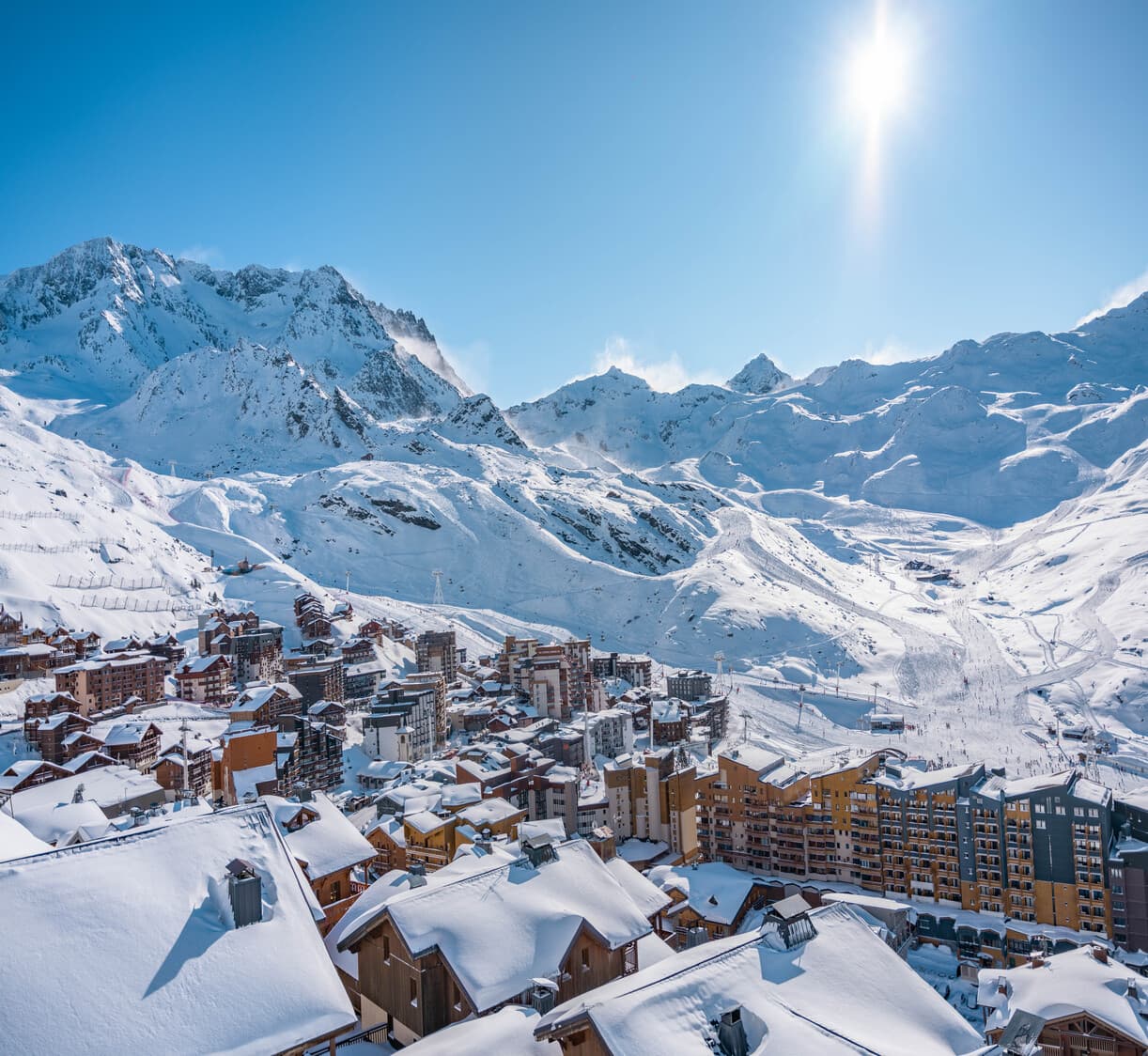
Val Thorens is the highest resort in Europe (2,300m) and the snowiest entry into the Three Valleys' 600km. Compact car-free centre, good family facilities, and guaranteed snow November to May. Best for kids 3 to 14 who want Three Valleys with the best snow. One thing to know: purpose-built, altitude affects some children, and exposed to wind.
For Three Valleys with more charm, try Saint-Martin-de-Belleville. For high altitude outside Three Valleys, try Tignes.
$3,120–$4,160
/week for family of 4
You have children under 5 (altitude sickness is real at 2,300m)
Biggest tradeoff
What's the Skiing Like for Families?
Your kid will ski the highest resort in Europe and come home telling everyone they skied at 3,230 meters. Val Thorens sits at 2,300m with skiing up to 3,230m, and the altitude guarantees snow from November through May. That reliability is worth more than any other amenity for families who have had a ski trip ruined by warm weather.
The resort is part of the Trois Vallees (600 km of pistes), the largest linked ski area in the world. But you do not need to leave Val Thorens. The local 150 km of terrain includes wide, well-groomed runs above the treeline that give beginners excellent visibility and consistent snow quality.
Beginner Zones
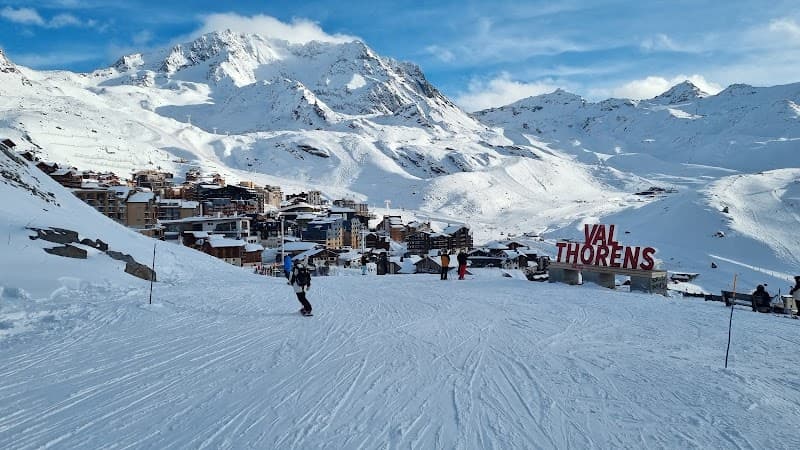
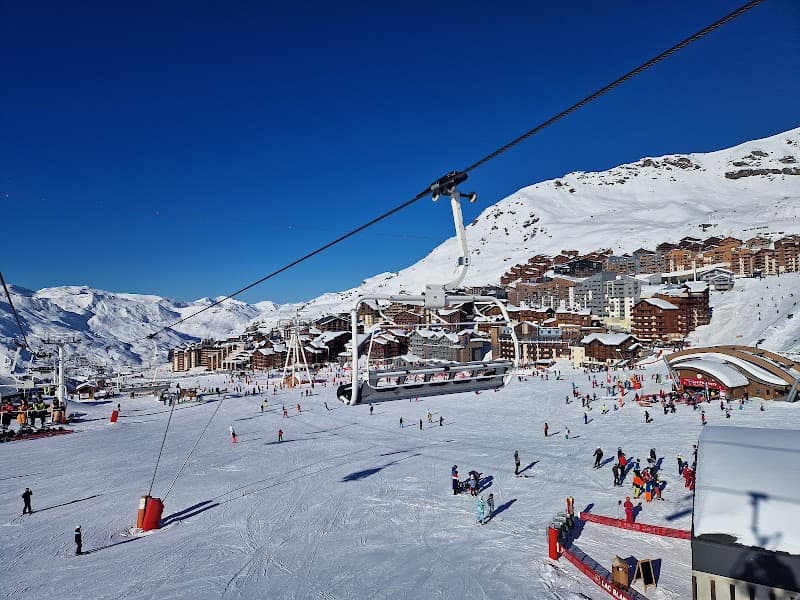
The Roc beginner area sits right at the resort center with free magic carpets and gentle slopes. The Plein Sud sector has wide blue runs on south-facing slopes where your child skis in sunshine. The above-treeline terrain means open, wide runs with clear sightlines. Beginners can see exactly where they are going.
Ski School
Multiple schools operate in Val Thorens. The ESF is the largest. Prosneige and other international schools offer smaller groups and English instruction as standard.
- Group lessons (3+): EUR 35-55 per half day depending on school and season
- Private lessons: EUR 55-75 per hour
- Children's village: The ESF runs a dedicated children's zone with combined indoor/outdoor activities
On-Mountain Dining
Mountain restaurants range from self-service cafeterias to proper sit-down dining. La Maison at the top of the Plein Sud sector has a sun terrace with views across the Trois Vallees. Expect EUR 12-20 for adult mains, EUR 8-12 for kids' menus. The on-mountain dining in Val Thorens is a step above cafeteria standard.
Trail Map
Full Coverage© OpenStreetMap contributors, ODbL
📊The Numbers
| Metric | Value |
|---|---|
Family Score | 7.6Very Good |
Best Age Range | 3–16 |
Kid-Friendly Terrain | 65%Very beginner-friendly |
Childcare Available | Yes † |
Ski School Min Age | 2 years † |
Kids Ski Free | Under 5 † |
Magic Carpet | Yes |
Score Breakdown
Value for Money
Convenience
Things to Do
Parent Experience
Childcare & Learning
How Much Are Lift Tickets?
You are paying Trois Vallees prices, which are the highest in France. But you are also getting access to 600 km of pistes, and the snow reliability at altitude means you will actually ski every day you paid for.
- Val Thorens/Orelle day pass: EUR 55-65 for the local 150 km
- Trois Vallees day pass: EUR 65-78 for the full 600 km
- Children (5-12): Roughly 30% off adult rates
- Under 5: Free
- 6-day Trois Vallees: EUR 330-400 for adults
The Val Thorens local pass is the smart buy for families with beginners. Your kids do not need 600 km. They need the gentle runs at Roc and Plein Sud. Upgrade to the Trois Vallees pass only when someone is ready to explore Meribel or Courchevel.
Beginner magic carpets at Roc are free. True first-timers can try skiing without a pass.
No Ikon or Epic affiliation. Trois Vallees is the benchmark for large-area skiing in Europe. The prices reflect it.
Available Passes
Planning Your Trip
🏠Where Should Your Family Stay?
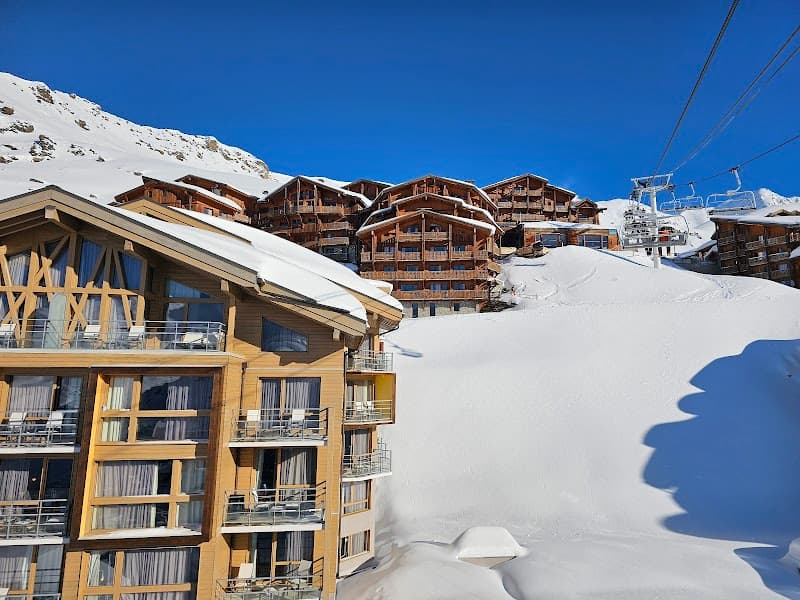
Book an apartment in the Roc de Peclet or Place Caron area, close to the Roc beginner zone and the main lifts. Val Thorens is a purpose-built station, not a village, and location within the resort matters more than it does in a traditional Alpine town.
- Apartments (ski-in/ski-out): EUR 800-2,000/week for a 2-bedroom depending on season and location. Properties near Place Caron offer the best lift access.
- Residence hotels: Pierre & Vacances and similar operators have pool access and reception services. EUR 1,000-2,500/week.
- Hotels: A handful of 3-4 star hotels with restaurants. EUR 150-300/night with breakfast.
Val Thorens is compact and car-free in the center. Everything is walkable, though "walkable" at 2,300m means more puffing than at sea level. An elevator and covered walkway system connects different levels of the resort.
Self-catering is the standard. A Sherpa supermarket and several smaller shops stock basics at mountain prices. For a full shop, drive to Moûtiers in the valley (40 minutes) or order a grocery delivery service (several operate during ski season).
Underground parking is available beneath most residence buildings for approximately EUR 80-120 per week.
✈️How Do You Get to Val Thorens?
Plan for a longer transfer than most French resorts. Val Thorens sits at the top of the Belleville valley, and the road up adds time regardless of which airport you fly into. The reward is guaranteed snow and a purpose-built resort where everything is at your feet once you arrive.
- Geneva Airport (GVA): 3-3.5 hours via the Tarentaise valley
- Lyon Airport (LYS): 3 hours via the A43 motorway
- Chambery Airport (CMF): 2 hours. Seasonal UK budget airline flights.
- Moûtiers station: TGV from Paris (4.5 hours), then bus to Val Thorens (1 hour).
The drive from the valley floor (Moûtiers) to Val Thorens takes 45-60 minutes on a mountain road that climbs steadily through the Belleville valley. The road is well-maintained but can be slow behind a snowplow. Snow tires are required.
You do not need a car once you arrive. Val Thorens is designed to be car-free. Park in the underground garage (EUR 80-120/week) and do not touch the car again until departure.
☕What's There to Do Off the Slopes?
By 5pm your kids will be racing down the toboggan run in the resort center, lit up against the darkening sky, and they will beg to do it again. Val Thorens has invested heavily in off-slope family activities, and for a purpose-built resort, the variety is impressive.
- Toboggan run: A 6km toboggan run from the summit, one of the longest in France. Open evenings with floodlights on certain days.
- Ice driving: A frozen track where adults can drive (kids ride along). Bookable through the tourist office.
- Zipline: The Tyrolienne zipline across the resort, 1,300m long. Age and height minimums apply.
- Sports center: Indoor pool, fitness, climbing wall, squash courts.
Dining
Val Thorens has more restaurants than most purpose-built stations:
- Le Chalet de la Marine: Fine dining with Savoyard influences
- Creperies and pizzerias: Multiple options, EUR 8-12 for kids
- Fast-food options: Burger joints and kebab shops for budget-conscious families
- Sherpa supermarket: For self-catering supplies at mountain prices
The resort has a lively apres-ski scene, more lively than most family resorts. The Folie Douce (a famous outdoor party venue) runs daytime DJ sets on the mountain that are fun to watch from a distance but can be loud if your toddler is napping in a nearby lodge.
When to Go
Season at a glance — color-coded by family score
💬What Do Other Parents Think?
What Parents Love
The Honest Gaps
- Families who want Tyrolean charm will be disappointed.
- Hydrate aggressively and plan a gentle first day.
- Bad visibility days are worse here than at lower, forested resorts.
Val Thorens is the rational choice for families who prioritize snow certainty over village character. You trade charm for reliability, trees for altitude, and a pretty setting for guaranteed conditions. For families who have limited vacation time and cannot afford a wash-out week, that trade-off is worth every concrete building in the station.
Families on the Slopes
(7 photos)Photos from Google Places. Posted by visitors.
Common Questions
Everything families ask about this resort
Have a question we didn't cover? We'd love to add it to our guide.
The Bottom Line
Would we recommend Val Thorens?
What It Actually Costs
Val Thorens is priced between Les Menuires (below) and Meribel (above). Six-day Three Valleys passes cost EUR 409/adult and EUR 335/child, same everywhere in the system.
The budget family in a self-catering apartment, packing lunches: a week for four runs EUR 3,200-3,800. Accommodation is cheaper than Meribel but more than Les Menuires, reflecting the altitude premium.
The comfortable family with a mid-range hotel, mountain lunches, daily ski school: EUR 4,500-5,500.
Weekly breakdown for a family of four (budget tier): Accommodation EUR 1,200-1,600, lift passes EUR 1,488 (2 adults + 2 children), ski school EUR 300-400, food EUR 350-500, transfers EUR 200-300. Total: EUR 3,500-4,300 for the full week.
For context: Les Menuires is 15-20% cheaper on accommodation for the same Three Valleys pass with slightly less altitude. Meribel costs 20-30% more for a proper village. Courchevel costs 40-60% more for the prestige. Brides-les-Bains saves 40%+ but adds a gondola commute and a lower starting point.Val Thorens is where families who prioritize snow and convenience over charm end up, and they rarely regret it.
Your smartest money move: Book a self-catering apartment and buy the Family Flex pass. Your Three Valleys access costs the same as everywhere in the system, but Val Thorens' altitude means you will never lose a day to poor snow conditions.
The Honest Tradeoffs
At 2,300m, altitude affects some children. Headaches, disturbed sleep, and fatigue on the first day are common. Push fluids, arrive early in the day, and plan a gentle first afternoon. Most kids adapt within 24 hours, but it is worth knowing.
The village is purpose-built and looks it. Functional, compact, and lacking the charm of a Savoyard village. Saint-Martin-de-Belleville 15 minutes down the valley, is the Three Valleys antidote to Val Thorens' architecture.
Wind is the other variable. Val Thorens sits above the treeline entirely, so when storms roll in, visibility drops to near-zero and upper lifts close. On those days you are limited to the lower runs or the indoor Aquaclub. Families should budget at least one weather day per week during January and February.
Would we recommend Val Thorens?
Book Val Thorens if snow reliability is what keeps you up at night. At 2,300m, it gets snow first, loses it last, and accesses 600km of Three Valleys from the top of the system. The compact, largely car-free village centre makes the morning routine simple, and the family infrastructure has improved markedly in recent years.
Fly into Chambery (2h), Lyon (2.5h), or Geneva (2.5h). If you want the Three Valleys with better village character, Meribel or Saint-Martin-de-Belleville are lower but prettier. Les Menuires 10 minutes below, offers cheaper Three Valleys slopeside skiing. If you want high altitude and snow reliability outside the Three Valleys, Tignes (2,100m with glacier) is the alternative.
Val Thorens is for families who want the snow equation solved.
Similar Resorts
Families who loved Val Thorens also enjoyed these
Alta Badia
Obergurgl-Hochgurgl
Serre Chevalier
La Plagne
Méribel
Brides-les-Bains
Transparency note: This content was created with AI assistance and reviewed by Tom Meredith, our editor. Prices, dates, and availability may change. We recommend confirming details directly with the resort before booking.