Zermatt, Switzerland: Family Ski Guide
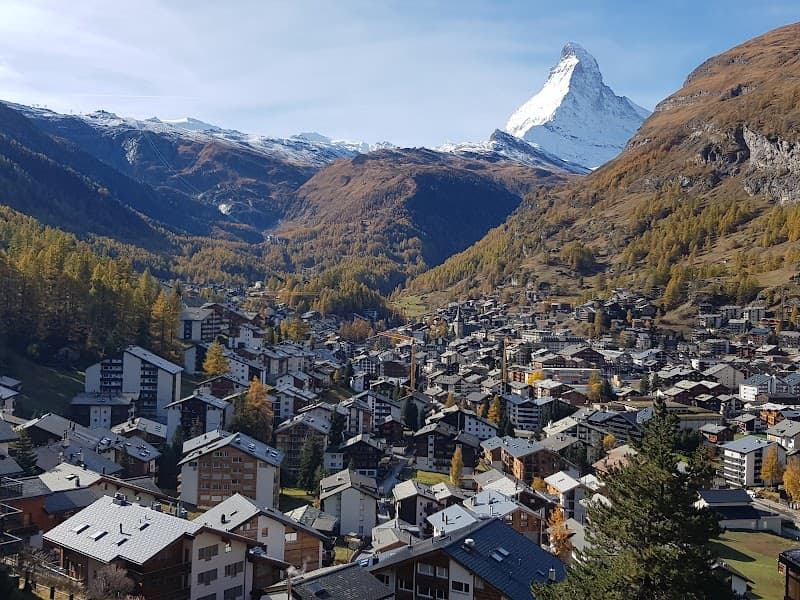
Cogwheel train in, no cars, the Matterhorn fills your window.
Last updated: July 2026
Switzerland
Zermatt
Book a village hotel and buy a multi-day pass (include the Italian connection for maximum terrain). If Zermatt's prices are too much, Cervinia is the same mountain at half the cost. Saas-Fee is a cheaper car-free Swiss alternative nearby. For the best kids' programs, Laax has Ami Sabi. Wengen is the other iconic car-free Swiss village. Nendaz gives you Verbier terrain at Zermatt-alternative pricing. Book a family apartment through Zermatt Tourism and buy the multi-day Zermatt lift pass (or the international Zermatt-Cervinia pass for Italy access). The Matterhorn Glacier Paradise at 3,883m is a must-do excursion. Book the Glacier Express for the return journey to Geneva or Zurich, the 8-hour scenic ride is a family highlight. Walk-on luggage via BVZ train from Visp is the only arrival option (no cars in Zermatt).
Is Zermatt Good for Families?
Zermatt is the Matterhorn, and the Matterhorn is Zermatt. Car-free village, 360km of terrain connecting to Cervinia in Italy, glacier skiing year-round, and outstanding restaurants. The most expensive ski destination in Switzerland. If your family wants the ultimate Alpine experience, this is it. If budget matters, Cervinia gives you the same mountain from the Italian side at half the price.
Switzerland's highest ski-resort pricing means a family week costs roughly twice what a comparable week in France or Austria would, with no structural budget escape route available.
Biggest tradeoff
What's the Skiing Like for Families?
Your 4-year-old starts at the Snowli Kids Village, and by the end of the week you will watch them ride a lift on their own. The village, run by Zermatters at Riffelberg on the Gornergrat side, packs 3,500 square metres of magic carpets, a carousel, and dedicated children's lifts into a fenced area built for exactly this. Beginners start at age 4, and complete first-timers learn here before they ever touch the main mountain.
Zermatt splits into three zones, which is a gift for mixed-ability families. Sunnegga-Rothorn is the sunny, gentler side, reached by an underground funicular from the village centre in about four minutes, ideal for a parent shadowing a nervous learner. Gornergrat, served by the rack railway that has climbed to 3,089m since 1898, opens wide intermediate reds with the Matterhorn turning in the window the whole way up. The third zone is the high one.
Matterhorn Glacier Paradise tops out at Klein Matterhorn, 3,883m, the highest cable-car station in the Alps and the snow-sure insurance policy that keeps Zermatt skiing when lower resorts run thin. You will see it marketed as skiing 365 days a year, treat that as a marketing line rather than a promise: the glacier has scheduled maintenance closures, so check the lift status before you build a day around it. The altitude is real too. Your village base sits near 1,620m and the glacier is more than twice that, so young kids can feel day-one headaches and fatigue up high, ease into the altitude and keep the first day low.
From Klein Matterhorn you can ski across the border to Breuil-Cervinia in Italy, and the International pass adds roughly 160km of Italian terrain. One practical warning from families who have done it, not an official rule: passes may need activating in the country you bought them in each day, so sort your ticket at the Swiss office before you set off. Only cross on a clear-weather day, because the high crossing shuts in poor visibility.
On ski school and childcare: Zermatters takes beginners from age 4, and FEA Zermatt nurseries accept infants from 3 months, open roughly 07:00 to 19:00 with some Saturday cover. We do not have verified current prices for either, so book direct and get the rate confirmed before you travel.
Trail Map
Full CoverageTerrain by Difficulty
© OpenStreetMap contributors, ODbL
📊The Numbers
| Metric | Value |
|---|---|
Family Score | 6Average |
Best Age Range | 6–14 |
Kid-Friendly Terrain | 25%Average |
Childcare Available | Yes †From 3 months |
Ski School Min Age | 4 years † |
Kids Ski Free | Under 9 † |
Magic Carpet | Yes |
Kids Terrain Park | No |
Local Terrain | 130 |
Score Breakdown
Value for Money
Convenience
Things to Do
Parent Experience
Childcare & Learning
Planning Your Trip
✈️How Do You Get to Zermatt?
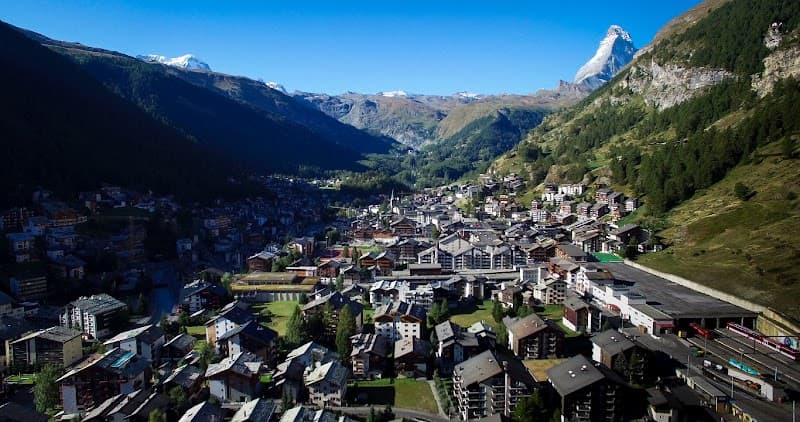
Book the train, not a rental car. Zermatt has been car-free for decades, and no combustion vehicle reaches the village. It is the single best thing about arriving here with kids, and the one piece of logistics you have to plan around.
If you drive, you stop 5km short in Täsch and park at the Matterhorn Terminal, which holds more than 2,100 covered spaces plus over 1,000 private ones, so you will find room even in February. We do not have a current verified daily parking rate to quote, so check the posted tariff at the terminal. From Täsch, the shuttle train covers the last stretch to Zermatt in about 12 minutes and runs frequently from early morning, around 05:00, until late. Your ski bags travel in the luggage area, and the whole thing is stroller-friendly.
Skip the car entirely if you can. Trains run to Visp and Brig, where you change onto the Matterhorn Gotthard Bahn straight into Zermatt. Swiss connections are timed to the minute, so even with tired children the changeover stays calm.
No airport sits close. From Zurich plan roughly 3.5 to 4 hours by train via Visp. Geneva is about 4 hours by train via Visp, with the fastest rail segment near 3h37m. Milan Malpensa runs about 4 hours by train via Domodossola, which suits families routing through Italy for the Cervinia side. Once you arrive, silent electro-taxis meet the station and run luggage to accommodation off the main street, so book one ahead if you are not staying on Bahnhofstrasse.
🏠Where Should Your Family Stay?
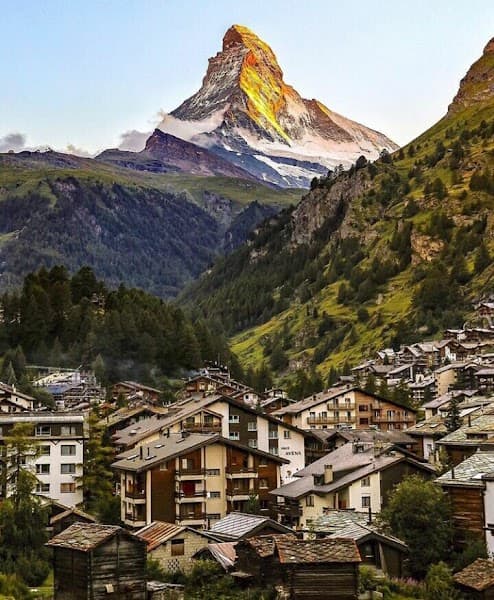
In a car-free village, book by location first and star rating second. Where you sleep decides how far you drag skis and children each morning, and Zermatt is walkable but long, roughly two kilometres end to end.
Base near the family zones. Staying close to the Sunnegga funicular or the Gornergrat railway station cuts the morning walk to the lifts that matter for young kids. Hotel Zermama near the centre is the family-focused name parents raise most often, built around connecting rooms and a play space, though you should confirm current rates and exact room configurations directly. The quieter Winkelmatten neighbourhood, just uphill from the centre, trades Bahnhofstrasse buzz for calm and suits families who want more room.
Choose your trip philosophy: hotel or self-catering apartment. A hotel buys you breakfast, a pool, and no dishes. A rented apartment buys you a kitchen, and in Zermatt a kitchen is the biggest single lever on your food bill, more on that in Cost Reality. For stays over four nights, apartments usually win on both space and cost.
We do not have verified current nightly rates for Zermatt to publish, and prices here swing hard between January quiet weeks and February peak, so we will not print a number we cannot stand behind. Check live rates for your exact dates and confirm the family details, connecting rooms, cots, a play area, directly with the property before you book.
💬What Do Other Parents Think?
What Parents Love
- The car-free village is a revelation with small kids. Your six-year-old can walk to ski school alone.
- The Matterhorn changes how kids see mountains. It sounds like marketing, but parents consistently report that their children become obsessed with the peak.
- Three ski zones mean genuine variety across a week. Sunnegga for sunny mornings with beginners, Gornergrat for intermediate exploration, Glacier Paradise for the family who wants to say they skied at 3,883 metres.
- The Wolli kids' programme keeps youngest ones engaged. Themed trails, a mascot they recognise from the village, and a progression system that gives children tangible goals each day.
What Parents Flag
- The cost is brutal and there is no workaround. CHF 88 adult day passes, CHF 395 to 650 per week for ski school, and accommodation with no budget floor.
- Restaurants assume adult budgets. Kids' menus are rare in the village's 100-plus restaurants.
- The transfer from Visp adds complexity. You cannot drive to Zermatt.
- Beginners feel the altitude. Sunnegga sits at 2,288 metres.
Families on the Slopes
(100 photos)Photos from Google Places. Posted by visitors.
How Much Are Lift Tickets?
Here is the honest version most sites bury: Zermatt runs dynamic pricing on winter lift passes, so there is no single fixed number, and we will not pretend otherwise. Book online, book early, and the rate drops.
The verified lever that matters most for families: children ski free until their 9th birthday on the Wolli Card. Two official sources confirm it, with no voucher or early-bird hoop, so kids under 9 simply get a free pass. From age 9 up to the 16th birthday, kids pay 50% of the adult price. Teens from 16 to under 20 pay 15% less than adults.
Winter adult day passes start from around CHF 88 for the Zermatt-only zone and from around CHF 103 for the International zone that adds Cervinia in Italy. Treat those as opening anchors, not fixed prices, because they came from a single secondary source and Zermatt's own site flexes the rate by demand and by how far ahead you buy. A full-mountain six-day adult price is the one number we could not verify to a standard we would publish, so do not carry an old figure forward, price your exact dates on the official checkout instead. There is a cheaper six-day pass around CHF 288 that covers only the Sunnegga beginner zone, useful if your week never leaves the nursery slopes, but it is not full-mountain access, so read the zone before you buy.
Ski school and childcare prices are not published in a way we can verify, so we will not invent them. Zermatters, the Swiss Ski and Snowboard School, takes beginners from age 4 at the Snowli Kids Village. FEA Zermatt runs nurseries that accept infants from 3 months. For both, book direct and get the current rate in writing.
Buy passes online, collect them from the machines around the resort, and you skip the ticket-window queue. Route to the official Matterhorn Paradise lift pass page for live winter pricing.
Available Passes
Planning Your Trip
☕What's There to Do Off the Slopes?
We don't have verified restaurant names and pricing from our research to recommend specific venues, check recent parent reviews on TripAdvisor before you book. The Matterhorn Museum built partially underground near the village centre, tells the story of the mountain's first ascent on 14 July 1865, and the deaths of four climbers when a rope snapped on the descent.
This isn't sanitised heritage. The actual broken rope is on display.
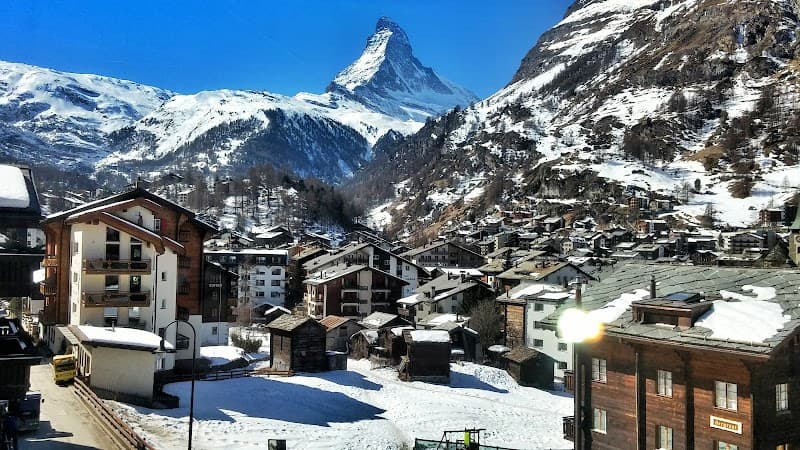
Teenagers and older children engage with this narrative seriously, and it transforms the Matterhorn from a postcard into a story with human weight. Zermatt is a car-free village, which changes the family dynamic entirely. Electric taxis and horse-drawn carriages replace traffic noise, and your kids can walk the main street without you gripping their hand at every intersection.
The outdoor ice rink near the church opens from December through February and costs CHF 8 for adults, CHF 5 for children.
It is small, not Olympic, but surrounded by Matterhorn views that make even wobbly skating feel cinematic. For rest days, the Gornergrat Bahn railway climbs to 3,089m and operates year-round.
A return ticket costs CHF 98 for adults and CHF 49 for kids aged 6 to 15, expensive but the panorama of 29 peaks above 4,000m is difficult to replicate anywhere else in the Alps.
When to Go
Season at a glance — color-coded by family score
Which Families Is Zermatt Best For?
The First-Timer Family
Consider alternativesZermatt is genuinely not the place to learn to ski. Beginner terrain is scattered across the mountain rather than concentrated in one welcoming zone, and altitude above 2,500m tires small children faster than parents anticipate. With no resort childcare and kids' group lessons starting at CHF 395 for a single half day, you're paying ultra-premium prices for a learning environment that wasn't designed for absolute beginners.
Save Zermatt for when the kids can confidently link parallel turns on red runs. For a first family ski trip in Switzerland, choose a resort with a dedicated beginner village and lower altitude nursery slopes.
The Bucket-List Family
Great matchThis is your resort. If skiing under the Matterhorn while your kids are old enough to actually remember it sounds like a core family memory, Zermatt delivers completely. The car-free village means children walk safely on cobblestones between lifts, shops, and lunch spots, and train-only access eliminates white-knuckle alpine driving. With 249 runs and terrain reaching 3,899m, the mountain matches the postcard.
Stay on the Sunnegga side of the village for direct funicular access to the most family-friendly intermediate terrain and the best morning light on the Matterhorn from your breakfast table.
The Mixed-Ability Crew
Good matchWith 78 easy runs and 128 intermediate ones, there's genuinely something for every ability level, though the spread isn't equal. Confident intermediates will have the week of their lives cruising long descents from Rothorn or Gornergrat. Your cautious blue-run skier, however, may find the mountain's sheer scale intimidating and wish the easy terrain felt more connected and sheltered.
Use the Sunnegga to Blauherd area as home base for less confident skiers while the stronger crew explores Schwarzsee and beyond. Plan to meet for on-mountain lunches rather than forcing everyone to ski together all day.
The Teen Wrangler
Great matchTeenagers who've outgrown smaller resorts will finally stop complaining here. Zermatt's 249 runs across three interconnected ski areas, plus the option to cross an international border into Italy on the Cervinia pass, deliver the kind of freedom and bragging rights that actually impress their friends back home. Add 25 designated freeride routes and you've got genuine adventure without needing to hire a mountain guide.
Spring for the International lift pass so your teens can ski into Cervinia for Italian pizza at lunch. It transforms a regular ski day into a border-crossing story they'll retell for years.
The First-Timer Family
Consider alternativesZermatt is genuinely not the place to learn to ski. Beginner terrain is scattered across the mountain rather than concentrated in one welcoming zone, and altitude above 2,500m tires small children faster than parents anticipate. With no resort childcare and kids' group lessons starting at CHF 395 for a single half day, you're paying ultra-premium prices for a learning environment that wasn't designed for absolute beginners.
Save Zermatt for when the kids can confidently link parallel turns on red runs. For a first family ski trip in Switzerland, choose a resort with a dedicated beginner village and lower altitude nursery slopes.
Common Questions
Everything families ask about this resort
Have a question we didn't cover? We'd love to add it to our guide.
The Bottom Line
Would we recommend Zermatt?
What It Actually Costs
Zermatt is the most expensive ski resort in Switzerland, and pretending otherwise helps no one. The value verdict: you are paying for the Matterhorn on your window, a car-free village where kids roam safely, and the roughly 160km of Cervinia terrain the International pass links in across the Italian border. If those are the things your family will actually use, the money makes sense. If not, the same mountain is cheaper from the Italian side.
The biggest real saving is built in: children ski free until their 9th birthday on the Wolli Card, so a family with two kids under 9 pays for two adult passes, not four. After that, 9 to 15-year-olds are half the adult price. Stack that with a self-catering apartment and you pull the two levers that move the total most. A family cooking breakfast and packing lunches will spend hundreds of francs less per week than one buying three restaurant meals a day, and mountain plates in Zermatt are not cheap.
The Cervinia crossing has a quiet budget angle: restaurants on the Italian side price in euros, and a plate of pasta in Breuil-Cervinia costs well under the Swiss-franc equivalent above the village. Ski over for lunch on a clear day and the exchange rate works in your favour.
Your smartest money move: go in a January quiet week rather than the February peak, book an apartment, and lean on the free-kids pass instead of the International pass unless you will actually ski to Italy more than once. We are not printing a fixed weekly total, because Zermatt's pass and lodging prices swing too far by date and demand for an honest single number, so price your exact week on the official sources and you will not be surprised at checkout.
One trap to sidestep: summer glacier prices are not winter prices. If you come for glacier skiing between early May and the end of October 2026, the Matterhorn Glacier Paradise summer tariff runs about CHF 99 adult and CHF 50 child for one day, or CHF 386 and CHF 193 for six days, with kids still free under 9. That is a separate season and a separate price list from the winter resort, so do not plan a winter budget around a summer number, or the reverse.
The Honest Tradeoffs
Altitude (1,620m base, skiing to 3,883m on Klein Matterhorn) can hit young kids hard on day one with headaches and fatigue. The terrain is heavily oriented toward intermediate and advanced skiing, with limited gentle beginner areas close to the village.The glacier ski area, while spectacular, requires a long lift journey from the village that is tiring for children under 6.
Restaurant prices in the village are steep: expect CHF 25 to 35 per plate for a basic lunch. If you want car-free charm at lower cost, Wengen delivers a similar experience for 30% less.
If you want better beginner infrastructure for young children, Laax has the Ami Sabi program that Zermatt simply cannot match.
Would we recommend Zermatt?
Book a village hotel and buy a multi-day pass (include the Italian connection for maximum terrain). If Zermatt's prices are too much, Cervinia is the same mountain at half the cost. Saas-Fee is a cheaper car-free Swiss alternative nearby. For the best kids' programs, Laax has Ami Sabi. Wengen is the other iconic car-free Swiss village.
Nendaz gives you Verbier terrain at Zermatt-alternative pricing. Book a family apartment through Zermatt Tourism and buy the multi-day Zermatt lift pass (or the international Zermatt-Cervinia pass for Italy access). The Matterhorn Glacier Paradise at 3,883m is a must-do excursion. Book the Glacier Express for the return journey to Geneva or Zurich, the 8-hour scenic ride is a family highlight.
Walk-on luggage via BVZ train from Visp is the only arrival option (no cars in Zermatt).
Similar Resorts
Families who loved Zermatt also enjoyed these
Ovronnaz
Gstaad
Morgins
Verbier
Chiesa Valmalenco
Le Grand Bornand
Transparency note: This content was created with AI assistance and reviewed by Tom Meredith, our editor. Prices, dates, and availability may change. We recommend confirming details directly with the resort before booking.