Trentino-Alto Adige, Italy

San Vigilio di Marebbe, Italy: Family Ski Guide

Dolomite views, Ladin culture, ski school from age 3.

Family Score: 6/10
Ages 5-14
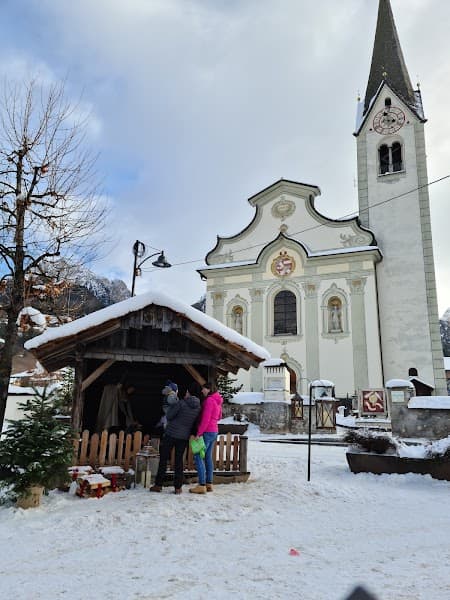
User photo of San Vigilio di Marebbe - unknown
6/10 Family Score
🎯

Is San Vigilio di Marebbe Good for Families?

San Vigilio di Marebbe is a tiny Ladin village that punches way above its weight. The Miara beginner slopes sit steps from hotel doors, so your 5 to 10 year olds can be skiing while you sip cappuccino on a terrace framed by Dolomite spires. Older kids get 119km of wide cruisers on Kronplatz, plus access to the 1,200km Dolomiti Superski network. Day passes run €77 adult, €55 child. The catch? The village is whisper quiet. No bustling pedestrian strip, no ice rink, almost no après. You're here to ski, eat merenda (afternoon snack) at your hotel, and repeat.

6
/10

Is San Vigilio di Marebbe Good for Families?

The Quick Take

San Vigilio di Marebbe is a tiny Ladin village that punches way above its weight. The Miara beginner slopes sit steps from hotel doors, so your 5 to 10 year olds can be skiing while you sip cappuccino on a terrace framed by Dolomite spires. Older kids get 119km of wide cruisers on Kronplatz, plus access to the 1,200km Dolomiti Superski network. Day passes run €77 adult, €55 child. The catch? The village is whisper quiet. No bustling pedestrian strip, no ice rink, almost no après. You're here to ski, eat merenda (afternoon snack) at your hotel, and repeat.

Your teens need off-slope entertainment, restaurant variety, or any semblance of nightlife

Biggest tradeoff

Limited data

20 data pts

Perfect if...

  • Your kids are 5 to 14 and you want a calm, ski-focused base without resort-town chaos
  • You love the idea of ski-in/ski-out hotels where beginners and advanced skiers can split up easily
  • You want authentic Italian Dolomite culture (Ladin language, proper food) rather than a generic alpine village
  • You're planning to explore the broader Dolomiti Superski area and want a quieter home base

Maybe skip if...

  • Your teens need off-slope entertainment, restaurant variety, or any semblance of nightlife
  • You want a walkable resort village with shops, ice rinks, and things to do on a rest day
  • You need dedicated childcare for kids under ski school age

The Numbers

What families need to know

MetricValue
Family Score
6
Best Age Range
5–14 years
Kid-Friendly Terrain
35%
Ski School Min Age
Kids Ski Free

⛷️What’s the Skiing Like for Families?

San Vigilio di Marebbe is one of the best places in the Dolomites to put a first-timer on skis. And not in a token bunny-hill way. We're talking 87 easy runs across a connected ski area, which is 35% of the entire piste map dedicated to green terrain. Your kids won't just learn to turn here; they'll learn to explore, progressing from the Miara beginner slopes right in the village to wide, sun-drenched blues with Dolomite spires framing every run by day three.

The thing your kid will remember about skiing here isn't the lesson or the medal ceremony. It's looking up mid-run, seeing a wall of pale rock towers that looks like something from a fantasy movie, then looking down and realizing they're actually skiing.

The Terrain

San Vigilio sits at 1,201m and serves as a gateway to Plan de Corones (Kronplatz), one of the 12 ski areas in the Dolomiti Superski network. The numbers: 154 pistes across 31 lifts, summit topping out at 2,275m. The breakdown skews heavily family-friendly. 87 easy runs, 53 intermediate, and 14 advanced.

That ratio is unusually generous for beginners and progressing intermediates. The Miara slopes, right at the edge of the village, are where every first-timer starts. Gentle, wide, and short enough that a stumble doesn't turn into an epic yard sale. Once kids graduate from Miara, the broad blue and red cruisers up on Plan de Corones give them real mileage without real danger.

Advanced skiers have the Sylvester and Herrnegg black runs to keep things honest, but let's be clear: this is not a resort you choose for expert terrain.

San Vigilio's home slopes are modest in vertical. The big skiing happens when you ride the gondola up to Plan de Corones proper, so set expectations with younger kids that the first couple of days stay local before branching out. The Dolomiti Superski pass unlocks 1,200km of connected terrain across 12 valleys if anyone in your group gets restless. Alta Badia is accessible via skibus, which adds another dimension entirely.

Ski Schools

San Vigilio has three ski schools. The one families need to know about is Ski & Snowboard School San Vigilio di Marebbe (Scuola Sci), the only school in the village with a dedicated Kinderland (children's ski park). Picture a private, fenced-off practice slope equipped with treadmill lifts and inflatable obstacles where no adult skier can accidentally barrel through your child. That detail alone justifies enrollment.

They take kids from age 3 with their Baby Snupper program: two hours of gentle snow play and ski introduction daily, running €225 to €270 for a six-day block depending on the week. Lunch and afternoon care can be added for €26 to €38 per day. That frees you up for a solid four to six hours of your own skiing.
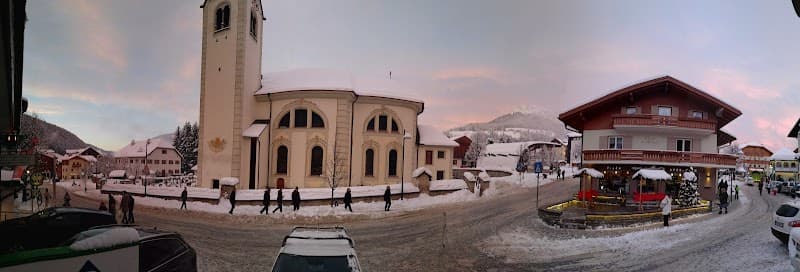
For kids aged 6 and up who are ready to go all in, the Full-Time Beginners course at Scuola Sci runs 28 hours over six days, from €380 in low season to €420 in peak February. That includes lunch on the mountain with instructors from Tuesday through Friday. Bundle in equipment rental (helmet included) and you're looking at €466 to €506 for the week. For context, a comparable full-week program at a big-name French resort would easily run €100 to €150 more.

Lessons are grouped by age, language, and ability. The school's website is fully available in English, German, and Italian, so the language barrier worry largely dissolves once you're enrolled.

Ski Sporting Academy is the second school worth considering, especially for older kids or teens who want a younger, more energetic instructor vibe. They follow the Italian Ski School methodology (heavy on fun, lighter on rigid technique drills) and offer group, private, and snowboard lessons. Their office sits on Strada Caterina Lanz right in the village center. Dolomiti Snow Ski School rounds out the options with private snowboard lessons starting at €60 per hour in low season, jumping to €80 during Christmas and February peak weeks.

Rentals

Scuola Sci's Snow Shop doubles as the most convenient rental operation in the village, offering a 10% discount to anyone enrolled in their ski school. If you're booking lessons anyway, that means one stop for gear and instruction. Equipment packages including helmet run €73 for six days for kids. Several hotels, including Les Alpes, arrange for rental companies to deliver and fit equipment right at the hotel and collect it on departure day, which neatly eliminates the "carry rental skis through a parking lot with a screaming four-year-old" scenario.

On-Mountain Eating

Lunch on the mountain in the Italian Dolomites is a completely different animal from the overpriced, microwave-reheated cafeteria food you've resigned yourself to at most ski resorts. The rifugi (mountain huts) on Plan de Corones serve proper South Tyrolean and Ladin cooking. Think Kaiserschmarrn (shredded pancake with berry compote), Schlutzkrapfen (half-moon spinach ravioli), and hearty Gulaschsuppe. You'll spend €10 to €15 per plate, and your kids will eat better at 2,000m than they do at most restaurants back home.

The full-time ski school groups eat lunch together at one of the slope-side huts, so if your child is enrolled, that meal is handled.

Rifugio Graziani Hütte, perched on the slopes above the village, earns consistent praise and doubles as a small hotel, which tells you they take the food seriously. For a memorable family lunch stop higher up, the huts clustered near the Plan de Corones summit offer panoramic terrace seating where you're eating dumplings while staring at a 360-degree ring of Dolomite peaks. Budget €80 to €100 for a family of four to eat well with drinks on the mountain. In Méribel, that same lunch buys you a single adult main course and a glass of wine.

The Language Question

San Vigilio sits in South Tyrol (Alto Adige), which means the local language is actually Ladin, with German and Italian as close seconds. English is the fourth language here. Ski school instructors speak it well and most hotel staff manage fine, but you'll encounter menus, signage, and lift-ticket kiosks primarily in German and Italian.

Don't let this deter you. The ski schools sort kids by language, restaurants have multilingual menus, and the Google Translate camera feature handles any sign you can't decode. The multilingual reality is actually part of the charm: your kids will come home saying "Bun dé" (good day in Ladin) and ordering Knödel (bread dumplings) by name.

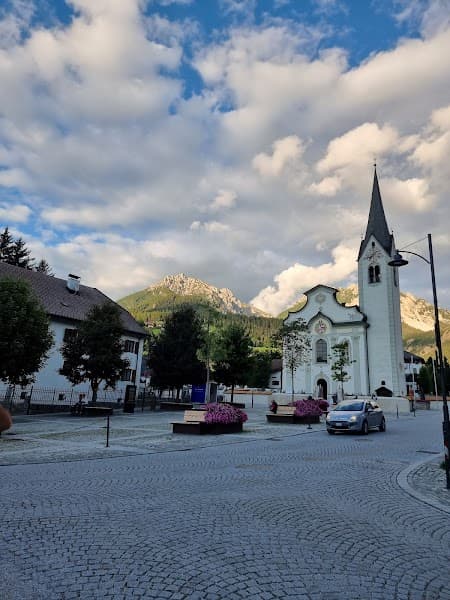
User photo of San Vigilio di Marebbe - unknown

Trail Map

Full Coverage
154
Marked Runs
31
Lifts
87
Beginner Runs
56%
Family Terrain

Terrain by Difficulty

🔵Easy: 87
🔴Intermediate: 53
Advanced: 14

© OpenStreetMap contributors, ODbL

Family Tip: San Vigilio di Marebbe has plenty of beginner-friendly terrain with 87 green and blue runs. Great for families with young or beginner skiers!

💬What Do Other Parents Think?

San Vigilio di Marebbe is one of those resorts where parent feedback almost exactly matches the marketing. That's rare enough to be noteworthy. The consistent refrain: it's genuinely peaceful, the skiing is excellent for learners, and the food is so good you'll forget you're at a ski resort. Parents who've done the big-name French and Austrian circuits come here and describe it like exhaling for the first time in a week.

"We didn't queue for a single lift all week" appears in review after review. Honestly, after years of reading parents rage about 20-minute gondola waits in Méribel, it hits different.

The praise that keeps surfacing centers on the Miara beginner area in the village and how naturally kids progress there. Parents describe children going from snowplough to parallel turns in a single week, largely because the slopes are wide, uncrowded, and graded so gently that confidence builds fast. The Ski and Snowboard School San Vigilio di Marebbe gets particular love for its dedicated Kinderland (children's ski park), where only enrolled kids are allowed on the practice slope. Multiple parents flag this as the detail that sold them: no rogue intermediate skiers bombing through your four-year-old's lesson.

That's a real safety feature, not just a marketing bullet point.

The food comes up almost as often as the skiing. San Vigilio sits in the Ladin-speaking part of South Tyrol, and families consistently rave about mountain hut lunches that feel more like proper restaurants. Think canederli (bread dumplings), fresh pasta, and strudel that your kids will actually fight over. Several parents note spending less on meals here than in comparable Austrian resorts, with better quality.

One parent summed it up well: "My kids ate better at 2,000 meters than they do at home." That tracks.

The complaints are real but predictable. San Vigilio di Marebbe sits in a remote valley, and getting there requires a commitment. Parents driving from Innsbruck or Venice describe the last 30 minutes of narrow valley road as "beautiful but white-knuckle in snowfall." English-language signage and communication can be patchy.

The ski school instructors generally speak English well, but booking processes, restaurant menus, and village information default to Italian or German. North American families in particular report a learning curve with logistics that would be nonexistent at a purpose-built French resort. The move: download Google Translate offline before you arrive, and book ski school by email in advance rather than trying to sort it on arrival day.

Where parent opinion diverges from official messaging is on the "gateway to Dolomiti Superski" angle. The tourism board promotes access to 1,200 km of interconnected terrain, which is technically true via the Dolomiti Superski pass. But parents with younger kids consistently say they never left the Kronplatz/Plan de Corones area, and that the 154 local pistes were more than enough for a full week.

The broader network matters if you're an advanced skier itching to explore. For families with kids under 10, the local terrain is the whole trip. Don't let the mega-pass marketing pressure you into buying more than you need.

The ski-in/ski-out hotel situation draws near-universal approval. Parents staying at properties like Excelsior Dolomites Life Resort and Hotel Les Alpes describe the luxury of walking out the door onto snow, which transforms the morning routine from a stressful gear-hauling march into something almost pleasant. The half-board and three-quarter-board packages common here (breakfast, afternoon cake, dinner all included) remove the daily "where are we eating" negotiation that drains energy at other resorts.

Multiple families call the included afternoon Jause (snack) the unsung hero of their holiday. Kids come off the slopes, there's cake and hot chocolate waiting, nobody melts down. That alone is worth the premium over a self-catered apartment.

The honest tension? San Vigilio is brilliant for the 5-to-14 age range and genuinely limited outside it. Parents with toddlers below ski school age report fewer structured childcare options than they'd find in Austria or France. Parents with teenagers describe evenings as "very quiet."

One parent put it bluntly: "If your 15-year-old wants nightlife, bring a different teenager." Fair enough. This is a village of 1,400 people in a mountain valley. It does calm, authentic, and family-paced better than almost anywhere in the Dolomites, but it does not do entertainment infrastructure. Know which one you need before you book.


🏠Where Should Your Family Stay?

San Vigilio di Marebbe is one of those rare Dolomites villages where ski-in/ski-out isn't reserved for a single eye-wateringly expensive property. Several hotels sit right on or next to the slopes. The village is compact enough that even places a few minutes' walk from the lifts feel genuinely close. The real decision isn't hotel vs. apartment (though both work brilliantly), it's whether you want the full half-board Italian hotel experience, with four meals a day appearing without you lifting a finger, or an apartment with a kitchen so you can control the budget and eat pasta in your pajamas after the kids crash.

If I'm booking for my family, I'm going with Excelsior Dolomites Life Resort. This family-run 4-star-superior property offers genuine ski-in/ski-out access to the Plan de Corones/Kronplatz slopes, a 3/4 board package (breakfast, lunch, afternoon snack, and dinner all included in the room rate), a family spa alongside an adults-only spa, and what multiple reviewers call the most photogenic infinity pool in the Dolomites. You'll pay €280 to €350 per night in peak season for a family room, which sounds steep until you remember that four meals a day are baked in. Do the math on feeding a family of four at Dolomite mountain restaurants and that rate starts looking almost reasonable.

It books out fast, especially during February half-term weeks. Reserve months ahead or don't bother.

Hotel Les Alpes is the other standout ski-in/ski-out option in San Vigilio di Marebbe, sitting directly on the Cianross slope. Their setup is particularly clever for families with beginners: the Cianross run is short and gentle, so little ones can ski right to the hotel door without navigating anything intimidating. You can buy lift passes at the Cianross lift next to the hotel (no trekking across the village in ski boots with a crying five-year-old), and they'll arrange equipment rental delivered straight to the property.

Three evenings a week, the Cianross slope gets floodlit for night sledging. That's the kind of detail that turns a good ski trip into the one your kids talk about for years. Nightly rates land in the €180 to €250 range depending on the week, comfortably mid-range for a slopeside Dolomites hotel.

For families watching the budget, San Vigilio's apartment scene is where the real value lives. Residence Plan de Corones scores a 9.3 on Booking.com and offers ski-to-door access from €130 per night, an aparthotel format with kitchens so you can cook breakfast and pack lunches. Airbnb listings in the village start at €94 per night, though €150 to €190 is more realistic for a well-located two-bedroom in ski season, based on Airbnb's own average pricing data.

A family apartment with a kitchen, a washing machine, and a view of snow-dusted peaks for under €200 a night, in a village that connects to 1,200km of Dolomiti Superski terrain? In Cortina d'Ampezzo, that money gets you a studio with a hotplate and a shared hallway.

One thing to know about lodging in San Vigilio: many hotels operate on a half-board or 3/4-board model, which is standard in South Tyrol. This actually simplifies family trip budgeting enormously. Instead of guessing what you'll spend on food, the biggest variable is already locked in. Your kids come off the slopes to a hot lunch waiting at the hotel rather than you frantically Googling "restaurant near me" in a language you don't speak.

The village itself is small and walkable, so proximity to lifts matters less here than in sprawling mega-resorts. Even properties listed as a "5-minute walk" from the Miara slopes are genuinely five minutes. Not the resort-brochure version where five minutes means fifteen in ski boots. Hotel Al Sonnenhof, right on the main square, offers ski-to-door access and sits in the center of everything, a solid pick if you want to wander into a bar or shop without planning a military operation. Hotels at this tier run €160 to €200 per night.

💡
PRO TIP
San Vigilio accommodations come with a Guest Pass that includes free public transport throughout the area, including the ski bus connections to nearby Alta Badia. That pass quietly saves families €15 to €20 a day on bus fares they'd otherwise pay to explore the broader ski region. Factor that into your accommodation comparison. The "cheaper" rental in a neighboring valley without the pass might not actually be cheaper at all.

🎟️How Much Do Lift Tickets Cost at San Vigilio di Marebbe?

San Vigilio di Marebbe is one of those places where the lift ticket price makes you do a double take, then check if you're reading it wrong. You're not. An adult day pass on the Kronplatz/Plan de Corones ski area runs €75 to €83 depending on the season, and juniors (ages 8 to 15) pay €53 to €58. That's for 154 pistes and 31 lifts across a proper Dolomites ski area. For context, a single day at Verbier costs more than two days here.

Kids under 8 ski free at San Vigilio di Marebbe when an accompanying adult buys a pass for the same period. That's a genuine freebie, not a marketing gimmick buried in fine print. One adult, one child, same validity dates, done. If you've got a five-year-old and a seven-year-old, you just saved yourself €116 per day in peak season. That math alone should end the "where should we go" debate.

The multi-day discounts follow Dolomiti Superski's standard structure, and they reward commitment. A 6-day adult pass costs €381 to €423 depending on the period, which works out to €63 to €70 per day. Junior 6-day passes land between €267 and €296. The sweet spot is the 7-day pass: adults pay €404 to €449 and juniors €283 to €314, a per-day rate that drops below €65 for adults. Buy the week and your daily cost drops by 20% compared to singles. That's the move.

San Vigilio's lift passes are part of the Dolomiti Superski system, which means your ticket covers not just Kronplatz but access to 1,200 km of terrain across 12 interconnected Dolomite valleys if you buy the Superski version. There's no Epic or Ikon integration here. North American families hoping to use a mega-pass will need to buy local. Dolomiti Superski is arguably the best regional pass system in the world, so you're hardly slumming it.

Low-season pricing (late November through mid-December, and mid-March through mid-April) drops adult day passes to €70 and juniors to €49. You'll find the slopes quieter, the sun lingering longer in March, and your wallet noticeably heavier. February half-term is peak season at €83/day for adults, which is still less than a family burger night costs at most Colorado resorts.

One thing that trips up English-speaking families: the pricing tiers on the official San Vigilio website mix German, Italian, and occasionally Ladin labels. "Junioren" means juniors (born 2007 to 2016 for the 2025/26 season), and "Senioren" covers anyone born 1959 or earlier at €68 to €75/day. The site itself works fine once you toggle to English, but the price tables sometimes lag behind the language switch. Bookmark the sanvigilio.com ski pass page and check it in January when prices are confirmed for the following season.

Is the pricing fair for what you get? Honestly, it's better than fair. You're skiing a modern, well-groomed area with high-speed lifts, panoramic Dolomite views that make your phone camera feel inadequate, and 35% beginner terrain where your kids can build real confidence before tackling blues. All for 20% to 30% less than what you'd pay at Cortina or the Trois Vallées. Your biggest expense in San Vigilio won't be lift tickets. It'll be the mountain lunch you didn't plan on, at a rifugio where the pasta is handmade and the bill still comes in under €15 a plate.


✈️How Do You Get to San Vigilio di Marebbe?

San Vigilio di Marebbe sits at the end of a quiet valley in South Tyrol. The drive in is gorgeous, and the last 20 minutes feel like you've taken a wrong turn into a nature documentary. That remoteness is the whole point, but it does require a bit of planning to get there.

Your best airport option is Innsbruck Airport (INN), just 90 minutes south through the Brenner Pass. It's compact, easy to navigate with kids, and puts you on the A22 motorway heading straight into the Val Pusteria. Innsbruck has limited flight routes, so you may end up at Munich Airport (MUC), which is 3 hours north but connects to everywhere. Venice Marco Polo Airport (VCE) works too at 3 hours, though you'll trade motorway monotony for the dramatic climb up through the Dolomite valleys.

If you're coming from the UK, budget carriers fly into Verona Airport (VRN), which puts you 2.5 hours out on a straightforward run up the A22.

Rent a car. San Vigilio di Marebbe doesn't have a train station, and while the nearest rail link at Brunico (Bruneck) is only 20 minutes away, you'll still need transport for that final stretch into the valley. With ski gear and kids, a shuttle from Brunico is doable but adds a transfer you don't need.

The drive from any of these airports is painless: well-maintained Italian motorways give way to a two-lane valley road that winds gently past farms and churches. No white-knuckle switchbacks. No mountain passes to cross.
Winter tires are mandatory in South Tyrol from November 15 to April 15, and rental companies at Italian and Austrian airports will have them fitted by default. If you're driving from Munich or Innsbruck through Austria, you'll need a Vignette (motorway toll sticker), €9.90 for 10 days, available at border petrol stations or online. You'll also hit the Brenner Pass toll, which runs €11 each way. Budget €30 to €40 round trip for road tolls between Munich and San Vigilio.

💡
PRO TIP
If flying into Munich, book your rental car from the Austrian side at Innsbruck Airport instead. Take the short train from MUC to Innsbruck (1 hour 45 minutes on the ÖBB rail), pick up the car there, and you'll dodge the premium that German airport rental desks charge while cutting your drive time nearly in half. Your kids get a scenic train ride through the Alps instead of two extra hours staring at the back of a headrest.
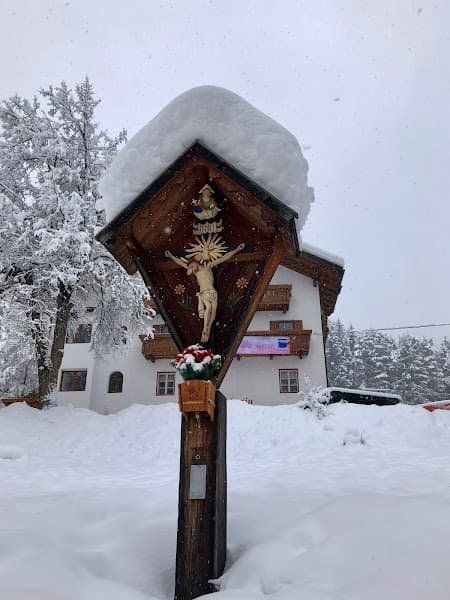
User photo of San Vigilio di Marebbe - unknown

What Can You Do Off the Slopes?

San Vigilio di Marebbe is the kind of village where church bells are louder than the nightlife. That's not a complaint. After a day on Kronplatz's 154 runs, a quiet evening with good food and a glass of Lagrein beats a thumping bass line every time. But if your crew needs off-slope stimulation beyond a hotel spa, it helps to know what you're working with.

The village is compact and genuinely walkable, even with tired little legs. You'll stroll past painted facades and wooden balconies on streets that feel more like a Ladin hill village than a purpose-built resort. No sprawling pedestrian zone, no designer boutiques. Just a handful of shops, a pharmacy, and enough character to make the walk from hotel to restaurant feel like part of the holiday. Pushchairs work fine on the main roads, though icy patches after dark require the usual caution.

For dining, most families on half-board or 3/4-board plans won't eat out every night, and honestly the hotels here do dinner well enough that you might not want to. When you do venture out, Ristorante Fana Ladina serves proper South Tyrolean cuisine in a cozy wood-panelled room: think Schlutzkrapfen (stuffed half-moon pasta), Kaiserschmarrn (shredded pancake with plum compote), and venison goulash. A family dinner with drinks runs €80 to €120. Pizzeria Ristorante Posta in the village centre covers the essentials when your kids just want pizza and you just want a carafe of local wine, at €50 to €70 for a family of four.

Self-catering families will find a small Despar grocery shop in the village with enough staples, fresh bread, and local cheese to keep breakfast and lunch sorted. Prices sit slightly above city supermarket levels (welcome to a mountain valley), but South Tyrolean Speck and fresh rolls from the bakery counter make for a far better lunch than anything you'd grab slopeside. Stock up on arrival if you're driving in. The selection is limited compared to the larger supermarkets in Brunico, 20 minutes down the valley.

The off-slope activity most likely to get talked about at school on Monday is the Pferdeschlittenfahrt (horse-drawn sleigh ride) through snow-covered meadows toward the Fanes-Sennes-Braies nature park. Your kids bundled in blankets, the sound of hooves on packed snow, Dolomite peaks glowing pink in the late afternoon light. It costs €15 to €25 per person depending on duration. The tourism office in the village centre can arrange bookings.

San Vigilio also offers a Rodelbahn (toboggan run) on the illuminated Cianross slope, open three evenings a week. Sled rental is cheap, and the run is gentle enough for younger kids while still giving everyone that cold-air-in-your-face thrill. The Owl Park (Eulenpark) near the village lets kids meet native owl species up close, a quirky, low-key outing that fills a non-ski morning perfectly.

Husky sled dog rides and zip line experiences are also listed among the village's winter activities, bookable through the local tourism office or your hotel reception. For rainy days or rest days, several of the four-star hotels open their spa and pool facilities to guests. Excelsior Dolomites Life Resort has what might be the most photogenic infinity pool in the Dolomites, though access is reserved for hotel guests.

Evening entertainment is, honestly, limited. No cinema, no bowling alley, no ice rink. A couple of hotel bars serve cocktails and local grappa, and some properties host live music on select evenings. Brunico (Bruneck), the nearest proper town, is 20 minutes by car or free skibus and has more shopping, gelaterias, and a medieval old town worth wandering.

After dark with tired kids, you're unlikely to make that trip more than once. Most families here settle into a rhythm of big dinners, hotel pools, and early bedtimes. That's genuinely fine. San Vigilio's charm is the quiet, and the mountains deliver the rest.

User photo of San Vigilio di Marebbe - unknown

When to Go

Snow conditions, crowd levels, and family scores by month

Best for families: JanuaryExcellent value post-holidays with solid base; fewer crowds mean shorter lift lines for kids.
Monthly ski conditions, crowd levels, and family scores
Month
Snow
Crowds
Family Score
Notes
Dec
GoodBusy5Holiday crowds peak; early season snow thin, snowmaking essential for kid terrain.
JanBest
GreatQuiet8Excellent value post-holidays with solid base; fewer crowds mean shorter lift lines for kids.
Feb
GreatBusy6Peak snow depth but European half-term holidays create crowding; book early for family lessons.
Mar
GoodModerate7Spring conditions improve, crowds moderate; warmer temps mean better snow consolidation for learners.
Apr
OkayQuiet4Season end with thin cover; Easter holidays may spike crowds; plan early April visits for best conditions.

Family score considers snow quality, crowd levels, pricing, and school holidays.

Common Questions

Everything families ask about this resort

It's genuinely excellent for beginners. 35% of the terrain is easy runs, and the Miara slopes right near the village are purpose-built for learning. The Ski School San Vigilio runs a dedicated Kinderland with its own fenced-off practice slope, no rogue adults bombing through, plus treadmill lifts and inflatable obstacles that make first-timers forget they're in a lesson.

The Baby Snupper program takes kids as young as 3 (ages 3-5), with 2-hour morning sessions running 6 days for €225-€270 depending on the week. Kids 6 and older can do the full-time beginner course (28 hours over 6 days) for €380-€420, which includes lunch on the mountain with the instructor Tuesday through Friday. Add €73 for a full equipment rental package with helmet.

This is a gap worth knowing about. San Vigilio doesn't have a standalone daycare center for pre-ski-age kids. The ski school's Baby Snupper program starts at age 3, and you can bolt on afternoon supervision (€38-€65/day depending on hours), but if you have a 1- or 2-year-old, you'll need to arrange care through your hotel. Several family-oriented hotels like the Excelsior Dolomites Life Resort offer kids' programs that can help fill this gap.

For a family of four (two adults, two kids aged 6-14), here's the math: 6-day lift passes run €423/adult and €296/junior (kids under 8 ski free with a paying adult). A mid-range hotel costs €160/night. Ski school for one child is €380 for the week. Factor in €100/day for meals and you're looking at €3,500-€4,200 for the week, solid value by Dolomites standards, and noticeably cheaper than Cortina.

Fly into Innsbruck (1.5 hours by car), Venice Marco Polo (2.5 hours), or Munich (3 hours). From Innsbruck, it's the most scenic and straightforward drive through the Brenner Pass. There's no train station in the village, but regular buses connect from Brunico/Bruneck, which sits on the Pusteria Valley rail line. Most families rent a car, the drive from any of those airports is gorgeous and hassle-free.

Mid-January through early February hits the sweet spot: snow is reliable, crowds are thin, and ski school prices drop to their lowest tier. The season runs early December to mid-April. Avoid Christmas/New Year week (prices spike 20% and it gets busy) and February half-term if you can. Late March is a sleeper pick, warmer temps, cheaper rates, and spring snow that's surprisingly fun for kids learning.

Have a question we didn't cover? We'd love to add it to our guide.