Kopaonik, Serbia: Family Ski Guide
70% beginner terrain, 37€ kids' lift pass, Serbia's national mountain.
Last updated: June 2026
Serbia
Kopaonik
Kopaonik is the strongest value-for-money beginner resort in Europe right now. If your family is learning to ski and you'd rather buy six days on snow than three at an Alpine resort, this is where the maths works, ranked 1st of 23 globally for beginners on Skiresort.info, with dedicated Kinderland zones, magic carpets, and slopes wide enough that first-day collisions feel unlikely. Skip it if your teenagers need steep terrain, black runs here are frequently closed, or if a 2-hour mountain road with car-sick children is a dealbreaker. Booking sequence: Secure ski school with MM Ski Sport first, then lodging (apartments fill fast over Christmas and New Year), then flights to Niš or Belgrade. Total planning time: one evening after the kids are in bed.
Is Kopaonik Good for Families?
If Les Gets is the polished French benchmark for family beginner skiing, Kopaonik is the same formula at half the price, with a rougher journey to reach it.
Serbia's top-rated ski area spreads 70% of its 55 km across easy and intermediate terrain, staffs its school with 60+ licensed instructors, and charges around €50 a day for an adult lift pass. What it costs you: limited flights into Niš, and a winding mountain road for the last hour.
Expert or ambitious teen skiers — black runs are few and often closed
Biggest tradeoff
What's the Skiing Like for Families?
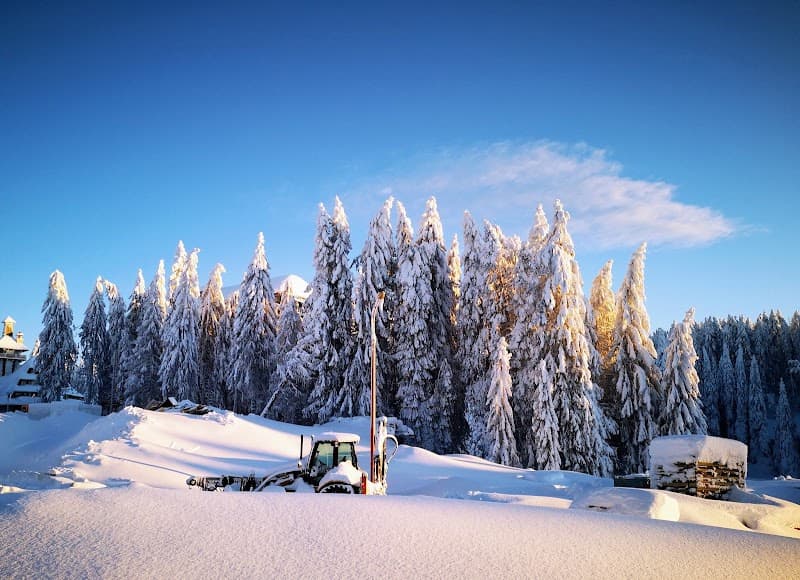
Kopaonik is as close to easy-mode learning as a ski resort gets. Nearly three-quarters of the pisted terrain is graded blue or green, and the runs are wide enough that your five-year-old won't be dodging teenagers on the same narrow track.
The Kinderland zones sit at valley level with magic carpet lifts, no chairlift anxiety on day one. Your child's first ski experience happens in a flat, enclosed area where falling over is the main event and nobody minds.
Here's the realistic week-long progression for a child aged 5-7:
- Days 1-2 (magic carpet): Kinderland zones with gentle gradient. Kids get comfortable sliding, stopping, and snowploughing. Most under-7s stay here for two full days.
- Day 3 (first real piste): Transition to the wide green runs around the base area. The terrain is so gradual that many parents don't realise their child has left the learner zone.
- Day 4 (first chairlift): The Karaman greben or Bela reka 1 ropeways access easy blue runs at mid-mountain. At 2,017 m, this is the breakthrough moment, and the views reward the bravery.
- Day 5+ (blue cruising): Confident beginners are linking turns on blues that cover most of the mountain. Families skiing together by Friday is realistic, not aspirational.
- Main friction point: The transition from magic carpet to chairlift. Serbian instructors handle this well, groups are small enough that nervous children get individual attention at the loading point.
MM Ski Sport runs the main school with 60+ IVSI/ISIA-licensed instructors. Group lessons for children start at €42/day for larger groups, scaling to €75/day for groups of 3-4. According to parent reviews, the teaching style leans warm and personal rather than clipboard-efficient.
One visiting family described their instructor, Ognjen, taking children to a "secret café" on the slopes for oversized pastries between runs. That's not a one-off, it reflects a hospitality-driven teaching culture where the instructor-child relationship matters as much as technical form.
Mixed-ability families benefit from an unusual layout here: beginner runs aren't segregated to one corner. Your learner and your intermediate skier are often on adjacent slopes, making mid-day meet-ups simple without anyone needing to traverse the mountain.
For annual families with confident intermediate teens: the 19 km of red runs offer satisfying, uncrowded cruising by Western standards. But the ceiling is low, 13 km of black terrain is frequently partially closed, especially early season. Advanced skiers will cover everything worthwhile in two days.
📊The Numbers
| Metric | Value |
|---|---|
Family Score | 6.7Good |
Best Age Range | 3–15 |
Kid-Friendly Terrain | 70%Very beginner-friendly |
Ski School Min Age | — |
Kids Ski Free | — |
Magic Carpet | Yes |
Score Breakdown
Value for Money
Convenience
Things to Do
Parent Experience
Childcare & Learning
Planning Your Trip
💬What Do Other Parents Think?
What Parents Love
What Parents Flag
What families remember most is the evening atmosphere, sitting in a slope-side bar at sunset while the kids eat cevapi and kajmak, realizing this obscure Serbian mountain just delivered one of their best family trips.
Families on the Slopes
(16 photos)Photos from Google Places. Posted by visitors.
How Much Are Lift Tickets?
Children aged 0 to 5 ski free with a ticketed adult.Multi-day passes sharpen the value considerably. A 6-day adult pass in mid-season costs roughly RSD 27,000 (€230), bringing the daily rate below €40. The equivalent child 6-day pass runs around RSD 19,000 (€162).
For a family of two adults and two children aged 7 and 9, a 6-day trip totals roughly €785 in lift passes at mid-season rates.
That is less than two adult day passes at Kitzbühel.The resort's official webshop (shop.skipas.rs) adds layered early-purchase discounts that reward families who plan ahead: 15% off from November 1 to 15, 10% off from December 1 to 8, and 5% off for online purchases at any other point in the season. These stack meaningfully on multi-day family bundles.
Season definitions matter: low season is November 15 to December 16 and March 24 to close; high season covers Christmas (December 25 to January 7) and Serbian winter break (February 11 to 17); everything else is mid.
All prices are in Serbian dinars (RSD). The ticket office accepts cards, and ATMs are available in the resort village.
No currency conversion fee surprises if your card handles RSD directly. Budget roughly €130 per day for a family of four on full-price passes in peak season, or under €100 per day with early-bird discounts in mid-season.
Planning Your Trip
🏠Where Should Your Family Stay?
Book a self-catering apartment first, unless the Viceroy's kids club is your non-negotiable, that single decision shapes your entire trip budget.
- Best convenience, Viceroy Kopaonik (~€345/night): Ski-in positioning, 500-set rental operation and ski storage at the adjacent Grand Resort & Spa area, and the V Team Kids Club supervised from 09:00 to 22:00. The kids club alone makes date-night dinners possible. What it costs you: it costs four times more than a mid-range apartment, and availability over peak weeks disappears fast.
- Best value, mid-range self-catering apartments (~€81/night): Kopaonik's apartment stock is the workhorse for budget families. Kitchen access cuts food costs dramatically, and most are walking distance to the base lifts. What it costs you: quality varies, request photos before booking, and confirm distance to the ski school meeting point.
- One to watch, Rozeta Kopaonik: A new ski-in hotel apartment project entering final construction as of spring 2026. If it opens on schedule, it could fill the gap between budget apartments and the Viceroy. Check status before booking.
Whichever option you choose, proximity to the Kinderland zone matters most for families with under-7s. Ten minutes of walking in ski boots with a tired four-year-old feels like forty. Book apartments through local agencies like Kopaonik Online rather than global platforms; inventory is wider and cancellation terms are often more flexible.
✈️How Do You Get to Kopaonik?
Fly into Niš, it's the shortest transfer at 2 hours 15 minutes, and Wizz Air and Ryanair now serve the airport with low-cost routes from several European cities.
- Best airport: Niš Constantine the Great (INI). Limited route network but growing. If Niš doesn't connect to your home airport, Belgrade (BEG) offers far more flights, but adds 3.5 hours of driving.
- Transfer reality: No confirmed shuttle services appeared in our research. Hire a car or pre-book a private transfer. The Belgrade route splits in half: tolled motorway for the first 90 minutes, then a narrow two-lane mountain road described by visitors as "almost a country road" for the remainder.
- Winter road warning: The final mountain approach has tight bends and inconsistent lighting. Snow tyres are legally required in winter. Drive in daylight if you can, arriving after dark with tired children and unfamiliar hairpins is avoidable stress.
- Parking: Cited as a genuine problem in multiple reviews. If you're staying slope-side, confirm parking availability with your accommodation before arrival.
- Smartest family move: Download offline maps before leaving the motorway, Serbian signage uses Cyrillic alongside Latin script on main routes, but smaller mountain signs may be Cyrillic only. Google Maps or Maps.me both work well offline.
Serbia sits outside the EU and Schengen zone. Most EU and UK passport holders don't need a visa for short stays, but verify current entry requirements before booking flights.
☕What's There to Do Off the Slopes?
After-ski at Kopaonik is informal, food-driven, and more lively than you'd expect from a resort this size.
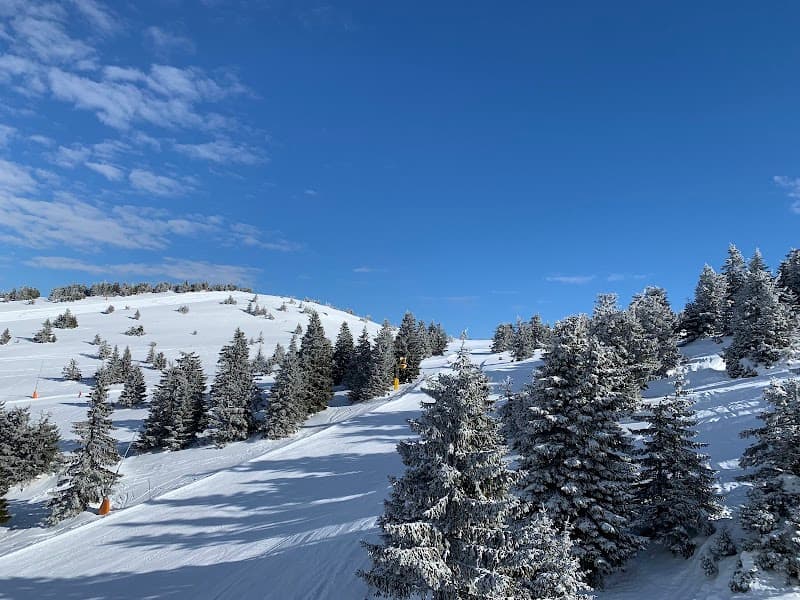
- The one activity that matters: The Alpine Coaster Kopaonik is a named, bookable toboggan-style coaster on the mountain itself, rare outside the Alps. It runs all ages and gives non-skiing family members (or post-lesson kids) something specific to look forward to. This is the thing your child will talk about at school.
- Evening reality: Kopaonik's resort village is compact and walkable. Après-ski bars are noted as a strength in reviews, and the atmosphere skews convivial rather than rowdy, families won't feel out of place at 6 PM.
- Food: Serbian mountain cooking is hearty, meat-centred, and inexpensive. Expect ćevapi (grilled minced-meat sausages), pljeskavica (a spiced meat patty that puts most burgers to shame), and kajmak (a tangy clotted cream spread) at slope-side restaurants. We don't have specific restaurant names to recommend, limited English-language dining reviews make it difficult to verify standout spots, but parent reviews consistently describe meals as filling and affordable.
- Belgrade add-on: If your family is open to a city night before or after skiing, Belgrade is 3.5 hours away and worth it, a vibrant, Balkan-Bohemian city with atmospheric winter street life, brass bands during the holiday season, and enough character to feel like a bonus trip rather than a layover.
When to Go
Season at a glance — color-coded by family score
Common Questions
Everything families ask about this resort
Have a question we didn't cover? We'd love to add it to our guide.
The Bottom Line
Would we recommend Kopaonik?
What It Actually Costs
A family of four can ski Kopaonik for a week at 40-50% of what the same trip costs at a mid-range Alpine resort, and that gap is structural, not a sign of inferior quality.
- Budget family (self-catering apartment, all meals home-cooked, large-group ski school): Six-day lift passes for two adults and two children at the 30% early-booking discount come to roughly €360. Apartment at €81/night for seven nights is €567. Group ski school for two kids at €42/day for five days is €420. Estimated total before flights: ~€1,350. That's a full ski week for the price of a long weekend in the Trois Vallées.
- Comfort family (Viceroy Kopaonik, small-group lessons, eating out): The Viceroy at €345/night for seven nights is €2,415. Lift passes at full price for four: roughly €520. Small-group lessons at €75/day for five days, two children: €750. Meals out (estimated): €350-500. Estimated total before flights: ~€4,000-4,200. Still well below equivalent five-star Alpine weeks.
- The biggest lever: Accommodation choice. The €264/night gap between a mid-range apartment and the Viceroy adds up to €1,848 over a week. If your children are in ski school all day, the apartment route frees that money for extra trip days, or a second holiday entirely.
We don't have confirmed rental equipment pricing or detailed meal costs. Based on visitor reports, on-mountain food runs well below Alpine norms, but budget an extra €20-30/day per family for eating out to be safe.
Your Smartest Money Move
Budget family (self-catering apartment, all meals home-cooked, large-group ski school): Six-day lift passes for two adults and two children at the 30% early-booking discount come to roughly €360.
The Honest Tradeoffs
There's no rail connection and no confirmed shuttle service.
Advanced skiers will be bored. Black runs are frequently closed, and the 2,017 m peak delivers limited vertical compared to Alpine resorts. A confident intermediate teen will cover the challenging terrain in a day.
- Bansko Bulgaria: More vertical, more established international tourism infrastructure, and easier to reach from most Western airports, though lift pass and lodging prices are creeping upward.
- Borovets, Bulgaria: Smaller and even cheaper, suited to absolute beginners who want the lowest possible entry cost, but lacks Kopaonik's terrain breadth and Alpine Coaster.
- Les Gets France: If budget matters less than convenience, this is the Western gold-standard for family beginners, at 2-3× the total cost.
Would we recommend Kopaonik?
Kopaonik is the strongest value-for-money beginner resort in Europe right now.
If your family is learning to ski and you'd rather buy six days on snow than three at an Alpine resort, this is where the maths works, ranked 1st of 23 globally for beginners on Skiresort.info, with dedicated Kinderland zones, magic carpets, and slopes wide enough that first-day collisions feel unlikely.
Skip it if your teenagers need steep terrain, black runs here are frequently closed, or if a 2-hour mountain road with car-sick children is a dealbreaker.
Booking sequence: Secure ski school with MM Ski Sport first, then lodging (apartments fill fast over Christmas and New Year), then flights to Niš or Belgrade. Total planning time: one evening after the kids are in bed.
Similar Resorts
Families who loved Kopaonik also enjoyed these
Ski Santa Fe
Diamond Peak
Sugarloaf
Kirkwood
Elysian Gangchon
Tomamu
Transparency note: This content was created with AI assistance and reviewed by Tom Meredith, our editor. Prices, dates, and availability may change. We recommend confirming details directly with the resort before booking.