Bakuriani, Georgia: Family Ski Guide
Soviet ski school since 1934. Your lift pass costs less than lunch.
Last updated: June 2026

Georgia
Bakuriani
Bakuriani is the strongest value play in European-accessible family skiing for beginners. The combination of a €17.50 adult day pass, free under-6 skiing, dedicated green terrain, and instructors who've been teaching children since the Soviet era creates a proposition no Alpine resort can match on cost. Don't book it if you need reliable English everywhere, standardised hotel quality, or a polished resort village. Bakuriani demands more planning than a week in Méribel. Your booking sequence: contact ski school first (Bakuriani Ski Academy or instructor Levan at levanski.com, both confirmed English-speaking), then lock accommodation (Kokhta Bakuriani for ease, Crystal complex for value), then book flights to Tbilisi, then arrange a transfer through your accommodation host via WhatsApp. Total planning time: one evening after the kids are in bed, but start six weeks out.
Is Bakuriani Good for Families?
What if a full family ski week cost less than a long weekend in the Alps? Bakuriani, Georgia's oldest resort and part of the government-run MTA network, delivers that arithmetic: a €17.50 adult day pass, under-6s free, and a ski school tradition stretching back to 1934.
The catch is real: Georgian script, limited English, and accommodation that requires more homework than a booking.com autofill. Adventurous families and budget-watchers, keep reading.
Your teenagers need serious off-piste or terrain park action
Biggest tradeoff
What's the Skiing Like for Families?
Your four-year-old's first ski lesson happens here, separated from faster traffic. The coaching heritage matters. Georgia's first ski school opened at Bakuriani in 1934 as part of the Soviet Olympic training programme, making it one of Europe's oldest continuous ski education sites. That culture didn't vanish; it evolved.
The Bakuriani Ski Academy offers instruction in English, Russian, and Georgian, while Skinane and Xtreme Ski-School run children's group lessons from around 100 GEL (~€32). For families wanting a named, reviewed instructor, Levan (levanski.com) has taught over 1,000 students and takes children from age four.
- First carpet: Didveli zone, magic carpet lifts at the base serve the very first session on near-flat terrain
- First green: The 'Half Pipe' run, a dedicated beginner piste with no intersecting traffic from stronger skiers
- First blue: Didveli's upper slopes open up once your child can snowplough-stop consistently, usually by day three
- First chairlift: The Didveli gondola and chairlifts connect smoothly, no T-bars to wrestle a six-year-old onto
- Taster option: The 25 Ski Park zone lets nervous families try skiing on a cash-per-ride basis (1-3 GEL per lift, no Multicard needed) before committing to a full day pass
- Watch for: Slope Style and Lado runs in Didveli are periodically closed for competitions, check locally each morning to avoid unexpected detours
For experienced families returning annually: Bakuriani spreads across five ski zones with 26-29 groomed runs (sources differ on the exact count). The Kokhta and Mitarbi zones deliver steeper terrain, and the top elevation reaches 2,700m. Advanced skiers won't find limitless challenge, a confident intermediate will cover the groomed terrain in four days.
But a mixed-ability family can keep everyone occupied for a full week. The compact base geography means the advanced teen and the beginner five-year-old regroup for lunch in minutes, not via a bus system.
A note on data: published run counts and lift numbers vary between sources (11-20 lifts depending on which zones are included).
The infrastructure is functional but not catalogued with Alpine precision.
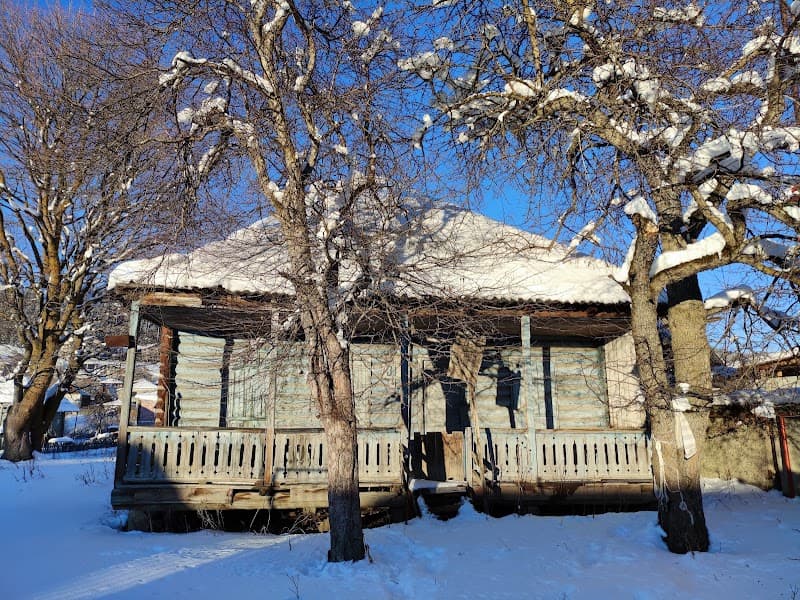
📊The Numbers
| Metric | Value |
|---|---|
Family Score | 6.1Average |
Best Age Range | 4–12 |
Kid-Friendly Terrain | 45%Above average |
Ski School Min Age | — |
Kids Ski Free | — |
Local Terrain | 36 |
Score Breakdown
Value for Money
Convenience
Things to Do
Parent Experience
Childcare & Learning
Planning Your Trip
💬What Do Other Parents Think?
What Parents Love
- The Borjomi day trip Families consistently mention this as a highlight, with kids collecting free mineral water from natural springs and riding the cable car over the gorge
What Parents Flag
- Limited terrain for confident intermediates Once kids master the blues, there's not much progression left at Bakuriani itself
- Language barriers in some mountain restaurants A few parents note ordering can be challenging without pointing and gesturing
- Inconsistent lift opening times Several families mention the 9:30am start feeling late when eager kids are ready to ski at 8am
The moment families remember most? Watching their children confidently skiing down Half Pipe while Georgian folk music plays from the mountain speakers, with the Caucasus Mountains stretching endlessly in every direction.
Families on the Slopes
(16 photos)Photos from Google Places. Posted by visitors.
How Much Are Lift Tickets?
A family of four, two adults, one child aged 6-12, one under-6, pays 138 GEL per day for lift access. That's about €44. In the Alps, that buys one adult a half-day pass.
- Multicard first: Every skier needs a reusable Multicard RFID card (5 GEL each, ~€1.60) before loading any pass. A family of four spends 20 GEL (~€6.50) on cards before their first run, buy these on arrival before joining the lift pass queue
- Under-6 rule: Children under 6 ski free on the MTA system. If your toddler will ride only two or three runs, you don't need a Multicard for them at all
- 25 Ski Park for day one: This zone operates entirely outside the Multicard system, pay 1-3 GEL cash per lift ride. A morning of tentative first runs costs under €3 total. Use it as a commitment-free taster before investing in full passes
- Season pass maths: An adult season pass is 650 GEL (~€206); child is 325 GEL (~€103). That's valid across all four MTA resorts, Bakuriani, Gudauri Goderdzi and Mestia. If you're skiing more than 12 days across a Georgian winter, the pass pays for itself
- Ski lesson savings: Group children's lessons start from around 100 GEL (~€32) at Skinane and Xtreme Ski-School. A private instructor like Levan (levanski.com) costs more but teaches in fluent English from age 4, worth it for anxious first-timers who need clear parent-instructor communication
- Accommodation booked through international platforms carries a markup versus booking directly with the property via WhatsApp. The price difference across a week can fund an extra day's skiing for the whole family
Georgia's low costs aren't a promotional quirk or a weak-currency window, they reflect the country's structural price level. Restaurant meals, groceries, and transport are all proportionally affordable. Budget families should plan around a sustained low daily spend rather than chasing specific deals or promo codes.
Planning Your Trip
🏠Where Should Your Family Stay?
Book accommodation with transfer assistance included, in Bakuriani, your host is your concierge, translator, and logistics fixer. This isn't a resort where you walk in cold and figure it out at a tourist office.
- Best convenience, Kokhta Bakuriani Hotel: The only ski-in/ski-out option. A 5-star, 92-room property with indoor ice skating, a kids' playground, and a restaurant, operated by Silk Hospitality. Mixed-ability families will find the easiest daily rhythm here, beginners and advanced skiers leave from and return to the same door. No published rack rates in our research; contact the hotel directly
- Best value, Crystal Complex apartments: Self-catering apartments with an on-site cable car, spa, swimming pool, and restaurant. Airbnb-listed units rate 4.9-5.0 from guests. Families who cook half their meals here save significantly versus eating out every night
- Best immersion, Local guesthouse: Budget families and adventurous first-timers will find guesthouses where owners cook Georgian meals, drive you to the lifts, and treat your children like visiting relatives. Book through a Georgian operator or ask in Bakuriani-focused Facebook groups for current recommendations
We don't have verified nightly rates for any Bakuriani property. Georgian accommodation pricing is fluid and often negotiable, especially for week-long stays booked directly with the host rather than through international platforms.
✈️How Do You Get to Bakuriani?
Fly into Tbilisi International (TBS) and budget three hours for the drive south, that's the only realistic winter route. The charming narrow-gauge Kukushka train from Borjomi operates in summer only; forget it for a ski trip.
- Best airport: Tbilisi (TBS), served by Wizz Air Turkish Airlines LOT, and others from major European hubs. Visa-free entry for EU, UK, US, Canadian, and Australian passport holders for up to 365 days
- Transfer reality: Private car transfer runs 3 hours via the Borjomi gorge. Arrange through your hotel or a Georgian operator like Adventure Georgia. Shared minibuses exist but aren't practical with ski gear and young children
- The smart move: Book your transfer in advance via WhatsApp through your accommodation host. Most guesthouse and hotel owners arrange reliable drivers at local rates, cheaper and more dependable than negotiating at the airport
- Winter warning: The Borjomi, Bakuriani road section can ice over. A 4WD or experienced local driver matters. Don't self-drive your first visit
- EU roaming: Does not apply in Georgia. Buy a prepaid SIM at Tbilisi airport before you leave the terminal, you'll need it for WhatsApp coordination throughout the trip
The drive through the Borjomi gorge, dense coniferous forest, river valley, occasional monastery ruin, is the kind of journey kids press their faces to the window for. Build in a leg-stretch stop at Borjomi town for mineral water from the source.
☕What's There to Do Off the Slopes?
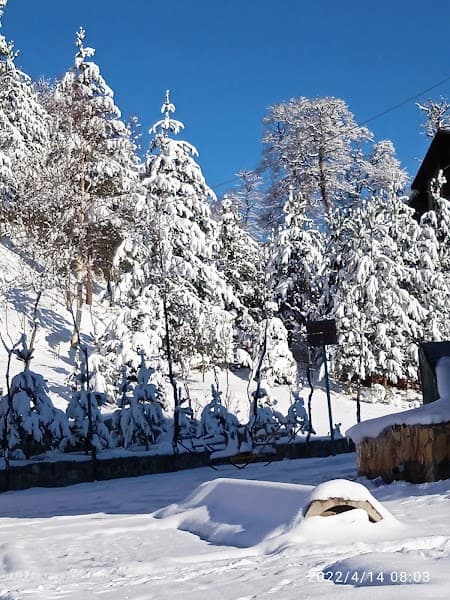
Evenings in Bakuriani are quiet, forest-framed, and low-key, there's no strip of bars and shops pulling you out after dark. That's either a relief or a limitation depending on your family's energy levels.
- Best warm-up: Kokhta Bakuriani's indoor ice rink and kids' playground are the default post-ski option for hotel guests. Crystal complex's pool and spa serve the same purpose for apartment families
- Evening reality: Expect dinner at your hotel or guesthouse, a walk through the village's spruce-lined lanes past A-frame wooden houses, and an early bedtime. Kids under 10 won't complain; teenagers might get restless by day four
- The food moment: Khachapuri (cheese-filled bread, often with a runny egg on top) and khinkali (soup dumplings you eat with your hands, the technique becomes a family competition) are the dishes your children will request for months afterward. Guesthouse meals often include both, served family-style by owners who take visible pride in the spread
- Day trip, Borjomi: The spa town is 30 minutes by car. Borjomi Central Park's mineral water spring lets kids fill bottles from the source, the warm, slightly sulphuric water is an experience they'll either love or theatrically reject. Either way, they'll tell their classmates about it
- Walkability: Bakuriani village is compact and flat enough for pushchairs. Groceries are available at small local shops, though selection is basic, bring specific snacks from Tbilisi if your children are particular
We don't have confirmed names or prices for specific independent restaurants in Bakuriani. According to parent reviews, most families eat at their accommodation or hotel restaurants, and report spending remarkably little.
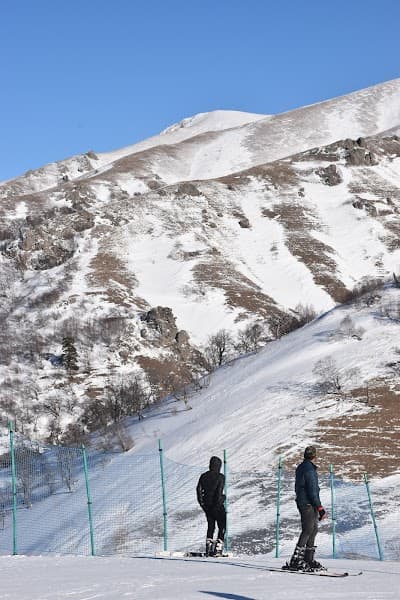
When to Go
Season at a glance — color-coded by family score
Common Questions
Everything families ask about this resort
Have a question we didn't cover? We'd love to add it to our guide.
The Bottom Line
Would we recommend Bakuriani?
What It Actually Costs
Bakuriani is the lowest-cost family ski destination reachable from Europe on scheduled flights, and the gap versus the Alps isn't marginal, it's structural.
- Lift passes (family of 4: two adults, one child 6-12, one under-6): ~138 GEL/day (~€44). The same family pays €150-€220/day at a French or Austrian resort
- Ski school: Group children's lessons from ~100 GEL/day (~€32). Alpine equivalent: €50-€80/day. A five-day course saves roughly €100-€250 per child versus the Alps
- Accommodation: No verified nightly rates available in our research. Parents on review sites describe guesthouse stays from 100-200 GEL/night (~€32-€65) for a family room including breakfast. Kokhta Bakuriani's 5-star rooms cost more, contact them directly for current rates
- Flights: Budget carriers (Wizz Air) serve Tbilisi from multiple European cities. Return flights from the UK or Central Europe typically range €80-€200 per person depending on timing
- The biggest lever: Georgia's food and transport costs. A family restaurant meal runs 50-80 GEL (~€16-€26) for four people. That's one adult main course in Courchevel
The realistic total for a budget-conscious family of four skiing six days in Bakuriani, including flights from Europe, transfers, accommodation, lift passes, lessons, and food, sits in the €1,500-€2,500 range. The equivalent trip in the French Alps starts above €4,000. That's not a rounding error; it's the difference between one ski trip a year and two.
Your Smartest Money Move
Kokhta Bakuriani's 5-star rooms cost more, contact them directly for current rates Flights: Budget carriers (Wizz Air) serve Tbilisi from multiple European cities.
The Honest Tradeoffs
Georgia's distance from Western Europe, its non-Latin script, limited English beyond the ski school, and an accommodation market without standardised quality ratings create real logistical friction, especially if something goes wrong on the mountain with a young child.
- Medical infrastructure: No English-guaranteed medical facility at the resort. Serious injuries mean a transfer to Tbilisi, three hours away
- Groomed terrain ceiling: Annual families skiing reds and blacks will exhaust Bakuriani's challenge in three to four days
- No resort village ecosystem: No pedestrian high street, limited shops, no après-ski scene. Families who need evening stimulation beyond their hotel will feel the gap
If Bakuriani's friction is too high for your family, consider Bansko Bulgaria for similar budget skiing with better English and more developed resort infrastructure, Gudauri, Georgia for stronger intermediate-to-advanced terrain with the same low Georgian costs, or Les Gets France for the same gentle beginner-friendly brief at standard Alpine prices and logistics.
Would we recommend Bakuriani?
Bakuriani is the strongest value play in European-accessible family skiing for beginners. The combination of a €17.50 adult day pass, free under-6 skiing, dedicated green terrain, and instructors who've been teaching children since the Soviet era creates a proposition no Alpine resort can match on cost. Don't book it if you need reliable English everywhere, standardised hotel quality, or a polished resort village. Bakuriani demands more planning than a week in Méribel.
Your booking sequence: contact ski school first (Bakuriani Ski Academy or instructor Levan at levanski.com, both confirmed English-speaking), then lock accommodation (Kokhta Bakuriani for ease, Crystal complex for value), then book flights to Tbilisi, then arrange a transfer through your accommodation host via WhatsApp. Total planning time: one evening after the kids are in bed, but start six weeks out.
Similar Resorts
Families who loved Bakuriani also enjoyed these
Changbaishan
Jasná
Whiteface
Snowshoe Mountain
Ski Santa Fe
Mount Hutt
Transparency note: This content was created with AI assistance and reviewed by Tom Meredith, our editor. Prices, dates, and availability may change. We recommend confirming details directly with the resort before booking.