Bansko, Bulgaria: Family Ski Guide
30 beginner runs, £498 for the week. Zermatt costs twice that.
Last updated: June 2026
Bulgaria
Bansko
Book Bansko if your family is new to skiing and you want the lowest financial risk in Europe. The combination of ~£40/day lift passes, sub-£25/night apartments, and £33 family dinners means a failed first ski week costs you hundreds, not thousands. Book ski school first, Pirin River's VIP Kids lesson (hotel pick-up from 08:15, drop-off at 17:30) fills up in peak weeks and frees your entire day. Then book accommodation within walking distance of the gondola station. Then flights to Sofia on Ryanair or Wizz Air. Equipment hire can wait until arrival. Don't book Bansko if your family already skis intermediate blues and reds confidently. Thirty-three runs won't hold you past day five. Look at Les Menuires for more terrain at a still-reasonable price.
Is Bansko Good for Families?
If Zermatt is the resort where you spend freely and ski endlessly, Bansko is where you spend a fraction and ski enough. A Post Office Travel Money survey put the weekly adult all-in cost at £499 here versus £1,148 in Zermatt, a saving of over £648 per adult per week.
This is the strongest budget play in European skiing for first-timer families: five ski schools take children from age 3, and a fenced kids' zone has its own drag lifts, magic carpet, and carousel.
Confident intermediate or advanced skiers who need varied challenging terrain
Biggest tradeoff
How Much Are Lift Tickets?
Bansko's cost advantage is not a small margin, it is a different category of affordability. The Post Office Travel Money survey found a week's skiing here (passes, hire, lessons, on-slope food) costs an adult £499. The same week in Zermatt: £1,148. That gap is wide enough to fund a second trip.
An adult day pass costs BGN 65 (approximately €33). Children aged 7 to 11.99 pay a reduced rate of roughly BGN 45 (€23) per day.Children under 7 pay a symbolic BGN 100 for the entire season (effectively €51 for unlimited skiing all winter), which makes Bansko one of the cheapest places in Europe to put a young child on snow.
The child must be accompanied and you will need to show a document proving the child's age at the ticket window.Multi-day passes drop the per-day rate further.
A 6-day adult pass runs roughly BGN 340 (€174), and the Bansko Twenty pass offers 20 days of your choice within the season (not necessarily consecutive) at a rate that works out to approximately BGN 55 per day.
That flexibility suits families who visit twice in one winter or ski intermittently during a longer Bansko stay.One friction point: online purchase of new passes is not available. You can reload an existing plastic card from a previous visit online, but first-time visitors queue at the gondola station ticket window.
Arriving before 8:30am on your first day saves 15 to 20 minutes.
Renting full ski equipment through Ulen (the resort operator) unlocks a 10% lift pass discount, and bundling equipment plus an instructor brings that to 15%.
Rental shops on Pirin Street in town are cheaper than slope-side, but they do not trigger the Ulen discount.For a family of four (two adults, one child aged 8, one under 7) doing six days, the total lift pass cost sits around BGN 730 (€373).
Add six days of ski hire for four at town rates and you are still under €600 for the family.
That is the entire lift-and-rental budget at roughly the cost of two adult day passes in Verbier.
📊The Numbers
| Metric | Value |
|---|---|
Family Score | 6.3Average |
Best Age Range | 4–14 |
Kid-Friendly Terrain | 64%Very beginner-friendly |
Ski School Min Age | — |
Kids Ski Free | — |
Local Terrain | 33 |
Score Breakdown
Value for Money
Convenience
Things to Do
Parent Experience
Childcare & Learning
What's the Skiing Like for Families?
Bansko is a confident yes for first-timer families with young children. The dedicated children's ski zone, fenced off from adult traffic with nets and crash mattresses, has three baby drag lifts, a magic carpet, and a carousel. That combination of learning infrastructure at this price point is rare in European skiing.
Your child's first week will likely follow this progression:
- Days 1-2, magic carpet and carousel: Children as young as 3 start here at schools like Sankiy or Snow Peaks. Instructors provide helmets and high-visibility jackets. Groups max out around 8 children.
- Day 3, baby drag lifts: The three small drag lifts in the kids' zone let beginners practise uphill transport without a chairlift. This is the bridge between carpet riding and actual skiing.
- Days 4-5, first green runs: Confident beginners move to the lower green-rated runs above Banderishka Polyana (1,595m), accessed by the gondola. Thirty percent of Bansko's 33 runs are beginner-rated, enough variety for a first week.
- Days 6-7, first blue (maybe): Strong learners may progress to easier blue runs with an instructor. Don't push this, the blues here are real intermediate terrain.
The daily friction point: Bansko's town sits at 925m, but skiing starts at 1,595m after an 8-minute gondola ride. There's no nursery slope you can walk to from your hotel. Every ski day begins with the gondola, which opens at 08:30. For families with very young children, this adds 20-30 minutes of logistics each morning.
For parents who want to ski while their children learn: Pirin River's VIP Kids package includes hotel pick-up from 08:15 and drop-off as late as 17:30. Your child is supervised all day. You're free to explore the mountain, including the steeper stuff a mixed-ability family's stronger skiers will want.
- Best school for English booking: Pirin River and Sankiy have the clearest English-language processes.
- Variable English levels: Snow Peaks and Pirin 2000 are competent on-slope but may require more patience during pre-booking communication.
- Private lessons available: All major schools offer 1:1 instruction if your child needs individual attention or you want a family lesson together.
Trail Map
Full CoverageTerrain by Difficulty
© OpenStreetMap contributors, ODbL
Planning Your Trip
🏠Where Should Your Family Stay?
Book accommodation within a 10-minute walk of the gondola station, everything else in Bansko is a compromise with small children in ski boots. No ski-in/ski-out option exists here, so gondola proximity is the single most important variable in your booking.
- Best convenience, Kempinski Hotel Grand Arena: The closest major hotel to the gondola base. Spa, pool, structured family facilities. The most expensive option in town, but by Alpine luxury-hotel standards, still a fraction of the price.
- Best value, Self-catering apartment near the gondola: Budget apartments start from 45 BGN/night (~£20). A two-bedroom flat with a kitchen lets you control breakfast and lunch costs. Search for apartments on Pirin Street or near Glazne for the shortest gondola walk.
- Best space, Green Life Bansko or Aparthotel Winslow Infinity: Aparthotel-style properties with pools and kitchenettes. Good for families wanting hotel services with apartment flexibility. Mid-range pricing.
We don't have verified nightly rates for most mid-range hotels, check booking platforms directly. Prioritise gondola proximity over amenities. The walk matters more than the pool when your four-year-old is in ski boots at 8am.
Bansko's old town restaurants are a 10-minute walk from most gondola-area hotels, and dinner prices run roughly 30-40 BGN for a family of four, including drinks. That pricing is the real reason families keep returning: you eat out every night and still spend less than a single restaurant meal at a Swiss resort.
💬What Do Other Parents Think?
Parents consistently describe Bansko as an "amazing time" and a "budget-friendly" choice that exceeds expectations. You'll hear phrases like "budget-friendly" and "amazing time" in nearly every family review, often from parents who chose Bulgaria on a whim and were pleasantly surprised by how much their money stretched.
You'll hear parents consistently praise three things. First, the price.
Families who've skied the Alps report spending roughly half what they'd pay in Austria or France, and that math holds across lift passes, lessons, meals, and lodging. Second, the beginner terrain. Parents with first-timers love the gentle, confidence-building slopes.
Multiple parents mention that instructors are patient with young children, and the dedicated kids' zones (separated from adult areas with nets and soft padding) give nervous parents real peace of mind.
Families on the Slopes
(27 photos)Photos from Google Places. Posted by visitors.
☕What's There to Do Off the Slopes?
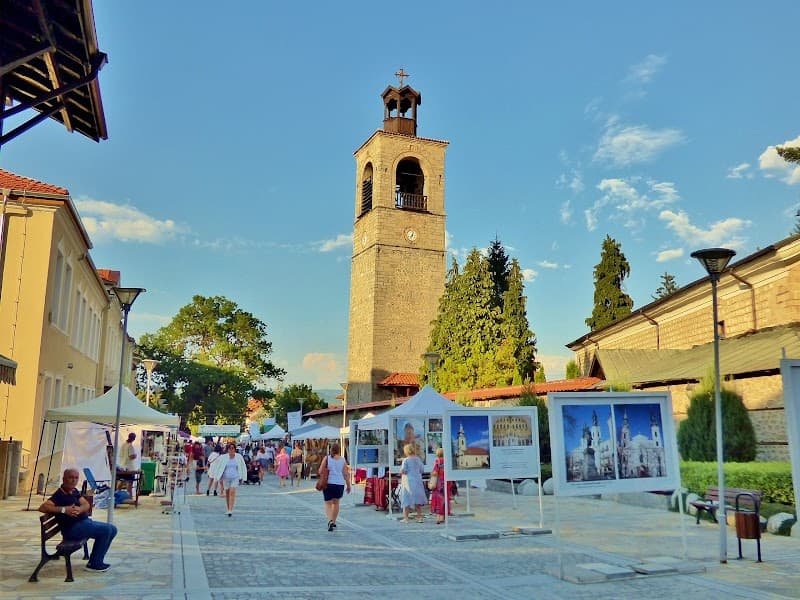
Bansko's old town saves your evenings from the "trapped in a hotel room" problem that plagues purpose-built resorts. The 18th-century quarter, a designated Bulgarian architectural reserve, is a ten-minute walk from the gondola station, with cobblestone lanes lined by mehana taverns where nobody rushes you out the door.
- Best evening activity, mehana dinner: Expect shared tables, clay-pot kavarma (slow-cooked meat), flaky banitsa pastry, shopska salad, and live folk music on weekends. Children are welcome. Budget around 75 BGN (~£33) for a family of four.
- Ice skating rink: Outdoor, town centre, open evenings. Low cost, high novelty for kids under 10.
- Bear Sanctuary day trip: The Dancing Bears Park near Belitsa is 30 minutes from Bansko, rescued bears in forested enclosures. A distinctive family excursion unavailable from any Alpine resort. Best scheduled on a rest day.
- Cafés with play areas: Several old-town cafés have indoor children's play zones. Parents use these for mid-afternoon resets between skiing and dinner.
- Worldschooling infrastructure: Bansko is an established hub for remote-working families. If you're considering a stay of two weeks or more, there are coworking spaces and community networks that most ski towns simply don't have.
Evening walkability is good within the old-town core. Beyond it, pavements are uneven and lighting is limited, bring a head torch if you're in an apartment further out.
When to Go
Season at a glance — color-coded by family score
✈️How Do You Get to Bansko?
Sofia Airport is your only practical starting point, and the two-hour drive to Bansko is straightforward enough with tired children in the back seat. Budget airlines, Ryanair Wizz Air connect Sofia to most major UK and Western European cities, keeping flight costs in the low hundreds.
- Best airport: Sofia (SOF). Well-served by low-cost carriers. No closer alternative exists.
- Transfer reality: The drive is 160km, motorway for the first 90 minutes, then a winding single-lane mountain road for the final 20 minutes. Pre-book a transfer through Balkan Holidays or similar operators if you'd rather not drive. Expect around £50-80 per car each way.
- Rental car call: Worth it for day-trip flexibility (Bear Sanctuary, hot springs near Banya). Parking in Bansko is manageable and cheap.
- Winter warning: Snow chains or winter tyres are legally required November to March. Rental cars should come equipped, confirm at the pick-up desk before you leave.
- Smartest family move: Book a late-morning arrival into Sofia. The drive is easy in daylight, but the mountain road is less fun in the dark with unfamiliar hairpin bends and sleeping kids.
Bulgaria is in the EU but not the Schengen Area. UK passport holders don't need a visa for stays under 90 days.
Common Questions
Everything families ask about this resort
Have a question we didn't cover? We'd love to add it to our guide.
The Bottom Line
Would we recommend Bansko?
What It Actually Costs
A family of four can ski a full week in Bansko for less than a long weekend costs in most Alpine resorts. Here's what that looks like in practice.
- Budget family (2 adults, 2 kids under 7), one week: Lift passes ~£400 (2 adult 6-day passes; kids free). Self-catering apartment ~£140. Flights from UK ~£300-500 (4 × budget airline). Equipment hire ~£200 (town shop). Ski school ~£250-400 (group, 5 days). Groceries + 3 mehana dinners ~£200. Total: roughly £1,500-£1,850. That's less than lift passes alone cost a family at some Swiss resorts.
- Comfort family (2 adults, 2 kids 8-12), one week: Add child lift passes (~£200), upgrade to a mid-range hotel (~£500-700), eat out more often (~£350). Total: roughly £2,200-£2,800. Still dramatically below the Alpine average for an equivalent week.
- Hotel ski-hire desks: 30-40% markup over town shops
- On-mountain lunches: Double the old-town price for the same food
- Individual transfers: Package operators bundle Sofia, Bansko transport cheaper than separate bookings
- The currency trap: Paying in EUR at tourist exchange rates instead of withdrawing BGN from ATMs
One honest caveat: the Post Office survey figure (£499/week all-in per adult) dates from 2021. Prices in Bansko have risen since, though the gap with Alpine resorts remains enormous.
Your Smartest Money Move
Budget family (2 adults, 2 kids under 7), one week: Lift passes ~£400 (2 adult 6-day passes; kids free).
The Honest Tradeoffs
No ski-in/ski-out accommodation exists in Bansko. The gondola station sits at the south end of town, and every ski day starts with a walk, in ski boots, with children, carrying gear. For families used to Alpine resorts where you click into bindings at the hotel door, this is a daily friction point that doesn't go away.
The terrain ceiling is real. Thirty-three runs won't challenge a confident skiing family beyond mid-week. Strong intermediates will feel repetition by day four or five.
Mountain infrastructure, grooming consistency, on-slope dining, signage, is functional but noticeably below French or Austrian standards. If seamless, hotel-linked mountain access is what you picture when you think "family ski trip," Bansko will disappoint.
If this resort isn't right for your family, consider:
- Les Menuires: Bigger terrain and better snow reliability, still budget-conscious by French standards, but meaningfully more expensive than Bansko.
- Borovets: Even cheaper than Bansko, though smaller and with less village character.
- Pamporovo: Flatter beginner terrain for very young children, but minimal off-slope life and even less terrain variety.
Would we recommend Bansko?
Book Bansko if your family is new to skiing and you want the lowest financial risk in Europe. The combination of ~£40/day lift passes, sub-£25/night apartments, and £33 family dinners means a failed first ski week costs you hundreds, not thousands.
Book ski school first, Pirin River's VIP Kids lesson (hotel pick-up from 08:15, drop-off at 17:30) fills up in peak weeks and frees your entire day. Then book accommodation within walking distance of the gondola station. Then flights to Sofia on Ryanair or Wizz Air. Equipment hire can wait until arrival.
Don't book Bansko if your family already skis intermediate blues and reds confidently. Thirty-three runs won't hold you past day five. Look at Les Menuires for more terrain at a still-reasonable price.
Similar Resorts
Families who loved Bansko also enjoyed these
Pamporovo
Sierra Nevada
Białka Tatrzańska
Špindlerův Mlýn
Savognin
Hauser Kaibling
Transparency note: This content was created with AI assistance and reviewed by Tom Meredith, our editor. Prices, dates, and availability may change. We recommend confirming details directly with the resort before booking.