Caviahue, Argentina: Family Ski Guide
Ski 15 runs beside an active volcano. Kids actually progress here.
Last updated: June 2026
Argentina
Caviahue
Book a cabin in the village first, then arrange transfers from Neuquen airport (365km). If your family wants more terrain and better infrastructure, Cerro Catedral in Bariloche is Argentina's flagship. If you want another small, family-focused alternative, Chapelco near San Martin de los Andes is easier to reach. Book accommodation in Caviahue village and buy multi-day passes for per-day savings. Bring cash. ATMs are unreliable and card acceptance is limited. The drive from Neuquén takes 4+ hours on mountain roads. Stock up on groceries in Zapala (2 hours away), as village shops carry only basics.
Is Caviahue Good for Families?
Caviahue is Argentina's gentlest family resort, built on an active volcano with 40% beginner terrain and reliable Patagonian snow. It is the opposite of Cerro Catedral's big-mountain energy. Best for first-time ski families who want empty slopes, hot springs, and monkey puzzle forests instead of a polished resort village. Remote and basic, but something special.
You need confirmed, transparent pricing before booking
Biggest tradeoff
What's the Skiing Like for Families?
Caviahue is about as easy-mode as Argentine skiing gets for families still finding their feet. Forty percent of the 22 marked runs are classified as beginner terrain, and unlike resorts that shove beginners onto a single flat patch near the car park, that allocation here means real runs with actual vertical off the new Ñirantal quad chairlift.
The Ñirantal quad, installed for the 2025 season, replaced the old double chair serving the beginner zone. That doubled lift capacity and halved queue times in the sector where families spend most of their first days.
And $500 million ARS in snowmaking went specifically into this beginner area, so even in thin early-season weeks, the learning zone holds coverage when the upper mountain doesn't.
- First steps (ages 4-5): The Snow Garden programme runs half-day and full-day sessions from the new expanded ski school building opened in 2025. Kids start on carpet lifts at the base.
- Junior Group (ages 6-12): Four-hour daily sessions, longer than many European equivalents, giving kids a full morning of structured practice before lunch.
- Adult group lessons: Two-hour blocks, which is shorter than you'd get at Chapelco. Supplement with a private afternoon lesson if you're serious about progressing.
- First chairlift moment: The Ñirantal quad is the natural graduation. Wide, gentle runs off the top let beginners practise with real altitude beneath them and araucaria forest framing the view.
- Early June: Season opens but coverage can be thin at the 1,650 m base. Snowmaking on the beginner sector provides insurance, this is exactly what that $500 million ARS investment was for.
- July school holidays (mid-July): Peak season. Best combination of coverage and crowds, this is when Argentine families from Neuquén and Buenos Aires arrive in force.
- August: Typically strong coverage across the full mountain. Quieter than July, and shoulder-tier pricing kicks in on passes and lessons.
- September: Statistical peak snow depth, the 171 cm summit average falls here. The trade-off: some years the season closes by late September, so confirm operating dates before booking flights.
Trail Map
Full CoverageTerrain by Difficulty
Based on 7 classified runs out of 15 total
© OpenStreetMap contributors, ODbL
📊The Numbers
| Metric | Value |
|---|---|
Family Score | 6Average |
Best Age Range | 5–15 |
Kid-Friendly Terrain | 0%Limited for beginners |
Ski School Min Age | — |
Kids Ski Free | — |
Local Terrain | 15 |
Score Breakdown
Value for Money
Convenience
Things to Do
Parent Experience
Childcare & Learning
Planning Your Trip
🏠Where Should Your Family Stay?
Book early and accept limited choice, Caviahue village is small, fills fast during Argentine school holidays in mid-July, and offers no large resort hotel complexes.
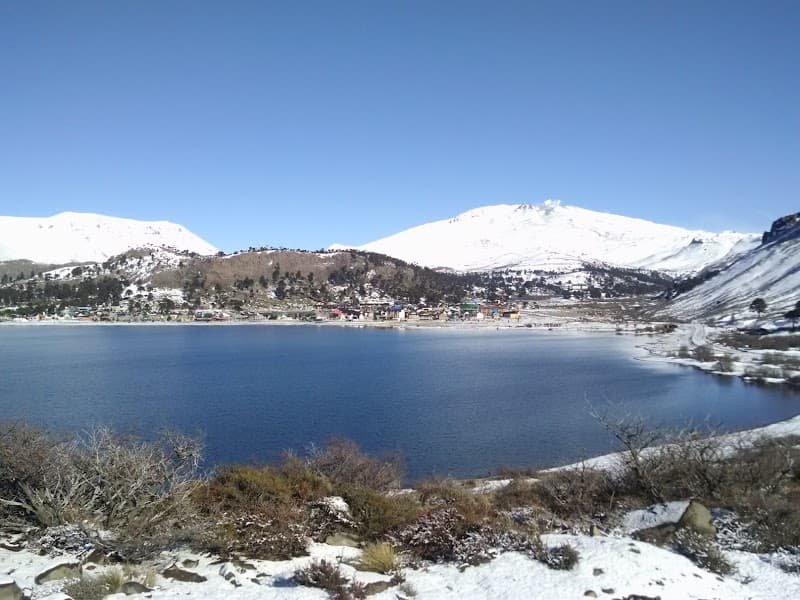
The compact village layout means most lodging sits within walking distance of the single base area where tickets, rentals, ski school, and restaurants cluster. You won't need a car once you're settled in.
- Best convenience, Gran Hotel Caviahue: The most-referenced hotel in parent reviews, located in the village with straightforward access to resort services. Expect comfortable but not luxurious rooms. Book at least 6-8 weeks ahead for July dates.
- Best value, Cabañas (self-catering cabins): Small rental cabins are the typical accommodation here. Kitchen facilities let budget families skip restaurant costs for breakfast and dinner, and with limited dining options in the village, self-catering is practical, not just economical.
- Best space, Apartment rentals: Some larger family units accommodate 4-6 guests. Availability information is limited in English, searching in Spanish or contacting Caviahue's tourism office directly yields more options.
We don't have verified pricing data for Caviahue accommodation. Argentine peso volatility means published rates shift frequently, confirm pricing close to your travel dates and expect to pay in ARS. Wi-Fi across the village is unreliable, so download offline maps and entertainment for kids before arriving.
How Much Are Lift Tickets?
Caviahue is inexpensive by global standards in hard currency, but pinning down exactly how inexpensive is the challenge, Argentine peso pricing shifts constantly and no discount aggregator currently serves this resort.
- Pass math: Published 2025 adult day passes run 1,284,000 ARS; children (6-11) 593,000 ARS; youth (12-16) 920,000 ARS. Seniors 65-69 pay the child rate. According to lanacion.com.ar, these are peak-season figures, no confirmed multi-day bundle or family pass appeared in our data, so ask at the ticket window.
- Shoulder-week pricing: Argentine resorts use alta/media/baja temporada tiers. Avoid the mid-July school holiday fortnight and you'll pay lower rates on passes, ski school, and sometimes accommodation simultaneously. This compound saving is the biggest lever available.
- Self-catering: Book a cabaña with a kitchen. Restaurant options in the village are limited anyway, cooking breakfast and dinner is both practical and economical.
- Currency awareness: International families paying with foreign cards or exchanging USD in-country may receive more favourable effective rates than published ARS prices suggest. This is real but unpredictable, treat it as a bonus, not a budget assumption.
- Under-6 pricing: Not confirmed in source data. Ask at the ticket office, Argentine resorts typically offer free or heavily reduced passes for young children.
- Private ski lessons and equipment rental. Group lessons and bringing your own gear, or renting in Neuquén city before the bus, save meaningfully.
Planning Your Trip
✈️How Do You Get to Caviahue?
Fly to Neuquén airport (NQN), then take the Alto Limay Viajes bus, it runs door-to-door from Cipolletti (adjacent to Neuquén city) to Caviahue village in roughly five hours, with Starlink satellite wifi onboard to keep kids occupied on the drive.
- Best airport: Neuquén (NQN), with domestic flights from Buenos Aires in about two hours. International families should connect through Buenos Aires Ezeiza (EZE) or Aeroparque (AEP).
- Transfer reality: 365 km from Neuquén city. No quick transfer exists, this is a committed journey. The Alto Limay bus is the simplest option for families without a rental car.
- Driving option: Rental car from Neuquén gives flexibility, but Route 26 into Caviahue is affected by winter weather. Carry chains and check road status before departure, closures happen during heavy snowfall.
- Rail: None. No train service connects to Caviahue.
- From Buenos Aires direct: 1,550 km by road, a two-day drive with children. Fly instead.
- Smartest family move: Book Neuquén flights arriving by midday, overnight in Neuquén city, and take the morning bus to Caviahue. Splitting the journey avoids arriving exhausted with kids after dark on mountain roads.
- Altitude note: Caviahue village sits at 1,647m with skiing up to 2,100m. Most children adjust without issues, but hydrate well on arrival day and keep the first afternoon low-key.
☕What's There to Do Off the Slopes?
Caviahue's off-slope scene is quiet, nature-driven, and in fact limited, this is a small Patagonian village at the foot of an active volcano, not a resort town with a pedestrian shopping strip.
- Dog sledding: The headline non-ski activity, run through the resort's Adventure Department at the base area. Kids love it. Book on arrival during peak weeks, as slots fill quickly.
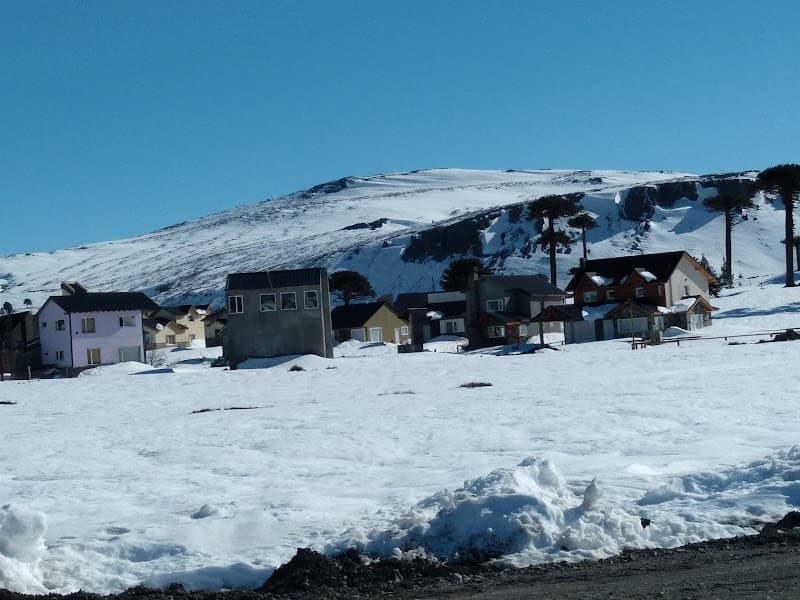
- Snowmobile and oruga excursions: Tracked-vehicle tours through the araucaria forest operate from the base. The ancient monkey puzzle trees surrounding Caviahue are legally protected, the resort sits inside a designated natural area, and you're skiing through a landscape that predates human habitation here.
- Araucaria forest walks: The pehuén tree is sacred to the Mapuche people indigenous to this region, the resort's Pehuén restaurant takes its name from it. A short walk from the base puts you among trees that look like they belong in a dinosaur documentary. Your kids will agree.
- On-mountain dining: Three restaurants operate on the mountain, Las Lengas Pehuén, and Anfiteatro. The resort expanded its food offerings for 2025. Argentine ski culture treats lunch as a 1-3 pm social event, not a quick sandwich. Plan your ski day around this rhythm rather than fighting it.
- Evening reality: A handful of village restaurants and nothing resembling nightlife. Families with young children won't miss it. Families with teenagers might hear about it.
When to Go
Season at a glance — color-coded by family score
Common Questions
Everything families ask about this resort
Have a question we didn't cover? We'd love to add it to our guide.
The Bottom Line
Would we recommend Caviahue?
What It Actually Costs
Extremely affordable in hard currency. Day passes run around ARS 15,000-20,000/adult (~USD 15-20 at typical exchange rates), though peso volatility means prices shift weekly. Accommodation at basic cabañas runs USD 40-70/night. Food in town is cheap, a family dinner for four costs USD 20-30.
A budget family of four skiing five days in a cabaña: plan USD 800-1,200 total for accommodation, passes, equipment, and food. That is a fraction of what any Northern Hemisphere resort charges.
A comfortable family in a mid-range hotel with restaurant dining: USD 1,500-2,200. Still cheaper than a single day at Vail for a family of four.
The hot springs at Copahue (30 minutes away) are a free or near-free rest-day activity. The Araucaria forests and Mapuche culture add depth that pure ski resorts cannot match.
Compare to Cerro Catedral (USD 2,000-3,500/week, much bigger terrain, much higher prices), Chapelco (USD 1,500-2,500/week, more polished, San Martín de los Andes town), or Las Leñas (USD 2,000-3,500/week, expert terrain). Caviahue is the cheapest ski option in Argentina with genuine character.
Your smartest money move: Bring USD cash and exchange locally for the best rate. Accommodation and food are extraordinarily cheap in hard currency. The hot springs at Copahue cost almost nothing and fill a rest day perfectly.
The Honest Tradeoffs
If your kids are under 5, the lack of childcare infrastructure makes this a challenging destination.
If you need convenience and infrastructure, Cerro Catedral delivers a full resort experience with modern lifts and Bariloche's town amenities 20 minutes away. If your family values small-scale intimacy and volcanic landscapes over polished infrastructure, Caviahue rewards that trade-off generously.
If this one gives you pause, consider Chapelco for more groomed runs, better ski school infrastructure, and San Martín de los Andes' charming town scene.
Would we recommend Caviahue?
Book a cabin in the village first, then arrange transfers from Neuquen airport (365km). If your family wants more terrain and better infrastructure, Cerro Catedral in Bariloche is Argentina's flagship. If you want another small, family-focused alternative, Chapelco near San Martin de los Andes is easier to reach. Book accommodation in Caviahue village and buy multi-day passes for per-day savings.
Bring cash. ATMs are unreliable and card acceptance is limited. The drive from Neuquén takes 4+ hours on mountain roads. Stock up on groceries in Zapala (2 hours away), as village shops carry only basics.
Similar Resorts
Families who loved Caviahue also enjoyed these
Cerro Catedral
Le Massif
Valle Nevado
Red Mountain
Blue Mountain
Kicking Horse
Transparency note: This content was created with AI assistance and reviewed by Tom Meredith, our editor. Prices, dates, and availability may change. We recommend confirming details directly with the resort before booking.