ESF vs ESI: Choosing a Ski School for Your Kids in France
France has two main ski-school networks for kids: ESF, the red-jacket giant with the famous medal system, and ESI, the smaller independents with smaller groups and stronger English. Here is how to pick.
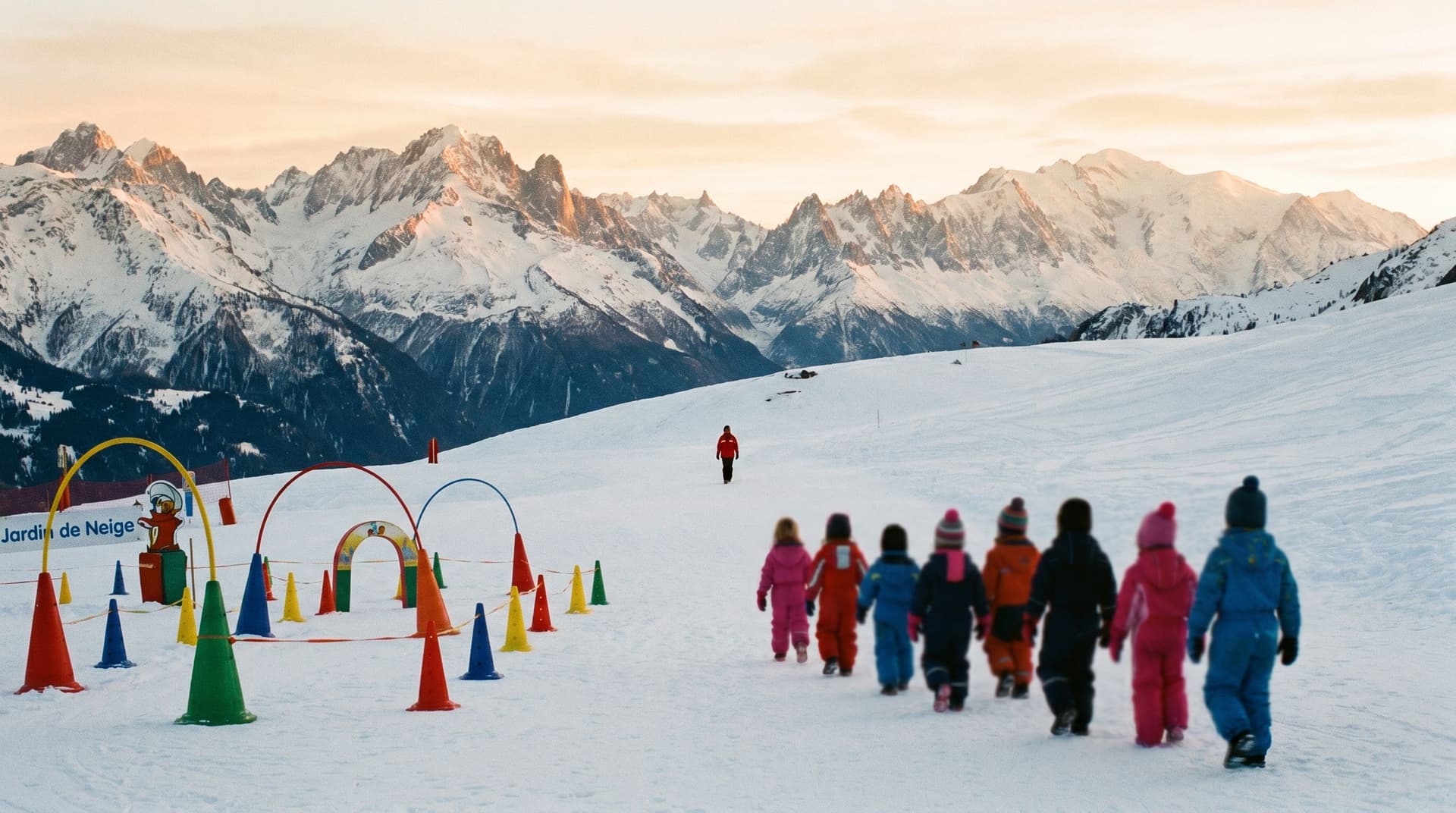
Almost every French resort has an ESF. The red jackets are everywhere, the booking site is the same in every village, and the medal your child brings home at the end of the week is a rite of passage French families have done for three generations. ESF (École du Ski Français) is the safe, default choice, and most of the time it is the right one.
But it is not the only choice. ESI (École de Ski Internationale) and a handful of other independents run smaller groups, almost always teach in fluent English, and tend to cost a little less. For a shy four-year-old, a non-French family, or a child who freezes in a group of ten, that difference matters more than the medal. This guide explains what actually separates the two so you can book the right one before the good slots sell out.
What ESF Is, and Why It Is the Default
ESF is the historic French ski school, founded in the 1940s. It is enormous: roughly 250 schools and around 17,000 instructors, which means there is an ESF in essentially every resort you will consider. That ubiquity is the whole point. You book through one familiar system, the lesson structure is identical from Avoriaz to Val Thorens, and the instructors know the local terrain inside out.
The trade-off is scale. ESF group lessons can be large, often eight to twelve children, occasionally more in peak French school-holiday weeks. A confident kid thrives in that energy. A nervous one can get lost in it. Most ESF lessons are taught in French, and while many instructors speak good English, it is not guaranteed, so a non-French child can end up half-following instructions in a big group.
- Reach: present in nearly every French resort, same booking system everywhere.
- Group size: typically around eight to twelve kids, larger in peak weeks.
- Language: French-first; English varies by instructor, not guaranteed.
- The hook: the medal system French kids grow up chasing.
- Best for: confident children, families wanting the classic French ski-school ritual.
What ESI Is, and When It Wins
ESI is the main alternative, a network of independent schools founded in 1977 specifically to serve the international market. It is far smaller than ESF, around 95 schools and roughly 2,000 instructors, so it is not in every resort. Where it does operate, it competes on the two things ESF cannot easily match: smaller groups and language.
ESI deliberately caps groups smaller, often aiming for around six to eight children rather than ten-plus. Its instructors are recruited and trained to teach fluently in English and frequently other languages too, which is a real advantage for a child who does not speak French. Prices are usually a touch lower than ESF, though this varies by resort. Beyond ESF and ESI, schools like Oxygène, Evolution 2 and Prosneige play in the same small-group, multilingual lane, so check what your specific resort offers.
- Reach: not everywhere, around 95 resorts, so confirm it exists in yours.
- Group size: usually smaller, often around six to eight kids.
- Language: built for international families, strong English and often more.
- Price: frequently a little cheaper than ESF, but check locally.
- Best for: shy kids, non-French families, anyone wanting more attention per child.
ESF vs ESI at a Glance
| What matters | ESF | ESI |
|---|---|---|
| Coverage | Nearly every French resort | Around 95 resorts, not everywhere |
| Typical group size | About 8 to 12 kids, larger in peak weeks | Often smaller, around 6 to 8 kids |
| Language of instruction | French-first, English varies by instructor | Built for international families, strong English |
| Progression system | ESF medals: Piou Piou, Ourson, Flocon, Étoiles | Own level system (Cristal series), medals at week end |
| Availability and booking | Huge instructor pool, but holiday weeks sell out | Smaller pool, book even earlier in busy weeks |
| Typical price | Standard, varies widely by resort | Often slightly lower, confirm on the resort site |
The ESF Medal System, Decoded
The medals are the reason many families pick ESF, and they genuinely help kids stay motivated. The progression is the same across France, so a medal earned in one resort means something in the next. Here is the order, youngest first.
- Club Piou Piou (ages 3 to 5): the gentle introduction, played out in an enclosed snow garden. It has its own internal steps (Piou Piou, Blanchot, Sifflote, Garolou).
- Ourson: the first real badge, learning to slow, turn and stop on gentle green runs.
- Flocon: linking turns, using button lifts, comfortable on green slopes.
- 1re, 2e and 3e Étoile: the famous stars, building parallel turns and control on steeper terrain.
- Étoile de Bronze, then Étoile d'Or: advanced control across varied slopes. Some resorts add Flèche and Chamois for racing.
ESI and other schools run their own equivalent ladders rather than the ESF stars, and your child still comes home with a medal. If a continuous, recognised French progression across multiple seasons matters to you, ESF has the edge here simply because it is everywhere.
Which School Suits Which Family
There is no universally better school, only a better fit for your kid and your week. A few honest rules of thumb.
- Choose ESF if: your child is confident in groups, you want the classic medal progression, or you are in a smaller resort where ESF is realistically the only option.
- Choose ESI (or another independent) if: your child is shy or easily overwhelmed, you are a non-French family who wants instruction your kid fully understands, or you value smaller groups and more attention per child.
- Mixed-ability families: both schools split by level, so siblings can learn separately and meet for lunch. Confirm the meeting point and timing when you book.
- Tight budget: ESI is often marginally cheaper, but the bigger saving is booking a half-day group lesson rather than private, and booking early.
One practical point that overrides the brand debate: in many resorts you will not get a free choice. The smaller the village, the more likely ESF is simply what is available. Check which schools actually operate in your resort before you fall in love with one.
How to Book, and When
Group lessons in French school-holiday weeks sell out, sometimes months ahead, so booking early is the single most useful thing you can do. The lesson is part of a wider plan, so sort the rest in the right order.
- Book your accommodation first, then the lessons, then lift passes. Lessons depend on where you are staying and which schools serve it.
- Book lessons as soon as you have dates, especially for the February and Christmas peaks. ESI sells out faster because it has fewer instructors.
- Pick a format: half-day group lessons (mornings are calmest and best for learning) are the standard, with afternoons free for family skiing. Add a kids-club or lunch slot if the school offers it.
- Prices vary widely by resort and season, so confirm figures on the specific school page rather than trusting a single national number. A week of children's group lessons can run anywhere from roughly 150 EUR in a small resort to well over 350 EUR for full days in a big-name one.
- Bring ID for the lift pass. French resorts use rechargeable hands-free passes and often ask for a child's ID card or photo at pickup.
Frequently Asked Questions
What is the minimum age for kids ski lessons in France?
Should I book private or group lessons for my child?
How does the ESF medal system work?
Is ESF or ESI cheaper?
Do ESF instructors speak English?
My resort only has ESF. Is that a problem?
Get our free family ski trip checklist and one useful email a month.
Ready to Plan Your Trip?
Use our tools to find the perfect family ski resort.
More How-To Guides
40 Alps Experiences Worth Crossing the Ocean For. The Best One Costs Nothing
Forty sourced Alps experiences for families: car-free villages, birth-year lift rules, ski kindergarten, glacier days, and the free evening walk most itineraries treat as a corridor.
How-To GuidesMilan to Cortina With Kids: Complete Transportation Guide
Every option for getting from Milan to Cortina with children. Trains, buses, rental cars, and private transfers compared.
How-To GuidesThe Ultimate Family Ski Trip Checklist
Everything you need to pack for a stress-free family ski vacation, organized by timeline and age group.
Transparency note: This content was created with AI assistance and reviewed by Tom Meredith, our editor. Prices, dates, and availability may change. We recommend confirming details directly with the resort before booking.