Skiing Cortina After the 2026 Olympics: A Family Guide
The Games are over. Now families can ski Cortina's actual Olympic pistes, visit the rebuilt sliding track, and skip the Olympic-week prices.
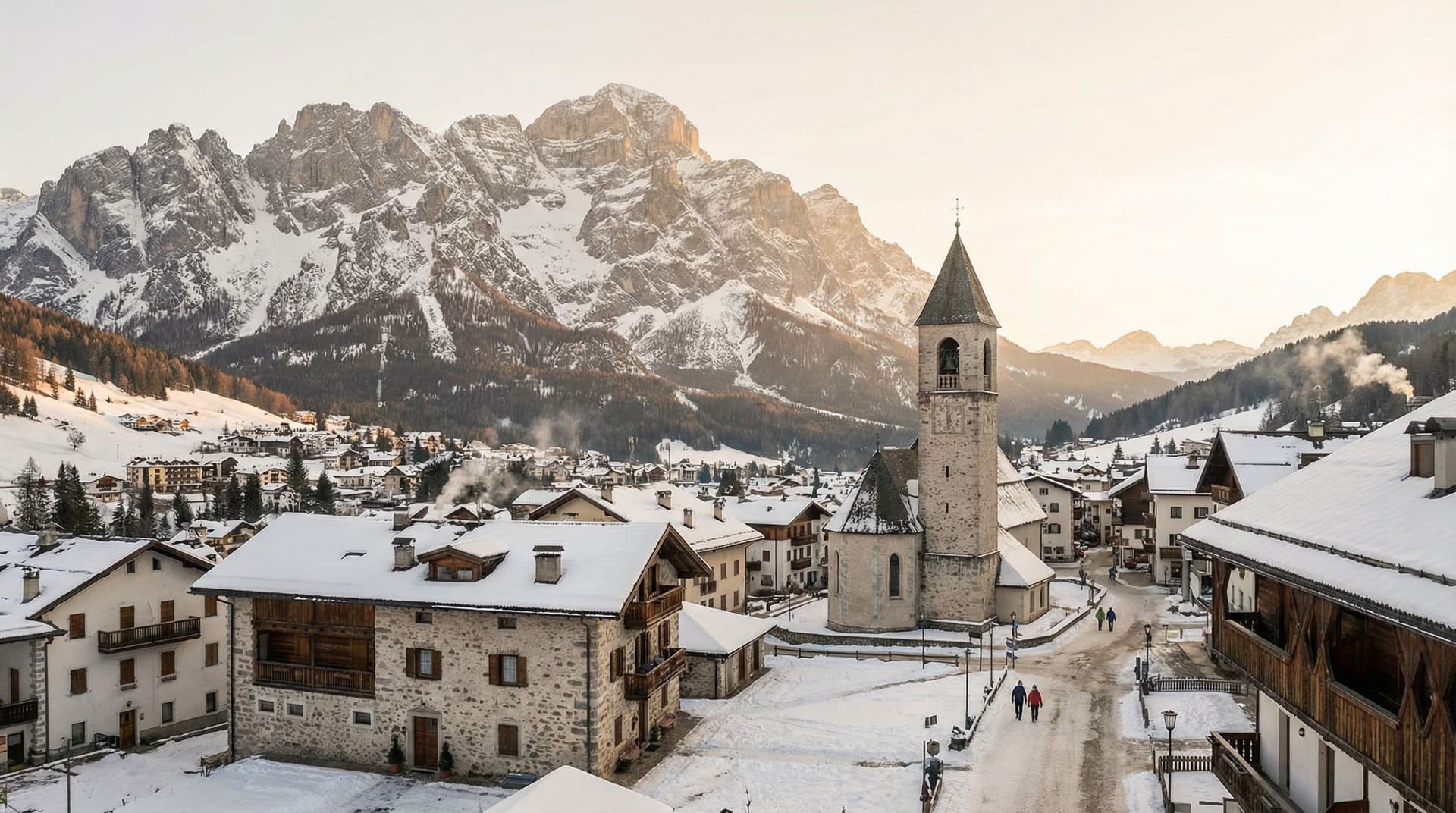
The Cortina d'Ampezzo Olympics are done. The Milano-Cortina Winter Games ran February 6 to 22, 2026, the Paralympics followed through mid-March, and the crowds, the road closures, and the Olympic-week price surge all went home with them. What stayed behind is the good part: the actual race pistes your family can now ski, the rebuilt Olympic sliding track to visit on a rest day, and a resort that has settled back into a normal winter rhythm.
This is the after-Games guide. If you were hoping to plan a trip around the competition itself, that window has closed. But the case for skiing Cortina with kids is arguably stronger now than it was during the circus. You can ski the Olympia delle Tofane, the course where the women's Olympic races were decided, with no race ticket and no security fence. And winter 2026-27 sits in a rare spot: an Olympic course you can ski for the price of a normal lift ticket, with the Games-week premium on passes and hotels already gone.
Below: which Olympic venues families can actually ski, what the Games left behind, how prices and crowds have normalized, and how to plan a Dolomites week that a six-year-old and a nervous parent will both remember fondly.
Which Olympic venues can families ski now?
Here is the correction most planning articles still get wrong: Cortina did not host the men's Olympic alpine races. The men's downhill, super-G, giant slalom, slalom, and combined were held on the Stelvio course in Bormio, roughly 130km west. Cortina hosted all five women's alpine events on the Olympia delle Tofane, the pitch below the Tofana massif that drops toward the Ra Valles and Tofana lift network.
That matters for your trip because the Tofane course is part of the normal ski area, not a walled-off race venue. After Paralympic preparation wrapped, the full Tofana sector reopened to the public on March 16, 2026. A confident intermediate parent can ski the same fall line the racers used, while the wider Tofana runs stay well within reach of a family that skis together.
The sliding sports, bobsled, luge, and skeleton, ran on the rebuilt Eugenio Monti track in a separate valley. You cannot ski it, but the restored track is a real curiosity stop for kids on a rest day. The takeaway for families: the Olympic course is yours to ski now, and none of it comes with a race ticket or an Olympic queue.
When to ski Cortina now
Late January to early February
March
Christmas and New Year
February half-term weeks
Cortina vs other Dolomites family resorts
| Resort | Olympic connection | Lift pass (2025-26 season) | Best for families |
|---|---|---|---|
| Cortina d'Ampezzo | Women's alpine on the Olympia delle Tofane; Eugenio Monti sliding track | €72-80/day | Ski the Olympic pistes; gentle Socrepes beginner area |
| Val di Fassa | None | Dolomiti Superski, €77-86/day | Gentle slopes and well-regarded ski schools |
| Alta Badia | None | Dolomiti Superski, €77-86/day | Wide cruising runs and a strong family food scene |
| Val Gardena | None | Dolomiti Superski, €77-86/day | Big linked area, good for improving intermediates |
| Kronplatz | None | Dolomiti Superski, €77-86/day | Modern lifts and wide, forgiving easy runs |
What the Olympics left behind
The Olympic legacy that matters to a family is access, not medals. The women's races were decided on the Olympia delle Tofane, and that pitch is part of the everyday ski area again, no race ticket or security fence required. The sliding sports ran on the rebuilt Eugenio Monti track, a real curiosity stop for kids on a rest day. Both are open now, and you are not paying an event surcharge to use them.
Prices have settled back toward normal Dolomites levels. Cortina's own day ticket ran €72 in shoulder weeks and €80 in high season across the 2025-26 winter, in line with the wider Dolomiti Superski network at €77 to €86. Official 2026-27 prices typically post in autumn, so treat these as the most recent confirmed figures rather than next season's rate, and check the current price before you book. Either way, the Olympic-week hotel spikes that made headlines in February 2026 are gone: lodging is back to standard high-season pricing, and the shoulder weeks in late January and March remain the value windows.
Crowds have normalized too. The media villages, race grandstands, and spectator shuttles are packed away. What a family finds now is a well-run Italian ski resort and the quiet bragging right of skiing an actual Olympic course. Winter 2026-27 is the first full season with the Games packed away and the race pitch open to everyone, an Olympic course at normal Dolomites prices, which is a strong argument for going sooner rather than later.
Cortina family planning checklist
- Book lodging 4 to 6 months ahead for Christmas, New Year, and the February half-term weeks; these sell out first at any Dolomites resort.
- Buy the Dolomiti Superski pass, which covers Cortina plus the wider Dolomites lift network on one card, if you plan to ski more than one valley.
- Reserve ski school and English-speaking instructors when you book lodging; family group slots fill before the rental gear does.
- Consider staying in nearby San Vito di Cadore or Dobbiaco for lower nightly rates, then driving in to the Cortina lifts.
- Book a mountain-hut lunch table at spots like Rifugio Averau a few days ahead during peak weeks.
- Pack layers for February swings; Dolomites days can move from hard cold mornings to mild afternoons.
- Check that every family passport is valid for the full trip window before you book flights.
- Download offline trail maps of the Cortina ski area for spotty-signal days on the mountain.
Frequently Asked Questions
Can families still ski Cortina's Olympic pistes?
Did Cortina host all the Olympic skiing?
Are lift tickets more expensive now because of the Olympics?
When is the best time to ski Cortina with kids now?
Are there kid-friendly things to do off the slopes?
Is it worth visiting Cortina now that the Games are done?
Get our free family ski trip checklist and one useful email a month.
Ready to Plan Your Trip?
Use our tools to find the perfect family ski resort.
More Regional Guides
South Tyrol for Families: Dolomites Skiing Without a Language Barrier
South Tyrol is the rare Italian ski region where German is an official language, so German-speaking families get Dolomiti Superski terrain and Italian food with no language barrier. Here is which areas actually work for kids, and the trade-offs.
Regional Guides2026 Milan-Cortina Olympics: The Complete Family Guide
Everything families need to know about the 2026 Winter Olympics. What to see, where to stay, and how to make it work with kids.
Regional GuidesTirol With Kids: The Honest Shortlist
Which Tirol ski resort fits which family? Serfaus for the youngest, Ischgl as the surprise, the Zillertal for one pass, St. Anton for older kids. Sorted honestly by age, budget, and transfer.
Transparency note: This content was created with AI assistance and reviewed by Tom Meredith, our editor. Prices, dates, and availability may change. We recommend confirming details directly with the resort before booking.