Garmisch-Partenkirchen, Germany: Family Ski Guide
Germany's highest peak, 90 minutes from Munich, still using 1936 Olympic infrastructure.
Last updated: August 2026
Germany
Garmisch-Partenkirchen
Book in Garmisch town and use public transport to the lifts. If you want bigger connected terrain, cross into Austria: Seefeld, Innsbruck resorts, or the Zugspitz Arena are all close. Oberstdorf is another German option with more cross-country. If you want serious Alpine skiing, Austrian or Swiss resorts are the upgrade. Book a family hotel or pension in Partenkirchen (quieter side) for Hausberg gondola access. Buy the Top Snow Card multi-day pass for per-day savings and access to Zugspitze glacier. Avoid Bavarian school holiday weeks in February. The Olympia-Eissportzentrum (ice skating arena) and Partnachklamm gorge walk are excellent rest-day activities.
Is Garmisch-Partenkirchen Good for Families?
Garmisch is Germany's flagship ski town, home to the Zugspitze (Germany's highest peak) and a history of hosting Olympic and World Cup skiing. The terrain is split across several small areas that do not connect, which is the main frustration.
The town itself is beautiful, the train connections are excellent, and the proximity to Munich (90 minutes) makes it an easy add-on to a city trip. Better town than any Austrian resort of similar size.
Garmisch is a real working town, not a purpose-built ski village — ski-in/ski-out accommodation is rare, slope-side convenience is limited, and the two ski areas (Garmisch-Classic and Zugspitze) require separate ticketing and planning.
Biggest tradeoff
What's the Skiing Like for Families?
Parents can ride the Kreuzeckbahn gondola with beginners and peel off onto adjacent red runs while kids stay on the blues below, you won't be in visual range on every run, but the zones funnel back to common meeting points at the mid-stations. The Zugspitze is a different proposition entirely.
It's not a progression mountain for beginners, it's a bucket-list day-trip where your confident teen or advanced skier can ride glacier runs at nearly 3,000 metres while the rest of the family takes the Zugspitzbahn rack railway up as sightseers. Treat it as one dedicated day, not a daily commute.
The two areas require separate lift tickets, which means mixed-ability families should plan Garmisch-Classic days together and make the Zugspitze an opt-in adventure.
The Skisafari programme at Skischule GaPa deserves a specific mention: an instructor guides your family through all three Garmisch-Classic zones as a narrated tour, pointing out terrain features, hidden viewpoints, and optimal routes.
It's the best way to learn the mountain's layout in a single session.
One practical note on ski school timing: group lessons for children at Skischule GaPa typically run from 10:00 to 12:00 and 13:00 to 15:00, with a lunch break supervised at the Hausberg mid-station restaurant for an additional fee of around €12. Full-day bookings free parents for five uninterrupted hours of skiing, enough to cover every run on Garmisch-Classic twice.
Trail Map
Full CoverageTerrain by Difficulty
Based on 46 classified runs out of 49 total
© OpenStreetMap contributors, ODbL
Planning Your Trip
🏠Where Should Your Family Stay?
GaPa is a real town, not a lift-base development, so accommodation spreads across the valley rather than clustering at the slopes. This is a feature if you want your kids to experience a living Bavarian community. It's a friction point if your definition of a ski holiday starts with walking out your door onto snow.
For families with toddlers, Leiner's family hotel is the clearest choice, it offers dedicated childcare for children aged 1-3, which is one of the only confirmed options in the resort for that age group. For the mixed-ability family where one parent needs to ski while the other manages a non-skiing toddler, this solves a specific problem.
Das Graseck Mountain Hideaway holds a 4.8 out of 5 rating on TripAdvisor across 1,143 reviews, it sits slightly above the town with a cable car connection and suits families wanting a quieter, more elevated experience.Staudacherhof rated 4.6 out of 5 from 633 reviews, is a more central spa hotel that works for comfort-seeking families who want to walk to restaurants after skiing. We don't have confirmed nightly rates for either property, check directly for family room availability.
Budget accommodation starts at approximately €92 per night.
At that price, expect a clean Bavarian guesthouse or apartment, functional, not luxurious, but with a kitchen that will save you hundreds over the week.
✈️How Do You Get to Garmisch-Partenkirchen?
No shuttle bus from a distant car park, no transfer van with eight other families' luggage. You step off the train, you're in town, and the Zugspitze is right there above you. The economics of this train matter, especially for budget-conscious families.
A Bavaria Ticket covers unlimited regional train travel for one day at a capped family price, as of recent pricing, €29 for the first adult and €10 for each additional passenger, meaning a family of four travels return from Munich for under €80 total.
Compare that to car hire (€50-70/day), fuel (€30-40 each way), motorway tolls if you cross into Austria, and parking near the lifts (€5-10/day). The train isn't just easier. It's measurably cheaper. Once you're in town, a car is optional. The local bus network connects the train station to both the Hausberg/Kreuzeck lifts and the Zugspitze base station at Hammersbach.
Buses run every 15-20 minutes during ski season. If you're staying in the town centre, most hotels and guesthouses sit within a 15-minute walk of the Hausberg gondola.
For families who want to explore the wider region (Mittenwald, Seefeld in Austria, or the Partnachklamm gorge), a rental car opens up day-trip options, but for a week focused purely on skiing GaPa, the train-plus-bus combination works and saves roughly €400 over renting a car for the week.
How Much Are Lift Tickets?
The Bavaria Ticket train hack is the single biggest cost saver: under €80 return for a family of four from Munich, versus €200+ when you add car hire, fuel, and parking across a week. Start there.
On the mountain, there's no confirmed family day-pass bundle, you're buying individual adult (€69) and child (€35.50) tickets. For a five-day trip, that's €1,045 for a family of four at day rates. Ask at the ticket office about multi-day passes; we don't have verified multi-day pricing, but German resorts typically discount from day three onward.
Ski school maths: Skischule GaPa charges €68 for the first group lesson day, dropping to €49 per day from day three. A three-day course for one child runs approximately €185, significantly less than a single two-hour private lesson at €169. Put both kids in group lessons and book a private session only if one child needs extra attention.
Rent equipment from AlpensportTotal at €18/day per child and €28/day per adult. A family of four renting for five days spends €460, there's no getting around that cost, but booking online before arrival often secures the gear you need without the morning queue.
Skip the Zugspitze on any day you're watching euros. It requires a separate ticket and adds cost for what is essentially a sightseeing day with limited skiing. Save it for the one splurge day mid-week.
Self-catering cuts your food bill by half or more. Budget guesthouses with kitchens exist from €92 per night, buy Brezn and Weisswurst from a town bakery for breakfast, pack sandwiches for the mountain, and eat out twice during the week.
Planning Your Trip
💬What Do Other Parents Think?
The biggest gripe? Limited terrain for strong intermediates and above.
Parents with older, confident kids mention that the Classic area feels small after two or three days, and the Zugspitze glacier is spectacular but not large enough to fill a week on its own.
Families with mixed-ability groups find it perfect; families with teenagers chasing steep terrain should consider it a three-day destination paired with Munich rather than a full week.
Families on the Slopes
(12 photos)Photos from Google Places. Posted by visitors.
☕What's There to Do Off the Slopes?
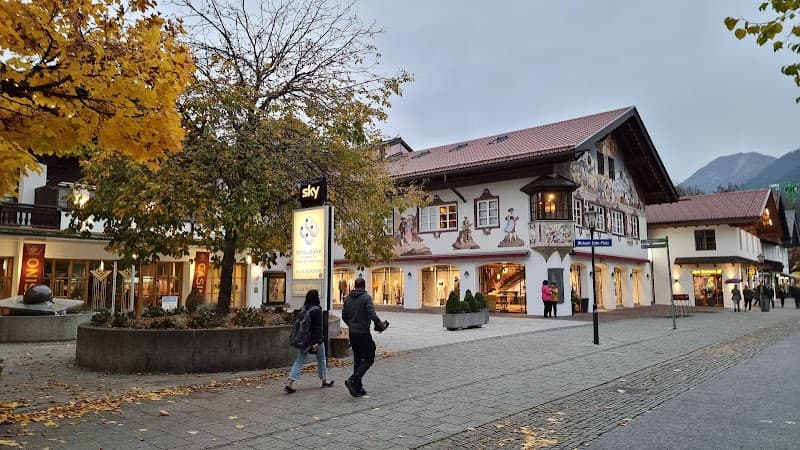
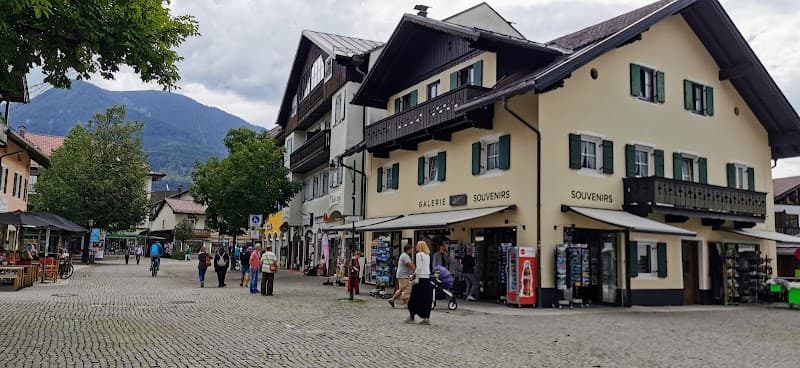
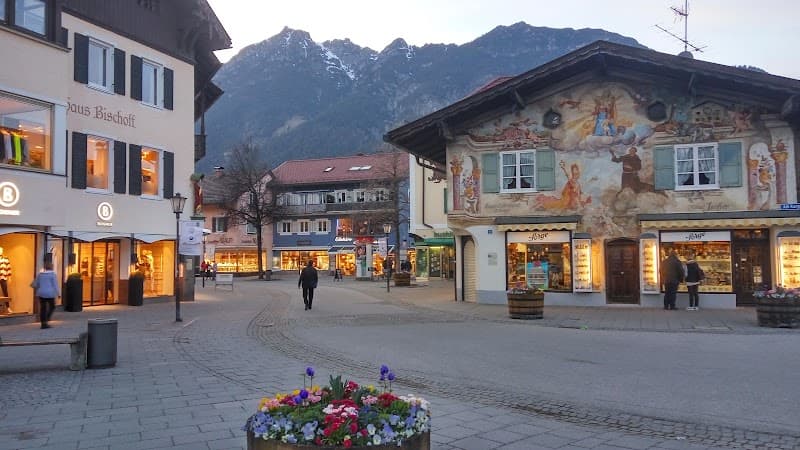
The light catches the Lüftlmalerei, those intricate painted facades on buildings in the old Partenkirchen quarter, and even your screen-addicted twelve-year-old might pause for a photo. This is where GaPa's dual identity earns its keep.
Partenkirchen, the older of the two communities merged by government decree in 1935 ahead of the Olympics, retains its medieval street plan: narrow lanes, low archways, paint that's been refreshed across centuries of the same technique. Walk ten minutes and you're in modern Garmisch, with its broader streets and sportswear shops.
The contrast is visible and worth exploring with kids who are old enough to notice. For a non-ski afternoon, the Partnachklamm gorge walk is the standout. A 700-metre path carved into the rock face follows the Partnach river through a narrow gorge with frozen waterfalls in winter.
Kids aged 5 and up handle it fine, though the walkway is icy and proper boots are essential. Entry costs around €6 for adults, €3 for children.
Budget an hour for the walk and another 30 minutes to warm up at the Gasthof at the gorge entrance afterward. Dinner options run deeper than most ski towns this size. The Gasthof Fraundorfer on Ludwigstrasse is the classic choice: Bavarian food, live zither music some evenings, and a warmth that doesn't feel manufactured.
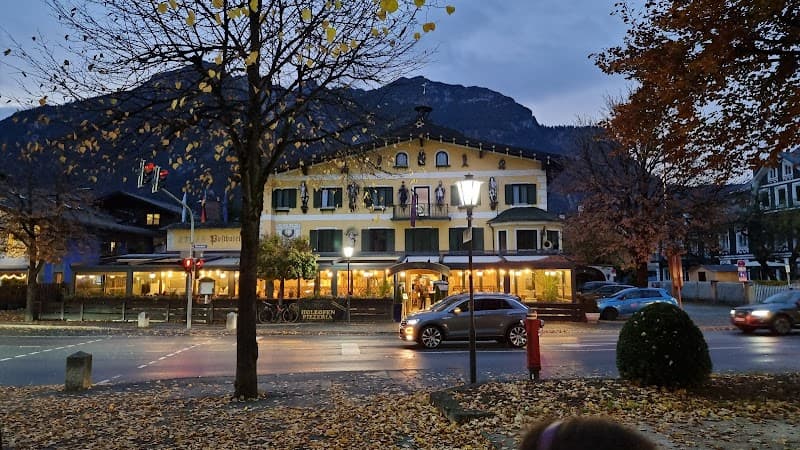
For pizza that your kids will actually finish, Ristorante Pizzeria Roma near the train station has been feeding families reliably for years.
Expect to pay €40 to €60 for a family of four at either spot, drinks included.
When to Go
Season at a glance — color-coded by family score
Common Questions
Everything families ask about this resort
Have a question we didn't cover? We'd love to add it to our guide.
The Bottom Line
Would we recommend Garmisch-Partenkirchen?
What It Actually Costs
Accommodation ranges from EUR 70/night for pensions to EUR 200+ for hotels in the town centre.
A budget family of four skiing five days in a pension with self-catering: plan EUR 2,500 to 3,200 for the week. That is 15 to 20% below comparable Austrian resorts across the border.
Munich Airport is 90 minutes by car or direct train, with budget airline connections throughout Europe.
A comfortable family in a hotel with one Zugspitze day and mountain dining: EUR 3,800 to 5,000. The Zugspitze excursion (expensive but unforgettable at Germany's highest point) inflates the comfort tier more than at pure ski resorts.
Compare to Innsbruck-area resorts (EUR 2,800 to 3,800/week, more terrain, 15 to 20% pricier), Oberstdorf (EUR 2,200 to 3,000/week, similar quality, less famous), or Seefeld in Austria (EUR 2,500 to 3,500/week, more cross-country focused). Garmisch delivers German efficiency, Olympic heritage from 1936, and a spectacular town at pricing below the Austrian competition.
Your smartest money move: Buy a Garmisch Classic pass for daily skiing and add one Zugspitze day trip for the peak experience. Stay in a pension or Ferienwohnung (holiday apartment) rather than a hotel, the savings fund the Zugspitze ticket. Train access from Munich eliminates the rental car if you stay in town.
The Honest Tradeoffs
Garmisch is for families who want a German Alpine town with some skiing, not a ski vacation with a town attached.
Munich day-trippers fill the slopes on weekends and Bavarian school holidays, creating 20-minute lift queues at the Kreuzeckbahn and Hausberg gondola.
Should the tradeoffs outweigh the wins, consider Oberstdorf for a broader ski area with better family terrain.
Would we recommend Garmisch-Partenkirchen?
Book in Garmisch town and use public transport to the lifts. If you want bigger connected terrain, cross into Austria: Seefeld, Innsbruck resorts, or the Zugspitz Arena are all close. Oberstdorf is another German option with more cross-country. If you want serious Alpine skiing, Austrian or Swiss resorts are the upgrade.
Book a family hotel or pension in Partenkirchen (quieter side) for Hausberg gondola access. Buy the Top Snow Card multi-day pass for per-day savings and access to Zugspitze glacier. Avoid Bavarian school holiday weeks in February. The Olympia-Eissportzentrum (ice skating arena) and Partnachklamm gorge walk are excellent rest-day activities.
Similar Resorts
Families who loved Garmisch-Partenkirchen also enjoyed these
Hauser Kaibling
Santa Cristina
La Thuile
Zell am Ziller
Katschberg
Oberstdorf
Transparency note: This content was created with AI assistance and reviewed by Tom Meredith, our editor. Prices, dates, and availability may change. We recommend confirming details directly with the resort before booking.