Zillertal Arena, Austria: Family Ski Guide
Ten ski schools fighting for your kids. You get 143km to yourself.
Last updated: June 2026
Austria
Zillertal Arena
Book Zillertal Arena if you have children under eight and want the Alps' densest concentration of purpose-built kids' ski infrastructure. The ten-school ecosystem means you'll find the right instructor match, small group, right language, right age, without settling. Skip it if you're chasing steep expert terrain, want a single compact walkable village, or plan to ski in late March when that 580 m base creates real slush risk on lower runs. Your booking sequence: Reserve ski school first, bambini classes fill by early December for February half-term weeks. Then lock in accommodation in Gerlos or Zell am Ziller. Then buy multi-day lift passes online for the discount. Then book flights into Innsbruck. One evening's work after the kids are asleep, and you're done.
Is Zillertal Arena Good for Families?
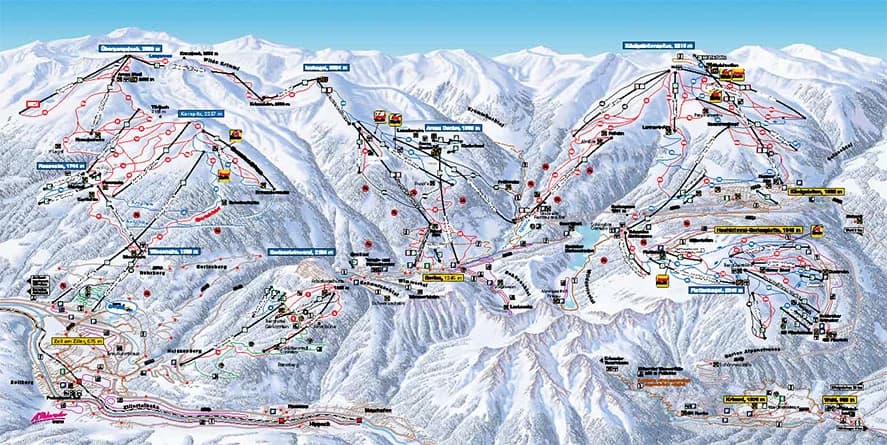
No other Austrian resort puts ten competing children's ski schools within a single 143 km ski area. Zillertal Arena, the largest piece of the 546 km Zillertal Superskipass system, offers childcare from age one, bambini groups capped at five, and dedicated kids' restaurants built on the mountain itself.
What it costs you: a 580-metre base altitude means lower slopes go bare in mild winters, and the four-village layout will disorient first-timers who haven't mapped their route in advance.
You need confirmed ski-in/ski-out lodging — not reliably available here
Biggest tradeoff
What's the Skiing Like for Families?
Mixed-ability families can ski separately all morning and meet without drama, if you choose your rendezvous point before breakfast. The Arena's four-village spread means your advanced teen at Gerlosplatte could be 30 minutes of skiing from your five-year-old on the Rosenalm carpet lifts in Zell. Designate a shared mountain restaurant at midday and everyone skis guilt-free until then.
- Beginners, Zell base (580 m): Blue runs and the Rosenalm children's park with conveyor belt lifts and a dedicated baby lift. Home for the first two or three days.
- Intermediates, Arena red run (6 km): The family centrepiece. Long enough to feel like a genuine achievement, gentle enough that a confident six-year-old can manage it by Friday.
- Advanced, Gerlosplatte: Black runs and steeper terrain for the dad-and-teen duo who need to burn energy while the rest of the family builds confidence below.
- Meeting point, Gerlos village: Mid-valley position with good lift access and several ski schools. The natural regrouping spot for split-ability families.
For confident skiers wanting more, the Zillertal Superskipass unlocks 546 km across four valley-wide ski areas, including Mayrhofen's steeper lines and the Hintertux glacier. The advanced members of your group won't run out of mountain on a full-week stay.
- From age 1: Michi's Schischule in Gerlos accepts children from one year old for childcare. Plastic-ski sessions for two-year-olds run at a maximum of two children per instructor, almost unheard of elsewhere in the Alps.
- Bambini groups (age 3-5): Ski School Pro Zell caps groups at five children per instructor. Michi's offers a "Schnuppern" taster session from €70 for ages 3-4, letting you test before committing to a full week.
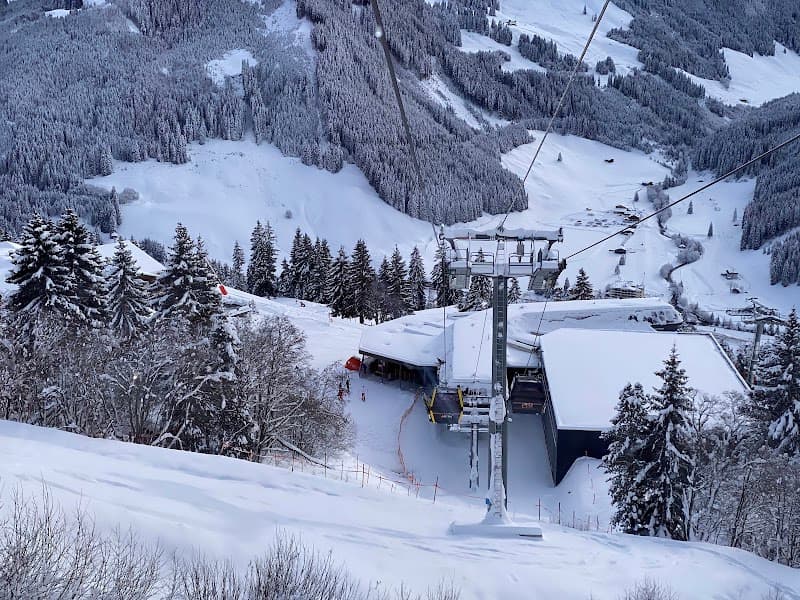
- First carpet to first chair: Rosenalm children's park has conveyor belts and a baby lift, enclosed, slow, designed so a three-year-old doesn't panic. After two to three days, most kids graduate to gentle blues above Zell. By day four, instructors introduce the chairlift.
- All-day supervision: Available for children aged six and over at Ski School Pro Zell, including lunch. This frees both parents for a full ski day, not just one at a time while the other minds the kids.
📊The Numbers
| Metric | Value |
|---|---|
Family Score | 6.6Good |
Best Age Range | 3–14 |
Kid-Friendly Terrain | — |
Ski School Min Age | 3 years † |
Kids Ski Free | — |
Score Breakdown
Value for Money
Convenience
Things to Do
Parent Experience
Childcare & Learning
Planning Your Trip
💬What Do Other Parents Think?
Parents consistently describe Zillertal Arena as a resort that understands families, though the sprawling four-village layout requires some planning to make work. You'll hear praise for the ski schools above almost everything else, with small group sizes and patient instructors earning repeat visits from families across Europe.
That sentiment echoes across reviews: instructors here make technique fun rather than tedious, and the multilingual staff means language barriers rarely become an issue.Your kids will spend their first days on magic carpets and conveyor belts at Rosenalm, building confidence before anyone suggests a chairlift.
The layout draws mixed reactions. Families staying in Zell am Ziller praise the gondola access and village amenities, while those in Gerlos appreciate ski-in/ski-out convenience but note fewer restaurant and shopping options.
Parents with kids under 6 consistently recommend choosing one base village and sticking to its terrain rather than attempting the full arena traverse.
Value earns repeat mentions. Compared to the Stubai or St. Anton, families describe Zillertal Arena pricing as noticeably gentler on lift passes, ski school, and accommodation. The Zillertal Superskipass covering all four valleys gets flagged as the smart buy for families staying a full week.
Families on the Slopes
(24 photos)Photos from Google Places. Posted by visitors.
How Much Are Lift Tickets?
Zillertal Arena prices its 2026/27 day tickets at €82.00 for adults from 8:00am, €65.50 for youth (birth years 2008 to 2011), and €37.00 for kids (birth years 2012 to 2020). Season runs December 4, 2026 to April 11, 2027. Roll in after the early rush and the adult rate drops on a sliding scale: €78.50 from 10:30am, €63.50 from noon, €45.00 from 1:30pm. If your crew is slow out the door anyway, a 10:30 start costs €3.50 and buys a calmer breakfast.
The move for families: children born after 1 January 2021 ride free on the Zillertal Arena pass whenever a paying adult (Aufsichtsperson, a supervising adult) is with them. Pack the kids' ID. Photo ID is enforced for every discounted category without exception, so a passport or ID card is the difference between the €37.00 child rate and paying full freight at the window.
Staying a week? Buy the Zillertaler Superskipass instead of stacking day tickets. Six days runs €399.00 adult, €319.00 youth, €179.50 child for 2026/27, and it opens all four Zillertal ski areas, 546 piste km on 180 lifts, not just the Arena. Seven days is €458.50 / €366.50 / €206.50. The free valley ski-bus rides along with it.
Planning Your Trip
🏠Where Should Your Family Stay?
Book Gerlos for the best balance of ski access, snow reliability, and ski school choice, then don't second-guess it.
- Best convenience, Zell am Ziller: The largest village with the most shops, restaurants, and infrastructure. Direct access to the Rosenalm children's area. Drawback: lowest altitude (580 m) means the walk to lifts can be slushy in warm spells, and it's the busiest base.
- Best balance, Gerlos: Mid-valley position, good direct lift access, home to Michi's Schischule and several other schools. Higher than Zell, better snow at base level. Quieter evenings, fewer restaurants, which is a plus or minus depending on your family.
- Best snow, Königsleiten: Highest base village, most reliable cover, and a in reality quiet Tyrolean feel. Trade-off: fewer amenities and further from the Arena's main beginner areas at Zell.
Self-catering apartments are the budget family's strongest lever here. Budget lodging starts around €90/night based on available data, but we lack confirmed mid-range or luxury pricing. Book through the official zillertalarena.com portal for current rates and availability.
One positioning note: staying in Gerlos or Königsleiten over Zell sacrifices some village nightlife and restaurant choice but gains marginally better lift proximity and snow reliability. For families with young kids who'll be asleep by 8 p.m. anyway, that's a clear win.
✈️How Do You Get to Zillertal Arena?
Innsbruck is the simplest play, 60 to 75 km from the valley, with the most direct route and the shortest transfer with kids in the car.
- Best airport: Innsbruck (60-75 km). Limited route network, but if your city connects, this is the obvious choice. Transfer under 90 minutes by road.
- Most flights: Munich (170 km). Far more route options from the UK and across Europe. Budget around 2-2.5 hours driving, longer in heavy snow.
- Salzburg: 100 km. A middle option that occasionally offers cheaper flights than Innsbruck with a manageable transfer.
- Train option: The narrow-gauge Zillertalbahn runs from Jenbach (mainline connection to Innsbruck) to Zell am Ziller. It's doable car-free, but slow and harder with equipment and small children. Better as a half-day heritage excursion than a commuter option.
- Car verdict: Rent one. With kids, boots, and 6 a.m. ski school starts across different villages, a car isn't a luxury, it's sanity. Winter tyres are legally required in Austria from November to April.
- The insider move: If flying into Munich, book a one-way car rental to drop at Innsbruck or Jenbach on the return, sometimes cheaper than round-trip airport parking plus transfers.
Fuel up in Germany before crossing the border; Austrian petrol stations along the A12 charge roughly 15% more per litre.
☕What's There to Do Off the Slopes?
Evenings in the Zillertal are quiet, warm, and kid-friendly, this is not a party valley, and that's the point.
- Best family après moment: Live Zillertaler brass band music in village gasthauses. These are genuine cultural events, free, informal, and children are expected to attend. Your eight-year-old watching a tuba player in lederhosen perform folk songs at a candlelit table is the kind of evening that sticks.
- Evening reality: Zell am Ziller has the most restaurant and café options. Gerlos and Königsleiten are quieter, plan for self-catering dinners or hotel half-board most evenings. Austrian restaurants in reality welcome children at dinner without fuss.
- Walkability: Each village is compact enough that you won't need a car after dark. Zell's main street has bakeries, small supermarkets, and sport shops within a 10-minute stroll.
- Day-trip standout, Krimml Waterfalls: Among Europe's highest waterfalls, accessible from the valley. A genuine half-day excursion that gives non-skiing family members (or rest-day families) something memorable beyond the hotel pool.
- Winter walking: The Gerlos Wildgerlostal trail to the Stausee Durlaßboden reservoir is confirmed and doable with older children. Tobogganing runs and ice skating are available in the valley, though we lack specific venue details.
We don't have confirmed restaurant names or menu pricing for specific family dining spots. The dedicated children's restaurants on the mountain are a verified feature, but detailed off-mountain dining data is limited in our research.
When to Go
Season at a glance — color-coded by family score
Common Questions
Everything families ask about this resort
Have a question we didn't cover? We'd love to add it to our guide.
The Bottom Line
Would we recommend Zillertal Arena?
What It Actually Costs
Two adults and two school-age kids (birth years 2012 to 2020) pay €238.00 a day in lift tickets at 2026/27 full-day rates (2 × €82.00 + 2 × €37.00), before a single lunch, rental, or lesson. Swap a younger child for a teen in the 2008 to 2011 range and that seat jumps to €65.50 from €37.00.
Buy the week and the math bends your way. A six-day Zillertaler Superskipass for that same family of four totals €1,157.00 (2 × €399.00 + 2 × €179.50), which lands at €192.83 a day against €238.00 at the daily counter. You also stop being pinned to one mountain, because that pass covers all four Zillertal areas, 546 piste km across 180 lifts.
The toddlers ride for nothing. Any child born after 1 January 2021 skis free with a paying adult, so a family with a three-year-old and a preschooler pays for two adult passes and watches the little ones lap the Rosenalm conveyor belts at zero lift cost. Ski school starts at age 3; guest-kindergarten childcare takes children from age 1 if they're not ready to click in.
The Honest Tradeoffs
The four-village sprawl across Zell am Ziller Gerlos, Königsleiten, and Krimml is in reality confusing on a first visit. German-language signage, separate ski school meeting points at different bases, and no single centre of gravity make regrouping stressful without a pre-planned routine.
The 580-metre base altitude at Zell am Ziller is among the lowest of any major Austrian resort. Lower slopes go bare in warm spells, and late-season visitors from mid-March onward should expect to ride lifts up before finding consistent snow. This is not a resort that guarantees doorstep skiing in a mild winter.
If Zillertal Arena isn't right for your family:
- Mayrhofen: Same valley, shares the Superskipass, more compact single village, but steeper terrain and a stronger party scene.
- SkiWelt Wilder Kaiser-Brixental: Austria's biggest linked area with solid family infrastructure, though a similarly low base altitude and less concentrated children's school ecosystem.
- Ski Amadé: More total kilometres and higher-altitude options for better snow insurance, but less purpose-built children's infrastructure per resort.
Would we recommend Zillertal Arena?
Skip it if you're chasing steep expert terrain, want a single compact walkable village, or plan to ski in late March when that 580 m base creates real slush risk on lower runs.
Your booking sequence: Reserve ski school first, bambini classes fill by early December for February half-term weeks. Then lock in accommodation in Gerlos or Zell am Ziller.
Then buy multi-day lift passes online for the discount. Then book flights into Innsbruck. One evening's work after the kids are asleep, and you're done.
Similar Resorts
Families who loved Zillertal Arena also enjoyed these
Hochoetz-Kühtai
Ellmau
Schlick 2000
Radstadt-Altenmarkt
Itter
Gerlitzen
Transparency note: This content was created with AI assistance and reviewed by Tom Meredith, our editor. Prices, dates, and availability may change. We recommend confirming details directly with the resort before booking.