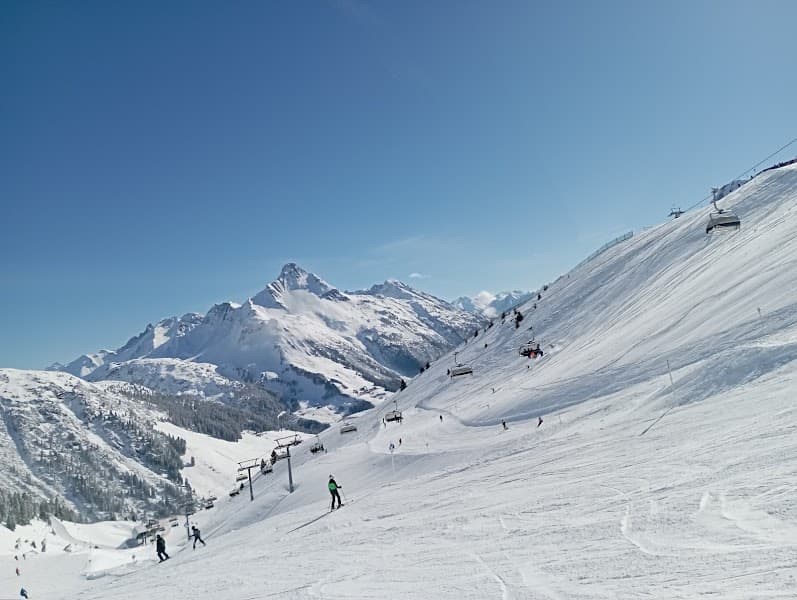
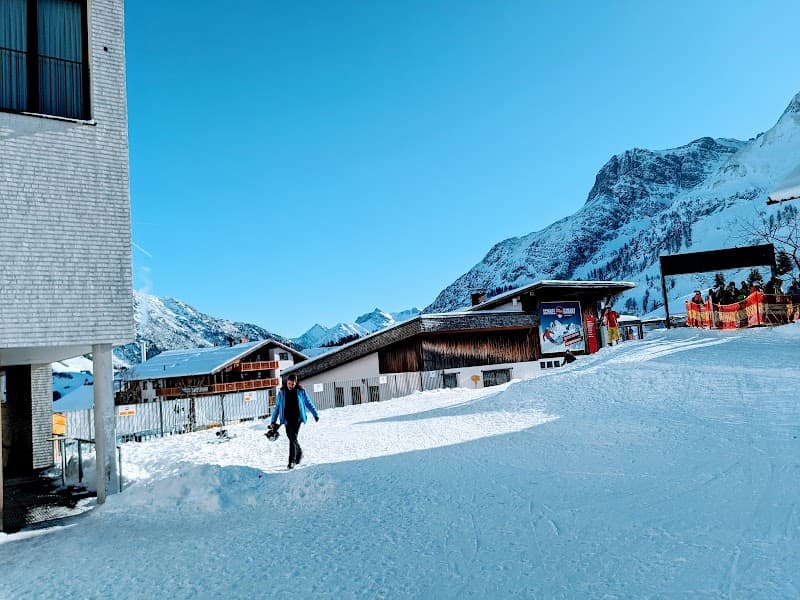
Vorarlberg, Austria

Warth-Schröcken, Austria: Family Ski Guide

305 kilometres of Arlberg terrain. Fairy land beginner zone. No St. Anton crowds.

Family Score: 7/10
Ages 3-14

Last updated: April 2026

User photo of Warth-Schröcken - unknown
7/10 Family Score
7/10

Austria

Warth-Schröcken

Warth-Schröcken is for families who want the Arlberg's extraordinary snow and linked ski network without the Arlberg's social performance, particularly parents with young beginners who need a calm, snowsure environment, structured childcare from 30 months, and the flexibility to scale up terrain and cost only when their family is ready. The fairy land zone, the three-tier pass system, and that Vorarlberg snowfall funnel create a practical operating base that bigger Arlberg villages don't match at this price point. Do not book this if your family needs village nightlife, guaranteed English-speaking childcare staff, dining variety, or off-slope entertainment for teenagers. Your next step: check accommodation availability and lift-pass package deals directly through warth-schroecken.at, properties in a village this small fill early for peak weeks, and combined lodging-plus-local-pass offers are where the real savings surface.

Best: January
Ages 3-14
Childcare from 30 months and ski school from age 3 create the rare operational advantage where both parents and children of different ages can have genuinely productive days on the mountain simultaneously, all anchored in a calm, rustic village.
The moment you upgrade to a full Ski Arlberg pass to access Lech and beyond, costs become premium — and the village itself is tiny, with very limited restaurant variety, après options, or non-ski resort infrastructure.

Is Warth-Schröcken Good for Families?

The Quick Take

Warth-Schröcken works best for families who want the 305km Ski Arlberg network without Lech prices or crowds. Childcare from 30 months and ski school from age 3 mean both parents can ski from day one. 35% beginner terrain and snow reliability among Austria's best.

The catch: the twin hamlets share a population under 500. Restaurant, après, and non-ski options are minimal. English-language confidence among staff is unconfirmed.

The moment you upgrade to a full Ski Arlberg pass to access Lech and beyond, costs become premium — and the village itself is tiny, with very limited restaurant variety, après options, or non-ski resort infrastructure.

Biggest tradeoff

⛷️

What’s the Skiing Like for Families?

35% Good for beginners

The Snow Story

Warth sits at 1,495 metres, Schröcken at 1,269 metres, and between them they occupy one of the most meteorologically privileged positions in the Alps. The reason is pure geography: Atlantic low-pressure systems funnel east through the Western Alps, carrying heavy moisture loads, and slam into the Bregenzerwald-Arlberg ridge before they've had the chance to shed their cargo across the Tyrolean valleys to the east. The result is that Warth-Schröcken consistently records some of the highest natural snowfall totals of any permanently inhabited settlement in Austria, a claim the resort leans into with official marketing built around natural snow rather than snowmaking artillery.

Locals in the Bregenzerwald regard what Tyrolean resorts call a great snow year as merely average.

For families, this translates directly into booking risk. A Christmas trip here carries lower snowfall anxiety than almost anywhere else in Austria at comparable altitude. January and February are the deep months, the kind of conditions where you pull back the curtains and the hire car has vanished under overnight accumulation. Your children will build snow forts here that would be architecturally ambitious in other resorts. One TripAdvisor reviewer specifically cited snow reliability as their reason for planning return visits, and that aligns with regional meteorological reputation rather than any promotional claim.

Easter is a different calculation. Schröcken's base at 1,269m means spring warmth can soften lower slopes significantly by late March, even with the area's substantial snowpack advantage. Upper runs hold better, and the Ski Arlberg link to higher terrain provides insurance. But if you're booking the final week of the season, expect beginner areas at village level to get slushy by afternoon.
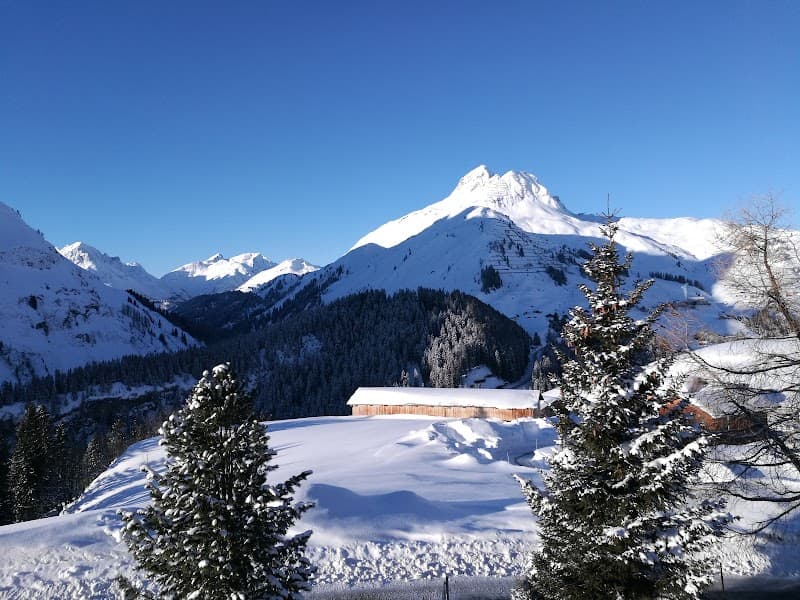
We don't have a verified average annual snowfall figure to cite, and we'd rather leave that gap honest than manufacture precision. What we can say: when other Austrian resorts are anxiously refreshing their snow reports, Warth-Schröcken is usually measuring in metres.

The snow isn't a bonus here. It's the foundation everything else is built on.

The Beginner Machine

The entry point for young skiers at Warth-Schröcken is the fairy land learning area at Saloberjet's base station, positioned right beside the Körbliftle baby lift. This isn't a roped-off corner of a main piste, it's a purpose-designed, themed environment where three-year-olds take their first steps on snow surrounded by figures and features scaled to their height and imagination. For a child who has never seen a ski slope before, the difference between this and being deposited at the base of a busy descent is enormous. It's the difference between excitement and overwhelm.

That matters for you too, not just for them.

The progression from fairy land follows a documented sequence that most Arlberg villages don't map out this explicitly. Start on the Körbliftle and the practice slopes, where standalone practice lift tickets keep costs minimal during the snowplough phase. When your child is ready for more, the shorter runs Nr. 291 and 293 along the Karhornbahn give them their first experience of a real mountain descent, wide, consistent gradient, manageable length that doesn't exhaust small legs. Once those feel comfortable, Nr. 270 and 282 provide the next step: longer runs that demand stamina, rhythm, and basic turn-linking. This isn't a generic "beginner to intermediate" label, these are numbered, named routes that ski school instructors use as progression benchmarks, and returning families can measure year-on-year improvement against the same terrain.

The 35% beginner terrain ratio means these learning slopes aren't shared corridors where intermediates blast through. The local Warth-Schröcken area physically separates early learners from the main traffic heading toward the Ski Arlberg link points. Your child's first tentative turns happen in a low-traffic environment, not on the highway to Lech.

Ski school takes children from age three. Childcare, structured ski kindergarten, accepts children from 30 months, bridging the gap for families with a toddler who isn't ready for lessons but needs supervision while both parents ski. According to the resort's official site, dedicated "Family winter" and "Ski schools and kids areas" programming exists as structured operations, not informal arrangements. Parents on review sites describe calm, organised environments, though we don't have confirmed data on class sizes, instructor-to-child ratios, or English-language instruction availability. If your family doesn't speak German, contact the ski school directly before arrival to confirm communication arrangements, this is a proactive step, not an afterthought.

Adult beginners and returners aren't forgotten either: adult group and private lessons operate alongside the children's programme, and the practice lift ticket applies to grown-ups too. No need to buy a full mountain pass while you're rebuilding your confidence after a decade away from skis.

Skiing Together

The honest layout reality: the beginner areas and the most challenging terrain are not side by side at Warth-Schröcken. If your strongest skier wants the full Ski Arlberg experience, St. Anton's off-piste, the Lech-Zürs circuit, they will disappear for hours on a full-day pass. Families don't casually reconvene mid-run across a 305km network.

What works better is a planned split-and-regroup strategy anchored around the Karhornbahn area. Progressing children ski runs Nr. 291 and 293 while a parent or teen explores Funcross Karhorn, a dedicated fun cross course with banked turns and terrain features that keeps confident intermediates entertained without leaving the local zone. Racing courses, a speed check, and a parallel giant slalom cluster in the same sector, alongside Skimovie and Photopoint features that give teenagers documentary evidence of their runs. Not a babysitting device, but a real motivator for a fourteen-year-old who'd otherwise grow impatient with family-pace skiing.

The practical meeting point is Saloberjet's base station, where the fairy land zone, the Körbliftle, and the Karhornbahn departure all converge. Lunch here keeps the family within five minutes' walk of each other regardless of ability level.

For the mixed-ability family, the rhythm that works: mornings apart, lunch together at the base, afternoons by ability. It requires structure, but the compact village geography rewards that discipline.

User photo of Warth-Schröcken

📊The Numbers

MetricValue
Family Score
7Good
Best Age Range
3–14 years
Kid-Friendly Terrain
35%Above average
Childcare Available
YesFrom 30 months
Ski School Min Age
3 years
Kids Ski Free
Kids Terrain Park
Yes

Score Breakdown

Value for Money

6.5

Convenience

6.5

Things to Do

3.5

Parent Experience

7.5

Childcare & Learning

7.5

Planning Your Trip

💬What Do Other Parents Think?

Warth-Schröcken earns its family reputation quietly, without the marketing blitz you see from the bigger Arlberg names. Parents who've been here consistently land on the same verdict: it's the place where your kids actually learn to ski, fast, in small groups, without the mayhem of a mega-resort. "The children had the time of their lives. Entertainment and learning to ski at the same time," one parent wrote on CheckYeti. Another noted their kids "were already in the big lift on the second day." Not hyperbole. The combination of dedicated beginner terrain and small class sizes at Skischule Warth and Skischule Salober-Schröcken creates a progression speed that surprises first-timers.

The praise parents keep circling back to is the 8-hectare Salober Kinderland, which functions less like a roped-off corner and more like its own little resort within the resort. Think exclusive lift entrances for ski school kids, a warming hut with play area and children's toilets, lunchtime supervision with actual meals. Not a vending machine and a prayer. One Dutch parent summed it up: "Dear, committed teachers. Learned a lot in 4 days. A lot of attention is paid to skiing, but also to the fun surrounding it." From level K3 onward, the groups eat lunch together in the ski area, which gives you a genuine five-hour window to ski the wider Arlberg without guilt.

The consistent complaint? Warth-Schröcken is quiet. Really, thoroughly quiet. One Tripadvisor reviewer called it "absolute disconnection and run down in this quiet and rustic place" and meant that as a compliment. If your family thrives on village energy, shops to browse, or après options beyond a hotel sauna and a toboggan run, you'll feel the silence by day three. Teenagers in particular may stage a mutiny. Parents with kids under 10 love the calm; parents with kids over 13 tend to describe it more diplomatically.

English-speaking families often arrive braced for a language barrier, and here's the honest tension: Warth-Schröcken's ski schools operate primarily in German. Both schools offer instruction in English, and the instructors are multilingual in the way Austrian ski professionals tend to be, but the signage, the booking systems, and the chatter in the Kinderland will be German-first. Several UK-based parents on snowHeads noted this was a non-issue once lessons started but required a bit more patience at registration. Book online in advance through the English-language pages at skischule-warth.com or skischule-salober.com. It eliminates the fumbling at the desk on day one.

Where parent opinion diverges from the official marketing is on piste kilometers. Warth-Schröcken advertises 62 km of local slopes, and the Ski Arlberg connection opens up 305 km total. That Tripadvisor reviewer wasn't shy about it: "What Warth says he has. I doubt that, though." On the ground, parents find the local terrain perfectly sufficient for a family with mixed abilities for 3 to 4 days. Staying a full week, though, and you'll want that Ski Arlberg pass (€81.50/day for adults in main season) to access Lech-Zürs via the Auenfeldjet. The local-only pass tops out at 2.5 days for a reason.

Families who've cracked the code share a few specific tips. First, look into the Kinderschnee (children's snow weeks) promotion, which bundles a free 4-day ski course and free lift pass for kids aged 3 to 6. Not buried in fine print: Hotel Adler and other partner properties actively offer it, and it represents hundreds of euros in savings. Second, the Salober Spielhütte (play hut) at the base station stays open all day with no appointment needed, a genuine fallback if your toddler melts down mid-morning. Third, several parents recommend staying in Warth over Schröcken. Warth has lift access at the village edge and ski-in/ski-out options, while Schröcken sits 5 km away and 200 meters lower, requiring the free ski bus to reach lifts.

My honest read on the parent consensus: Warth-Schröcken over-delivers for families with children under 10 and under-delivers for everyone else in the group who wants anything beyond skiing. You'll watch your four-year-old go from snowplow to actual turns in three days. proud, wind-burned, begging to go again tomorrow. You'll also eat dinner at your hotel every single night, because there's nowhere else to go. For the right family at the right stage, that tradeoff is more than fine. It's the whole point.

Families on the Slopes

(4 photos)

Photos from Google Places. Posted by visitors.


🏠Where Should Your Family Stay?

Warth-Schröcken is a village where you can count the hotels on two hands. That's the appeal. There's no sprawling resort infrastructure here, no cookie-cutter chain properties lining a purpose-built boulevard. What you get is a tight cluster of family-run Austrian hotels and apartments, most within a few minutes' walk of a lift, several offering genuine ski-in/ski-out access, and all priced noticeably below what equivalent quality costs in neighboring Lech or St. Anton. For families, the advice is straightforward: stay in Warth (not Schröcken) for the best proximity to lifts and the kids' ski school area at Saloberjet.

AlpenParks Hotel & Apartment Arlberg is the property I'd book first. It sits directly on the ski slope in Warth, ski-in/ski-out without exaggeration, and offers luxury apartments for two to eight people with a heated infinity pool overlooking the mountains. There's an in-house wellness area, fitness room, restaurant, and a breakfast buffet that saves you the morning scramble of feeding everyone from a kitchenette. The apartments come with full kitchens for families who want to self-cater dinners, which is smart when your nearest restaurant options are limited.

Nightly rates for a family apartment start from €200 in shoulder season and climb past €350 during peak weeks. For slopeside four-star with a pool in the Arlberg region, that's good value. In Lech, the same money buys you a studio and a polite suggestion to lower your expectations.

Hotel Jägeralpe is the pick for families with younger children who want everything handled. This family-focused hotel in Warth has an 85-square-meter Kindergarten (kids' playroom), a children's swimming pool complete with a pirate ship called "Oskar's Pearl," and a 120-square-meter youth room with a climbing wall and table football. They run a structured kids' program for children from age 2, Sunday through Friday, 9am to 5pm, which means your toddler is entertained all day while you explore the Arlberg.

The neighboring farm invites kids to watch the cows being milked in the afternoon, and easy family hiking trails start right at the hotel door. It's that cozy Austrian Familienhotel (family hotel) experience where staff know your kids' names by day two. Budget €180 to €280 per night for a family room with half-board, depending on the season.

Hotel Adler positions itself as Warth's dedicated Kinder- & Familienhotel (children's and family hotel), and it earns the title. The Adler sits near the Saloberjet base station where the children's ski school operates, and during Kinderschneewochen (children's snow weeks), guests get a free 6-day ski pass and 4-day ski course for kids. Your children get picked up by the ski school shuttle at 9:30am right outside the hotel entrance and delivered back at 3:30pm, fed and exhausted.

There's a large spa area (open to kids until 5pm), an indoor play zone with table tennis and a slide, and the kitchen takes young appetites seriously: ice cream cones at dessert, no fuss. The hotel says it's best suited once kids are old enough to start skiing, from age 4 up. Got a toddler? Hotel Jägeralpe is the better fit.

For self-catering on a tighter budget, Berghaus Schröcken in the smaller village of Schröcken offers apartments for two to nine people and even a standalone chalet sleeping eleven. The property has a wellness area, restaurant, and that particular Bregenzerwälder Handwerk (Bregenzerwald craftsmanship) aesthetic where everything is built from local timber and looks like it belongs. Apartments start from €120 per night for a couple and scale up for larger units.

The tradeoff is location. Schröcken sits 5km before Warth and 200 meters lower, with no lift in the village itself. A free ski bus connects you to the slopes, and you can ski back on marked routes when snow cover permits, but mornings require an extra 10 minutes of logistics. For families who prize kitchen space and a lower nightly rate over slopeside convenience, it works well.

One thing English-speaking families should know: Warth-Schröcken accommodation books through the local tourism website (warth-schroecken.at), which lists every property with direct contact details. Most hotel staff speak functional English, though you'll occasionally encounter a breakfast menu or spa schedule only in German. This is a village that hasn't been polished for the international package-holiday market. You'll hear cowbells in the morning instead of shuttle bus announcements.

The recommendation for most families: book AlpenParks if you want apartment flexibility with hotel amenities and true ski-in/ski-out, or Hotel Jägeralpe if you've got kids under 4 and want all-day childcare built into your stay. Either way, stay in Warth.


🎟️

How Much Do Lift Tickets Cost at Warth-Schröcken?

The three-tier pass system is Warth-Schröcken's most underappreciated cost lever, and the families who use it strategically spend meaningfully less than those who buy a flat week of Ski Arlberg passes by default. Here's the approach:

Days one and two: buy practice lift tickets for any family member still working on the beginner slopes. These are the cheapest product available, covering the Körbliftle and the learning areas at Saloberjet. There is zero point paying €75 per adult or €37.50 per child for a mountain nobody in the family will leave the base of.

Days three onward: assess honestly. If your family is happy cruising the local Warth-Schröcken slopes and the Karhornbahn progression runs, buy the local-only pass. It covers everything within the local area at a lower price than the full Ski Arlberg ticket, the exact daily rate isn't confirmed in our data, but it's a distinct, cheaper product.

Full Ski Arlberg days: reserve the €75/€37.50 daily passes for one or two dedicated days when the strong skiers want to reach Lech, Zürs, or St. Anton. Don't default to a six-day Ski Arlberg pass if you'll only use the full network twice.

The 3-Täler pass, covering 360km across 31 ski areas in the Bregenzerwald, Großes Walsertal, Tiroler Lechtal, and surrounding valleys, is a genuine alternative if Lech and St. Anton aren't essential to your trip. Exact pricing isn't confirmed, but it sits below Ski Arlberg rates and opens enormous regional variety.

Group discounts exist for clubs, friend groups, and multi-family trips, registration by 4pm the day before is required through the resort office. The free local ski bus saves daily parking costs too, which is the best price you'll find in Austria for anything.


Planning Your Trip

✈️How Do You Get to Warth-Schröcken?

Innsbruck airport is 85km away, 90 minutes by car through the Arlberg road tunnel or over the pass. Friedrichshafen is slightly closer at 100km but offers fewer flight routes. Zürich (150km) and Munich (200km) work for families combining the trip with a wider itinerary or chasing cheaper flights.

Winter tyres or snow chains are essential. The Flexenpass road connecting Warth-Schröcken to the Lech/Zürs side can close temporarily during heavy snowfall or avalanche alerts, if you're driving from that direction, check road conditions on your arrival day and build in flexibility. A local ski bus operates within the resort area once you've arrived.

User photo of Warth-Schröcken

What Can You Do Off the Slopes?

At four o'clock on a Tuesday, Warth looks like what it is: a farming hamlet in winter. There is no pedestrian boulevard, no designer shopping strip, no aquapark, no bowling alley. A TripAdvisor reviewer described it as offering "absolute disconnection" in a "quiet and rustic place," and that language is precise. The heavy-timbered, stone-based Vorarlberg chalets around you are centuries-old agricultural architecture, not ski resort set dressing. You will hear cowbells before you hear bass music.

This is either exactly what you want or a deal-breaker.

What exists: tobogganing runs that give children a second adrenaline hit after skis come off. Horse-drawn carriage rides through the valley, traditional Bregenzerwald Pferdeschlittenfahrten rooted in genuine farming culture rather than a manufactured tourist experience, pulled by horses that work this landscape year-round. Cross-country ski tracks for parents who want exercise without chairlifts. Winter hiking paths along the valley floor.

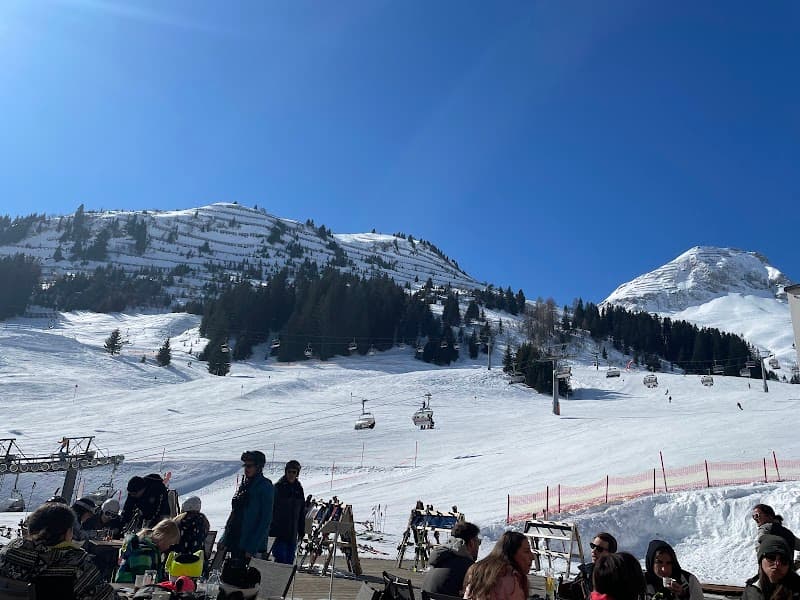
We don't have verified restaurant names or specific dining recommendations for the village, the research data here is thin. One reviewer mentioned "fantastic food" at their hotel without naming the property. According to the resort's official site, a "Culinary experiences" section exists, but we haven't been able to extract specifics. If evening dining variety matters to your family, you'll find the options limited. Self-catering or hotel half-board is the pragmatic approach in a village this small.

The quiet is the feature. Bring a board game for after dinner.
User photo of Warth-Schröcken

When to Go

Season at a glance — color-coded by family score

Best: January
Season Arc — Family Scores by MonthA semicircular visualization showing ski season months color-coded by family recommendation score.JanFebMarAprDecJFMADGreat for familiesGoodFairNo data

Common Questions

Everything families ask about this resort

Ski school accepts children from age 3. For younger children (from 30 months), structured ski kindergarten childcare is available, allowing both parents to ski while the toddler is supervised. Contact the ski school before arrival to confirm arrangements, especially regarding English-language communication.

No. Three distinct pass products exist: a local Warth-Schröcken-only pass (cheapest), the full Ski Arlberg pass covering 305km and 85 lifts including links to Lech, Zürs, and St. Anton (€75 adult/€37.50 child per day), and the 3-Täler pass covering 360km across 31 ski areas in the wider Bregenzerwald region. Practice lift tickets are also available as the cheapest standalone product for pure beginners.

This is one of its strongest suits. The fairy land themed learning area beside the Körbliftle baby lift at Saloberjet base station is specifically designed for young beginners in a low-traffic, purpose-built environment. The 35% beginner terrain ratio means learning slopes aren't overwhelmed by faster skiers, and a documented progression of named runs (Nr. 291, 293, then 270, 282) provides clear advancement benchmarks through the week.

Yes, but it requires a pass upgrade. The local Warth-Schröcken area has limited advanced terrain, strong skiers will want the full Ski Arlberg pass to access Lech, Zürs, and St. Anton. Within the local zone, Funcross Karhorn, racing courses, and a speed check keep confident intermediates and teens occupied. Plan morning splits and lunchtime reunions at Saloberjet base station.

Exceptionally reliable by Austrian standards. The village sits in a meteorological funnel where Atlantic weather systems deposit heavy snowfall against the Bregenzerwald-Arlberg ridge. Christmas bookings carry low snow-risk. Late-season trips (late March onward) may see softer conditions at Schröcken's lower base altitude of 1,269m, though upper slopes and Arlberg-linked terrain hold better.

Limited options, honestly. Tobogganing, horse-drawn carriage rides, cross-country skiing, and winter hiking exist. But Warth and Schröcken are farming hamlets with a combined permanent population under 500, there's no swimming pool complex, bowling alley, or cinema. Evening entertainment is largely confined to your hotel. Families who need off-slope variety should factor this into their decision.

A car is helpful for arrival (nearest airports are Innsbruck at 85km and Friedrichshafen at 100km), but a local ski bus operates within the resort area once you're settled. Winter tyres or chains are required. Be aware that the Flexenpass road from the Lech side can close during heavy snow or avalanche alerts.

The lift pass costs are identical if you buy Ski Arlberg passes. The savings come from accommodation and dining, Warth-Schröcken's modest village economy doesn't carry Lech's luxury premium. The additional advantage is the local-only pass option: families with beginners can ski for less on days they don't need the full Arlberg network, a flexibility Lech doesn't meaningfully offer since its own slopes are fully integrated into the system.

Have a question we didn't cover? We'd love to add it to our guide.

The Bottom Line

Our honest take on Warth-Schröcken

What It Actually Costs

Two families, same resort, same five days. The gap between their bills tells you what kind of trip Warth-Schröcken actually becomes.

Scenario A, Budget Family (2 adults, 2 kids aged 8 and 10, 5 ski days):

Lift passes: 2 days on practice/local passes, 3 days on full Ski Arlberg. At €75/adult and €37.50/child for Arlberg days, that's €337.50 for Arlberg days. Estimating the two local days at 60-70% of Arlberg pricing gives approximately €100-130. Lift pass total: approximately €440-470.

Accommodation (5 nights, self-catering apartment): No verified Warth-Schröcken pricing available. Based on Bregenzerwald regional rates for basic family apartments, estimate €80-120 per night. Total: approximately €400-600.

Equipment rental (4 sets, 5 days): No local rental pricing confirmed. Austrian resort average for family packages runs €400-500.

Ski school (2 half-days group lessons, both children): No confirmed local pricing. Austrian average for children's group lessons: approximately €55-80 per child per day. Total: approximately €220-320.

Meals (self-catering with groceries, plus 2 restaurant dinners): Estimate €250-350.

Scenario A estimated total: €1,710-2,240

Scenario B, Comfort Family (same composition, mid-range hotel with half-board, 5-day Ski Arlberg passes, one private lesson):

Lift passes (5-day Ski Arlberg): Multi-day rates typically discount 10-15% from daily prices. Estimate €630-680.

Accommodation (5 nights, 3-star hotel, half-board): Estimate €150-220 per night. Total: approximately €750-1,100.

Equipment rental: €400-500.

Private lesson (1 child, half-day): Estimate €200-280.

Group lessons (second child, 3 days): Estimate €165-240.

Additional dining, drinks, activities: €200-300.

Scenario B estimated total: €2,345-3,100

The gap, roughly €600-860, lands almost entirely on accommodation choice and pass strategy. That three-tier pass flexibility is where Warth-Schröcken gives cost-conscious families a lever that base-village Lech simply doesn't offer. Two days on practice or local passes instead of full Arlberg saves a family of four approximately €150-200 with almost no sacrifice in actual skiing quality.

Important caveat: accommodation, rental, lesson, and meal prices above are regional estimates. We do not have verified Warth-Schröcken-specific pricing for these categories. Contact providers directly before booking, and check the resort's official site for package deals combining lodging and local lift passes.

The Honest Tradeoffs

The moment you upgrade to a full Ski Arlberg pass, you're paying the same premium price as guests stepping out of Lech's five-star lobbies, but returning each evening to a hamlet with fewer restaurants than most people have on their street. The village has very limited dining variety, no meaningful après-ski, and almost no non-ski entertainment infrastructure beyond what you'd find in any rural Austrian farming community of 200 houses. If your teenagers expect anything beyond slopes and scenery after 4pm, they will be bored by Wednesday.

English-language communication in childcare and ski school settings is not confirmed as reliable. For non-German-speaking families, this creates real anxiety during the most sensitive handoff of the day: leaving your toddler with a carer who may not share your language for emergency communication.

The local ski area is small. Exactly how small is debated, one TripAdvisor reviewer explicitly questioned the claimed local kilometre figures, but don't expect to spend five full days on Warth-Schröcken's own slopes without meaningful repetition. The Arlberg link extends your range enormously, but it's an upgrade purchase, not a default inclusion.

None of this is hidden. The village is quiet because it's tiny, and it's tiny because it never tried to be anything else.

Would we recommend Warth-Schröcken?

Warth-Schröcken is for families who want the Arlberg's extraordinary snow and linked ski network without the Arlberg's social performance, particularly parents with young beginners who need a calm, snowsure environment, structured childcare from 30 months, and the flexibility to scale up terrain and cost only when their family is ready. The fairy land zone, the three-tier pass system, and that Vorarlberg snowfall funnel create a practical operating base that bigger Arlberg villages don't match at this price point.

Do not book this if your family needs village nightlife, guaranteed English-speaking childcare staff, dining variety, or off-slope entertainment for teenagers.

Your next step: check accommodation availability and lift-pass package deals directly through warth-schroecken.at, properties in a village this small fill early for peak weeks, and combined lodging-plus-local-pass offers are where the real savings surface.