Pila, Italien: Familien-Skiguide
Gondel-Skigebiet über der Römerstadt Aosta: 70 km schneesichere Nordhang-Pisten, Mont-Blanc-Panorama, Kinder gratis, abends echte Stadt statt Touristendorf.
Last updated: June 2026
Italy
Pila
Pila ist das Beste-beider-Welten-Konzept: oben alpines Familienskigebiet (schneesicher, übersichtlich, Mont-Blanc-Panorama), unten echte italienische Stadt (Restaurants, Römer-Ruinen, Kultur). Die Gondel verbindet beides in 18 Minuten, einzigartig in den Alpen.Für Familien die günstig, unkompliziert und mit echtem Stadtleben-Bonus skifahren wollen: hervorragende Wahl. 70 km reichen für eine Woche mit Kindern, der Preis unterbietet die Aostatal-Nachbarn um 30-40%, und Aosta liefert das Abendprogramm das Bergdörfer nie haben. Italiens bestgehaltenes Familien-Skigeheimnis.Unser Rat: Eine Woche in Pila oben, 2-3 Abende Gondel nach Aosta zum Essen. Thermen-Tag einplanen. Und den Valle-d'Aosta-Pass für einen Courmayeur-Tagesausflug überlegen. Mont-Blanc-Tunnel inklusive!
Ist Pila gut für Familien?
Pila ist das Haus-Skigebiet von Aosta, per Gondel direkt aus der Stadt erreichbar (1800-2700m). 70 km Pisten mit Mont-Blanc-Panorama, Familien-Skigebiet, und abends eine echte italienische Stadt statt Touristendorf. Schneesicher (Nordhang, Beschneiung), kompakt, übersichtlich, und deutlich günstiger als die Nachbarn (Courmayeur, Cervinia, La Thuile).
Perfekt wenn: Ihr ein kompaktes, günstiges Familien-Skigebiet mit Mont-Blanc-Blick und Stadtanbindung (Aosta!) wollt. Überspringen wenn: Ihr maximale Pistenkilometer oder Highend-Resort-Atmosphäre sucht.
Only 38 runs across 70km, ageing lift infrastructure, and no guaranteed English-speaking instruction make Pila a poor fit for families who want scale, modernity, or linguistic reassurance.
Biggest tradeoff
Wie ist das Skifahren für Familien?
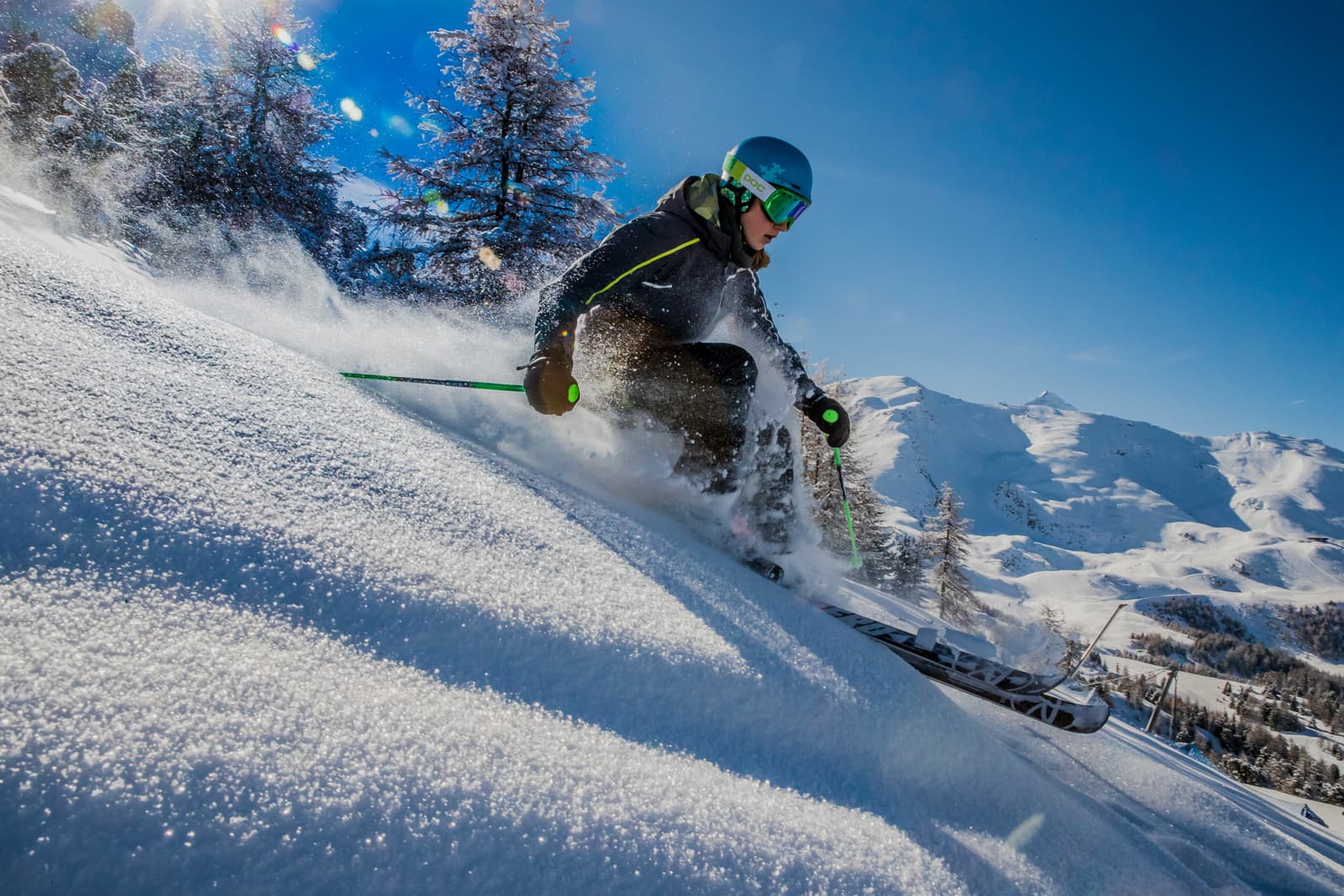
Kompaktes Gebiet auf Nordseite über Aosta. 70 km, 1800-2700m, fast ausschließlich blaue/rote Pisten. Mont-Blanc + Matterhorn im Panorama!
- Anfänger (Baby Park Grimondet, 1800m): Eigener Bereich direkt an der Gondel-Bergstation. Förderband, Seillift, abgesperrt. Flach, übersichtlich, sonnig (Vormittag). Skischul-Treffpunkt. Kostenlos für Kinder in Skischule.
- Familien-Pisten (Couis, 2100-2700m): Per Sessellift ab Pila. Breite blaue Pisten mit Panorama auf Mont Blanc, Matterhorn und Gran Paradiso. Die „Grimondet. Gorraz“-Abfahrt (blau, 5 km): Familien-Favorit. Gleichmäßig, breit, mit Aussicht. Nachmittags-Sonne auf oberen Pisten.
- Fortgeschrittene (Les Fleurs, 2700m): Rote Pisten mit steileren Passagen. Für Eltern/Teens. Die Weltcup-Piste (Women's Downhill) ist anspruchsvoll aber breit. Abfahrt bis zur Gondel-Bergstation (900 Hm).
- Skischule: Scuola Sci Pila, ab 3 Jahren. 5 Halbtage ab ≈145€/Kind. Gruppen max 8. Italienisch (Deutsch/Englisch auf Anfrage). Treffpunkt Baby Park. Privatstunden ab ≈50€/h.
- Mittagspause: Rifugio Chalet de l'Ange (2100m, Terrasse mit Mont-Blanc-Blick, Polenta ≈11€). Bar Yeti (Pila Zentrum, Pizza + Pasta). Oder: Gondel nach Aosta. Mittagessen in der Stadt (30 min inkl. Fahrt).
Schneesicherheit: Nordhang! 95% Beschneiung. 1800-2700m. Schneesicher Dezember bis April. Nordseitige Exposition hält den Schnee länger als südexponierte Gebiete. Saison: Anfang Dezember bis Mitte April.
Wochen-Strategie: Tag 1-2: Baby Park + erste blaue Pisten. Tag 3: Couis-Bereich (Panorama-Pisten). Tag 4: gesamtes Gebiet + Mittagessen Rifugio. Tag 5: rote Pisten für Mutige / Wiederholung Blau für Kinder. Tag 6: Lieblingspisten + Gondel nach Aosta für Abschluss-Gelato.
Insider-Tipp: Morgens als Erste hoch (8:30 Gondel-Start). Pisten perfekt präpariert, keine Warteschlangen. Die Couis-Pisten (2400-2700m) behalten dank Nordexposition den ganzen Tag griffigen Schnee. Bei klarer Sicht: Foto-Stopp am Couis-Grat (Mont Blanc, Matterhorn, Gran Paradiso in einer Linie!). Nachmittags ab 14 Uhr: untere Pisten werden weicher, perfekt für letzte Schwungübungen der Kinder. Die Grimondet-Abfahrt (blau, bis zur Gondel-Bergstation) als Schlusstück: flach auslaufend, sicher, direkt zum Gondelhaus.
Trail Map
Full CoverageTerrain by Difficulty
Based on 23 classified runs out of 24 total
© OpenStreetMap contributors, ODbL
📊The Numbers
| Metric | Value |
|---|---|
Family Score | 6.9Good |
Best Age Range | 3–16 years |
Kid-Friendly Terrain | — |
Ski School Min Age | 3 years † |
Kids Ski Free | — |
Local Terrain | 24 runs |
Score Breakdown
Value for Money
Convenience
Things to Do
Parent Experience
Childcare & Learning
Planning Your Trip
🏠Wo sollte eure Familie übernachten?
Zwei Optionen: oben in Pila (direkt an der Piste, begrenzte Auswahl) oder unten in Aosta (Stadt, per Gondel hoch). Beides funktioniert!
- Hotel Lion Noir (Pila, 3-Sterne): Direkt an der Piste! Familienfreundlich, Spielzimmer, günstiges Restaurant. Ab ≈70€/Nacht HP. Ski-in/Ski-out. Kleines Hotel mit persönlicher Atmosphäre. DER Familien-Klassiker in Pila.
- Hotel Etoile de Neige (Pila, 3-Sterne): Zentral in Pila, Wellness, gutes HP-Restaurant. Ab ≈65€/Nacht HP. Familienfreundlich, Kinderecke.
- Hotel Milleluci (Aosta, 4-Sterne): Designhotel mit Panorama auf Berge. Ab ≈110€/Nacht ÜF. 5 min zur Gondel. Abends in Aosta: Restaurants, Aperitivo, römisches Theater. Für Eltern die Stadtleben wollen!
- Apartments Pila: Ab ≈450€/Woche (4 Pers.). Kleiner Laden oben. Oder: in Aosta mieten (≈500€/Woche) + Gondel-Wochenkarte (≈35€/Pers.).
- Tipp: Pila oben = unkompliziert (Ski-in/Ski-out, kurze Wege, ruhig). Aosta unten = mehr Leben (Restaurants, Geschäfte, Kultur). Familie mit Kleinkindern: oben. Familie mit Teens: unten (Aosta hat Kino, Geschäfte, Pizzerien). Die Gondel verbindet beides in 18 min.
Was kosten die Liftpässe?
Pila: 70 km Pisten (1800-2700m). Nordhang mit Mont-Blanc-Panorama.
- Pila 6 Tage Erw.: ≈210€ (70 km)
- Kinder (unter 8): GRATIS
- Kinder (8-14): ≈145€/6 Tage
- Senioren (65+): ≈175€/6 Tage
- Valle d'Aosta Skipass (optional): ≈320€/6 Tage (800 km! Cervinia, Courmayeur, La Thuile, Monte Rosa)
- Familien-Strategie: Pila-Pass reicht für eine Woche (70 km sind übersichtlich, aber mit Kindern genug). Familie (2+2, Kinder 4+6): ≈420€/6 Tage (Kinder gratis!). Tagesskipass: ≈40€/Erw., günstigster im Aostatal!
- Anfänger: Baby Park Grimondet: eigener Anfängerbereich mit Förderband (kostenlos für Skischüler). Flach, sonnig, abgesperrt. Perfekt für erste Versuche.
Planning Your Trip
✈️Wie kommt ihr nach Pila?
Pila (1800m) liegt oberhalb von Aosta (583m) im Aostatal, per Telecabine (Gondel) in 18 Minuten direkt aus dem Stadtzentrum erreichbar.
- Nächster Flughafen: Turin (1,5h). Genf (2h). Mailand Malpensa (2h). Zürich (4h via Simplon).
- Mit dem Auto ab Deutschland: München → Pila: ≈5h (Brenner → Verona → Turin → Aosta). Oder: durch Schweiz (4,5h via Simplon/Großer St. Bernhard). Zürich: 3,5h. Stuttgart: 6h. Maut: Schweizer Vignette (≈42€) oder österr./ital. Autobahnen (≈35€).
- Bahn: Zug bis Aosta (Umstieg Turin, 5h ab München). Ab Aosta Bahnhof: Gondel-Talstation 800m Fußweg oder Stadtbus (2 min). Die Gondel IST der Zubringer, kein Skibus nötig!
- Vor Ort: Pila oben ist klein: 4-5 Hotels, paar Restaurants, alles an der Piste. Gondel nach Aosta in 18 min, für Abendessen, Einkauf, Kultur. Oben kein Auto nötig. Parkplatz an Gondel-Talstation Aosta (≈5€/Tag).
- Familien-Tipp: Die Gondel-Lösung ist genial: oben Ski (ruhig, kompakt, schneesicher), unten Stadt (Restaurants, Geschäfte, römische Ruinen). Beste beider Welten! Karte Valle d'Aosta: Ermäßigungen auf Lifte, Museen, Thérmen.

☕Was gibt's abseits der Piste?
Pilas größter Trumpf: Aosta liegt 18 Gondel-Minuten entfernt, eine echte römische Stadt mit 35.000 Einwohnern, nicht ein Touristendorf.
- Aosta (römische Stadt!): Augustusbogen (römisch, 25 v.Chr.), Theater (2000 Plätze, gut erhalten), Kryptoportikus. Kinder finden Römer spannend! Altstadt: Fußgängerzone, Boutiquen, Cafés. Eine Stadt mit Geschichte, nicht nur Ski-Infrastruktur.
- Thérmen Pré-Saint-Didier (25 min): Outdoor-Thermalbad mit Mont-Blanc-Blick! Heiße Quellen, Sauna, Wasserfälle. ≈42€/Erw., Kinder ab 10. DAS Wellness-Highlight des Aostatals. Buchung empfohlen!
- Eislaufen Pila: Kunsteisbahn oben in Pila. ≈5€/Pers. Klein aber fein für Nachmittags-Vergnügen.
- Rodeln: Rodelbahn ab Gorraz-Sessellift (2 km, leicht, ab 5 Jahren). Rodel leihen 5€.
- Abends (Aosta): 50+ Restaurants! Trattoria degli Artisti (regional, ab 12€). Pizzeria Moderno (familienfreundlich, ab 8€). Osteria da Nando (Fontina-Käse!). Gelato bei Gelateria La Tradition. Kino, Theater, Aperitivo-Bars, echtes Stadtleben statt Touristen-Bubble.
- Einkaufen: Supermarché Gros Cidac (Aosta, groß). Markt samstags (Piazza Cavalieri). Fonduta-Käse (Fontina d'Aosta AOP) als Souvenir!
Für Kinder in Aosta: MAR. Museo Archeologico Regionale (Römerfunde, interaktiv, Kinder ab 6 begeistert, kostenlos mit Gästekarte!). Kryptoportikus (unterirdischer römischer Gang. Kinder lieben Taschenlampen-Erkundung). Gelateria La Tradition (bestes Gelato der Region). Mittwochs: Wochenmarkt in der Altstadt (Fontina-Käse probieren!). Bibliothek mit Kinderecke (deutsch/französisch). Bei Regen: perfekter Kulturtag unten in der Stadt.
When to Go
Season at a glance — color-coded by family score
Common Questions
Everything families ask about this resort
Have a question we didn't cover? We'd love to add it to our guide.
Unser Fazit
Würden wir Pila empfehlen?
Was es wirklich kostet
Pila ist das günstigste Skigebiet im Aostatal, deutlich unter Courmayeur, Cervinia oder La Thuile. Italienisches Preisniveau ohne Schweizer Aufschlag.
- Unterkunft: Hotel HP (3-Sterne Pila) ab ≈65€/Nacht (≈455€/Woche). Hotel ÜF (4-Sterne Aosta) ab ≈110€/Nacht. Apartment Pila ab ≈450€/Woche.
- Skipass 6 Tage Familie (2+2, Kinder 4+6): ≈420€ (Kinder gratis!)
- Skischule: 5 Halbtage ab ≈145€/Kind
- Verpflegung: Hüttenessen ab 10€. Restaurant Aosta ab 12€. Bei HP (Pila): nur Mittag extra.
- Gesamt (1 Woche, 4 Pers.): Ab ≈2.000€ (3-Sterne HP Pila + Pass) bis ≈3.500€ (4-Sterne Aosta + Pass + Skischule + Thermen). Vergleich: Courmayeur ≈3.000€, Cervinia ≈2.800€. Pila ist 30-40% günstiger!
- Spar-Tipp: Gondel-Saisonkarte (≈90€/Pers.) lohnt ab 5 Tagen. Online-Skipass: 10% Rabatt. In Aosta wohnen + Gondel-Abo kann günstiger sein als Pila-Hotel. Markttag (samstags): frisches Obst, Käse, Wein direkt.
Versteckte Kosten: Gondel-Wochenkarte (≈35€/Pers.) zusätzlich zum Skipass wenn man in Aosta wohnt. Hotel oben: Gondel inklusive. Parkplatz Aosta: ≈5€/Tag. Thermen Pré-Saint-Didier: ≈42€/Erw. (nicht billig, aber lohnend). Restaurant Aosta: deutlich günstiger als Berg-Restaurants in Courmayeur.
Worauf ihr achten müsst
Pila oben ist kein Ort, eine Handvoll Hotels an der Piste. Kein Ortskern, keine Fußgängerzone, kein Flair. Die Atmosphäre kommt von Aosta unten (per Gondel 18 min). Wer abends nicht Gondel fahren will: in Aosta wohnen.
70 km Pisten, für Familien mit Kindern eine Woche ausreichend, für fortgeschrittene Erwachsene nach 3-4 Tagen erschlossen. Lösung: Valle d'Aosta Skipass (≈320€) gibt Zugang zu Courmayeur, Cervinia, La Thuile. Tagesausflüge möglich (30-60 min Fahrt).
Deutsch kaum vorhanden. Aostatal ist französisch-italienisch. Hotels: Italienisch/Französisch/Englisch. Skischule: Deutsch nur auf Anfrage und nicht garantiert. Für Familien mit älteren Kindern kein Problem, für 3-4-Jährige in der Skischule ggf. Sprachbarriere.
Die Gondel hat feste Zeiten (8:30-17:30). Letzte Fahrt nicht verpassen! Bei Sturm/Gewitter: Gondel außer Betrieb (selten, aber möglich). In Aosta Wohnende dann ohne Ski-Rückfahrt. Hotels oben: kein Problem.
Würden wir Pila empfehlen?
Pila ist das Beste-beider-Welten-Konzept: oben alpines Familienskigebiet (schneesicher, übersichtlich, Mont-Blanc-Panorama), unten echte italienische Stadt (Restaurants, Römer-Ruinen, Kultur). Die Gondel verbindet beides in 18 Minuten, einzigartig in den Alpen.
Für Familien die günstig, unkompliziert und mit echtem Stadtleben-Bonus skifahren wollen: hervorragende Wahl. 70 km reichen für eine Woche mit Kindern, der Preis unterbietet die Aostatal-Nachbarn um 30-40%, und Aosta liefert das Abendprogramm das Bergdörfer nie haben. Italiens bestgehaltenes Familien-Skigeheimnis.
Unser Rat: Eine Woche in Pila oben, 2-3 Abende Gondel nach Aosta zum Essen. Thermen-Tag einplanen. Und den Valle-d'Aosta-Pass für einen Courmayeur-Tagesausflug überlegen. Mont-Blanc-Tunnel inklusive!
Ähnliche Skigebiete
Familien, denen Pila gefiel, mochten auch diese
Ortisei
Oetz
Campitello di Fassa
Sestriere
Cervinia
La Thuile
Transparenzhinweis: Dieser Inhalt wurde mit KI-Unterstützung erstellt und von Tom Meredith, unserem Redakteur, überprüft. Preise, Daten und Verfügbarkeiten können sich ändern. Wir empfehlen, Angaben vor der Buchung direkt beim Skigebiet zu bestätigen.