Ski Lessons for Kids: Ages, Costs & What to Expect
Complete guide to choosing the right ski lessons for your child, from age recommendations to costs and what happens in class.
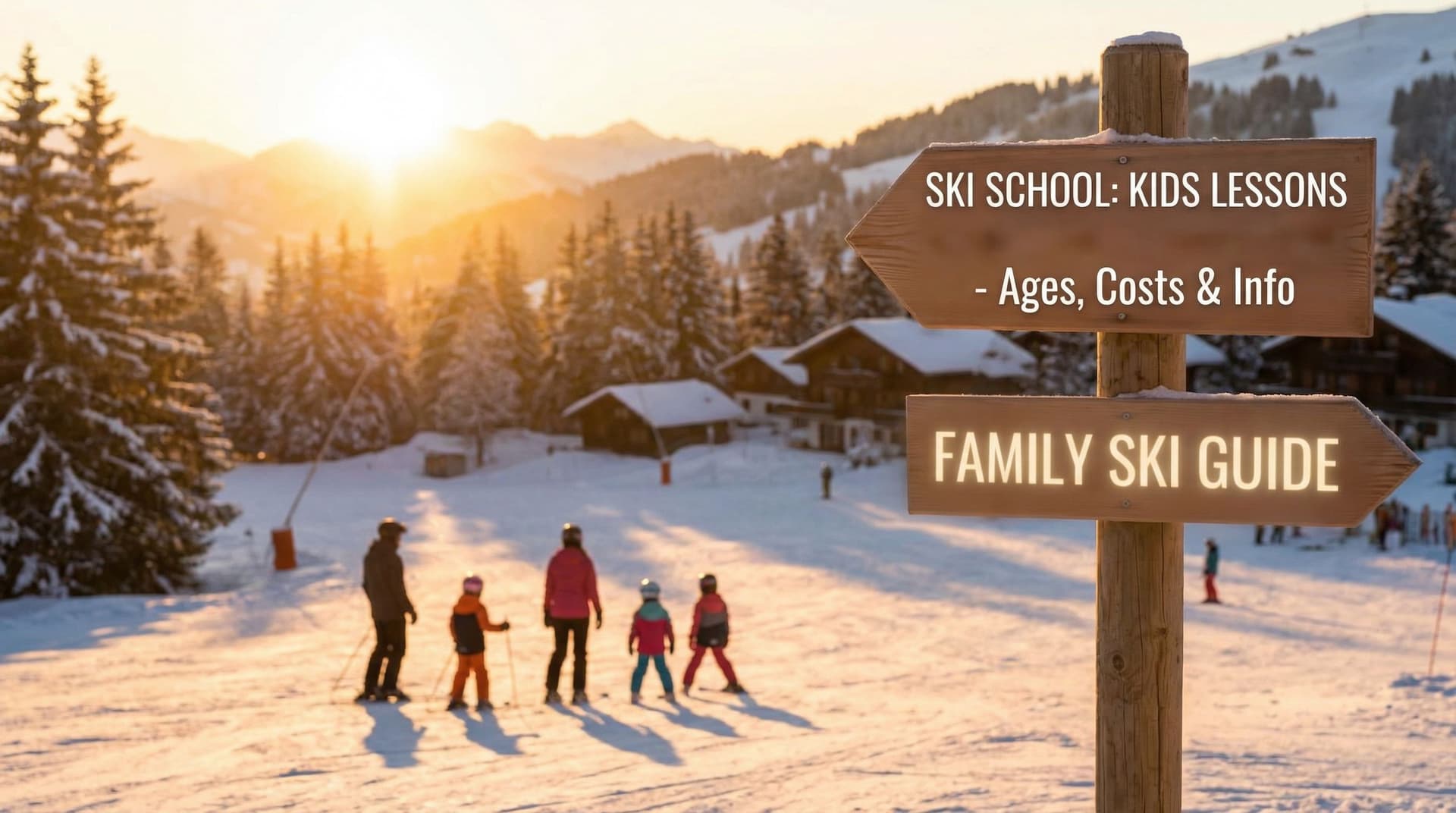
Your 4-year-old will learn to ski faster with proper instruction than you did fumbling down the bunny hill as a teenager,and they'll be infinitely safer doing it. Professional ski lessons aren't just about technique; they're your insurance policy against the emergency room visits that send 600,000 skiers to hospitals annually, with children under 14 representing the highest injury rates on the mountain.
The difference between a kid who loves skiing and one who's terrified of it often comes down to their first few hours on snow. This guide breaks down exactly what ski lessons cost at major resorts, which age brackets work best for different lesson types, and the specific skills instructors focus on to build both confidence and competence.
You'll learn how to choose between group and private lessons, what gear your child actually needs versus what ski shops will try to sell you, and the red flags that signal when it's time to switch instructors or programs.
Best Age to Start Ski Lessons
Most kids develop the balance, strength, and attention span needed for skiing between ages 4-6, with 5 being the sweet spot for most families. At this age, children can follow basic instructions for 45-60 minutes, have developed enough leg strength to control skis, and possess the coordination to pizza-wedge their way down gentle slopes without constant fear.
Watch for these physical readiness signs before booking lessons: your child can balance on one foot for 10+ seconds, walks confidently on uneven surfaces like playground equipment, and can follow two-step instructions without getting distracted. Kids who aren't quite there yet often end up frustrated, crying, or simply refusing to participate,wasting your money and potentially creating negative associations with skiing that last for years.
Starting too early backfires more often than parents realize. Three-year-olds might look adorable in tiny ski gear, but most lack the cognitive development to understand cause-and-effect movements needed for turning and stopping. According to the Professional Ski Instructors of America, children under 4 have significantly higher lesson dropout rates and lower skill retention. Save yourself the hassle and your child the frustration by waiting until they're truly ready, not just enthusiastic.
Group vs Private Lessons: What's Right for Your Child
| Factor | Group Lessons | Private Lessons |
|---|---|---|
| How the price works | Priced per child, so the cost scales with how many children you book | Priced per instructor for the whole booking, so it is often shared across siblings |
| Learning pace | Moves at group's average speed | Customized to your child's natural rhythm |
| Social interaction | Built-in ski buddies and peer motivation | One-on-one focus but misses playground dynamics |
| Instructor attention | Shared among 4-6 kids typically | 100% dedicated to your child's technique |
| A shy or anxious child | Can hang back at first, and often settles by copying other children | Nowhere to hide, which suits some children and overwhelms others |
| Skill progression | Steady progression, and repetition with peers at a similar level | Faster on technique, because nothing is spent managing a group |
| Weather flexibility | Less likely to cancel with multiple families | Easier to reschedule around conditions |
Types of Kids' Ski Programs
Half-Day Group Lessons (Ages 3-6)
Full-Day Ski & Play Programs (Ages 4-8)
Multi-Day Ski Camps (Ages 6-14)
Racing Development Programs (Ages 8+)
Adaptive Ski Programs
Private Family Lessons
What to Expect on Lesson Day
Your child's first ski lesson will likely feel chaotic to you but perfectly structured to them,instructors are masters at disguising learning as play. Most group lessons start with 10-15 minutes of indoor time where kids get fitted for equipment, learn basic safety rules, and play simple games that secretly teach balance and coordination. Don't be surprised if your 4-year-old spends the first half hour learning to walk in boots rather than actually skiing.
The lesson structure shifts dramatically by age group. Ages 3-5 focus almost entirely on fun and comfort,expect lots of sliding games, magic carpets instead of lifts, and frequent snack breaks. Ages 6-9 get more technical instruction but still wrapped in games like "pizza slice turns" and races to colorful cones. Ages 10+ receive more adult-like instruction with actual technique feedback and longer runs down beginner slopes.
Set your child up for success by arriving 30 minutes early, packing hand/toe warmers in their pockets, and having them practice putting on gloves at home (wet gloves are the #1 meltdown trigger). Most importantly, don't hover,instructors report that kids learn faster when parents aren't watching every move from the sidelines. Pick them up with hot chocolate ready and genuine enthusiasm for whatever tiny progress they made, even if it was just successfully getting off the magic carpet without falling.
Pre-Lesson Checklist for Parents
- Arrive 30 minutes early for equipment fitting and paperwork,most ski schools won't start lessons with late arrivals
- Pack hand and toe warmers in outside pockets for easy instructor access during breaks
- Dress your child in moisture-wicking base layers, not cotton,wet cotton against skin kills lessons fast
- Apply sunscreen 30 minutes before heading out, focusing on chin and nose where helmet shadows don't reach
- Pack a small backpack with snacks, water bottle, and one complete change of gloves
- Write your cell number on a piece of tape inside your child's jacket,ski school staff will thank you
- Confirm your child used the bathroom before gearing up,ski boots make bathroom breaks complicated
- Ask your instructor their name and radio number for easy mountain pickup coordination
- Clarify the exact pickup location and time,'base lodge' isn't specific enough on busy days
- Discuss your child's skiing goals for the day, whether it's first turns or pizza wedges
- Mention any fears or concerns your child has expressed about skiing or lifts
- Verify your instructor's policy on bathroom breaks and equipment adjustments mid-lesson
- Take a photo of your child in their gear before the lesson starts,you'll want it later
Ski Lesson Costs and How to Save
The structural fact matters more than any range we could quote. Group lessons are priced per child, so two children cost roughly twice one child. A private lesson is priced for the instructor's time and is commonly shared across a small family group, so the cost per child falls as you add siblings. That is why the right answer changes with the size of your family rather than with your budget alone.
We are not going to give you a single national price, because lesson pricing varies by resort, by country, by season and by how far ahead you book, and any single figure would be wrong somewhere. Where we do hold a verified, resort-specific price for a child's group lesson, we publish it with the resort named in our guide to the hidden costs of a family ski trip. Use those as anchors and check your own resort's published tariff before you budget.
What reliably costs more than families expect, whichever option you choose: equipment rental is frequently separate from the lesson price, a lift pass is often required for the child even in a beginner lesson, and lessons added mid-week are usually bought at the walk-up rate rather than the package rate.
What reliably saves money: booking the multi-day package rather than day by day, booking before the season rather than in resort, and being honest about how many days a young child will actually last, because the most expensive lesson is the one nobody attends. Our guide to whether ski school is worth it for a four-year-old covers the refund rules, which are stricter than most families assume.
Frequently Asked Questions
What if my child cries or refuses to ski during the lesson?
Do I need to buy ski equipment before the first lesson?
How do I know if my child is progressing or needs more lessons?
Are group lessons safe for young children?
What's the difference between ski school programs and private lessons?
Should I stay and watch my child's lesson?
Find the Right Resort for Lessons
Take our 2-minute family ski quiz to find resorts with top-rated kids' ski schools that match your budget and travel plans.
Holt euch unsere kostenlose Checkliste für den Familien-Skiurlaub und eine nützliche E-Mail pro Monat.
Bereit für die Reiseplanung?
Nutzt unsere Tools, um das perfekte Familien-Skigebiet zu finden.
Mehr How-To Guides
The Ultimate Family Ski Trip Checklist
Everything you need to pack for a stress-free family ski vacation, organized by timeline and age group.
How-To GuidesMilan to Cortina With Kids: Complete Transportation Guide
Every option for getting from Milan to Cortina with children. Trains, buses, rental cars, and private transfers compared.
How-To GuidesWhen to Book Your 2026-27 Family Ski Trip
A month-by-month booking timeline for the 2026-27 season, with the real pass deadlines, the 2027 school holiday collisions (English half-term splits across two weeks), and honest flags on what is reported versus confirmed.
Transparenzhinweis: Dieser Inhalt wurde mit KI-Unterstützung erstellt und von Tom Meredith, unserem Redakteur, überprüft. Preise, Daten und Verfügbarkeiten können sich ändern. Wir empfehlen, Angaben vor der Buchung direkt beim Skigebiet zu bestätigen.