German School Holidays by State: When the Slopes Are Empty
Germany staggers its winter school break across 16 states, so ski the week your own Bundesland is still in school and you skip the worst crowds and the peak-week prices in Tyrol, Salzburg and the Bavarian Alps.
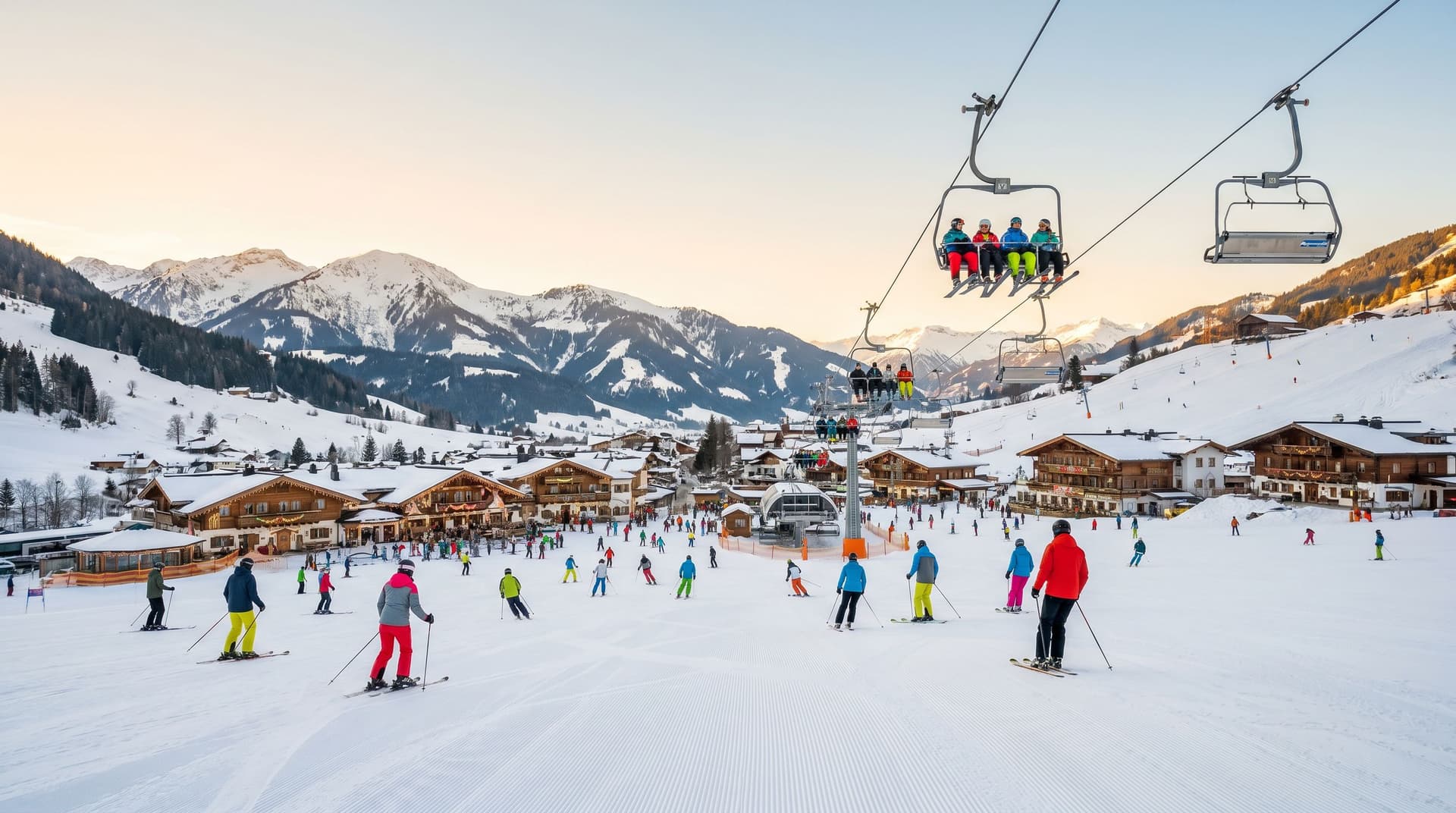
Germany does not have one national ski week. Each of the 16 federal states sets its own winter break, and they are deliberately staggered so the whole country is not on the Autobahn in the same fortnight. For a ski family that is the single biggest lever you control over crowds and price: the week your state is off, every family near you drives to the same resorts in Tyrol, Salzburg and the Bavarian Alps, and lessons, lift passes and lodging all jump.
The fix is simple once you see the calendar. Ski the week your own Bundesland is still in school but another state is off, or aim for the quiet windows in January and mid-March when almost no state is on break. The one week to dodge if you possibly can is the Bavarian Faschingsferien in mid-February, the busiest stretch of the German ski season. This guide gives you the actual 2026 dates, who floods which resorts, and how to plan around it.
Why the states stagger the break (and why it matters)
The Kultusministerkonferenz coordinates school holidays across the 16 states so they do not all overlap. The big summer break rotates on a fixed schedule, but the winter break is a patchwork: some states get a full week, some get a day or two, and four states get no dedicated winter holiday at all. That patchwork is your opportunity.
- The break has two names. Northern and eastern states call it Winterferien (early February). Bavaria and the Catholic south call it Faschingsferien, tied to Carnival in mid-February. Same idea, different week.
- Four states have no fixed winter break: Baden-Wuerttemberg, Hessen, Nordrhein-Westfalen and Rheinland-Pfalz. Many schools there still close for a few bewegliche Ferientage around Rosenmontag (16 February 2026), but it varies school by school, so confirm with your own school.
- Why you care: the two heaviest ski feeders are Bavaria and Baden-Wuerttemberg, both within an easy drive of the Tyrol and Salzburg resorts. When their breaks land, those resorts feel it most.
Winter break 2026 by state, and where they head (verify before you book)
| Bundesland | Winter break 2026 | Where these families ski |
|---|---|---|
| Bayern (Faschingsferien) | 16-20 February 2026 | Tyrol, Salzburg, Vorarlberg, the Bavarian Alps; A8, A93 and the Fernpass clog |
| Baden-Wuerttemberg | No fixed break; many schools close for Fasching around 16 February | Vorarlberg, western Tyrol, the Allgaeu and Switzerland |
| Berlin | 2-7 February 2026 | Long-haul to Austria and Italy; many fly or take the night train |
| Brandenburg | 2-7 February 2026 | Austria and Italy; same window as Berlin |
| Sachsen | 9-21 February 2026 | Czech Krkonose, eastern Austria, the Erzgebirge |
| Thueringen | 16-21 February 2026 | Austria and the Bavarian Alps; overlaps the Bavarian rush |
| Mecklenburg-Vorpommern | 9-20 February 2026 | Austria; a long drive south so many split the journey |
| Sachsen-Anhalt | 31 January-6 February 2026 | Harz mountains close to home, plus Austria |
| Saarland | 16-20 February 2026 | Western Austria, Switzerland, French Alps; overlaps Bavaria |
| Niedersachsen / Bremen / Hamburg / Schleswig-Holstein | One to two days only (around 30 January-3 February 2026) | Mostly weekend or long-weekend trips; limited full-week demand |
| Hessen / Nordrhein-Westfalen / Rheinland-Pfalz | No winter break | Travel at Christmas or Easter instead; lighter February pressure |
The week to avoid: Bavarian Fasching, 16-20 February 2026
If there is one stretch to plan around, it is the Bavarian Faschingsferien. In 2026 it runs 16-20 February, and it does not arrive alone: Saarland and Thueringen break the same week, and a large share of Baden-Wuerttemberg schools close for Fasching too. That stacks the two biggest ski-feeder states plus two more onto the same resorts at once.
- The roads tell the story. The ADAC warns every year about this window: the A8 toward Salzburg, the A93 toward Innsbruck and the Fernpass toward Tyrol and Vorarlberg all jam, with the worst on the kickoff weekend (Friday 13 and Saturday 14 February 2026).
- What it does to a family trip: longer lift queues, beginner areas packed, lunch tables hard to find, and ski schools booked out weeks ahead. This is the friction that wears small children out fastest.
- If you must go that week: book lodging and ski school the previous spring, drive in midweek rather than Saturday, and pick a bigger linked area that can absorb crowds rather than a small single-valley resort.
What the break weeks do to price and crowds
You do not need exact figures to plan around the pattern; the direction is consistent and large. When your state and its neighbours are off, German demand peaks and resorts price for it.
- Lodging moves first. The best family apartments and half-board hotels for the Fasching week are gone by the previous spring, and what is left carries peak rates. Fruehbucher discounts (often 10-15 percent) reward booking before September, exactly because the good weeks sell out.
- Ski school fills fast. Kinderskischule morning groups book out weeks ahead in peak weeks; reserve late and you take afternoon slots or a waitlist.
- The slopes themselves: the same resort one week earlier or later, when only a distant state is off, is calmer and noticeably cheaper on lodging.
- Confirm the costs of driving: the Austrian Vignette is about 12,80 EUR for 10 days (2026), winter tyres are required in Austria from 1 November to 15 April, and Switzerland charges a yearly Vignette around 40 CHF. None of that changes with the week, but budget for it.
The timing playbook
Three moves cover almost every German family. Pick the one that fits your school calendar and your budget.
- Ski the week your state is still in school. The sharpest trick. If you live in Bavaria and travel in early February while Berlin and Brandenburg are off, you avoid your own region's full rush. If you live in the north or in a no-break state, the Bavarian Fasching week is the one to skip, not target.
- Book early for your own break week. If the kids are only off during your state's break, lock lodging the previous April or May and reserve ski school the day booking opens. Late booking is what makes the peak weeks feel impossible.
- Go in January or mid-March instead. Early-to-mid January (after the New Year crowd clears) and the second half of March sit outside almost every state's break. You trade a little snow certainty at low altitude for far smaller crowds and softer prices; pick a higher, snow-sure resort and the trade is easy.
Snow-sure resorts that hold up in the calmer weeks
Zermatt
Obertauern
Mayrhofen
Livigno
Oberstdorf
Frequently Asked Questions
Which German states have the most important ski breaks?
When are the German winter school holidays in 2026?
What is the busiest week to ski near Germany?
How do I ski cheaper as a German family?
We live in NRW or Hessen with no winter break. When should we go?
Do the dates change every year?
Recevez notre check-list gratuite pour skier en famille et un e-mail utile par mois.
Prêt à planifier votre séjour ?
Utilisez nos outils pour trouver la station idéale pour votre famille.
Plus de Seasonal Guides
El Niño and the 2026/27 Ski Season: Will It Affect Your Trip?
Forecasters give this winter a greater than 90% chance of a very strong El Niño, and a 69% chance of the strongest on record. Here is what that actually shifts, region by region, what it does not shift at all, and the one past winter that should stop anyone promising you an epic season.
Seasonal GuidesEl Niño and Tahoe 2026/27: The Strongest Signal in North America
No ski region in North America responds to El Niño like Tahoe. Palisades averaged 186% of its normal snowpack across the three strongest events and hit 256% in 1982-83. Here is what that actually means for a family week, including the two ways a huge Tahoe winter can still ruin your trip.
Seasonal GuidesWhere to Ski at Christmas in Europe With Kids
The magical European Christmas ski trip you keep imagining. Which countries do it best, where to find real Christmas markets on the mountain, and how to pull it off without losing your mind.
Note de transparence : Ce contenu a été créé avec l'aide de l'IA et relu par Tom Meredith, notre rédacteur. Les prix, dates et disponibilités peuvent changer. Nous recommandons de confirmer les informations directement auprès de la station avant de réserver.