Budget ski en famille : ce que coûte vraiment une semaine dans les Alpes
Le budget ligne par ligne d’une semaine au ski pour une famille de quatre : les petites stations françaises qui cassent les prix, les repères autrichiens et suisses, et les leviers qui font vraiment baisser le total.
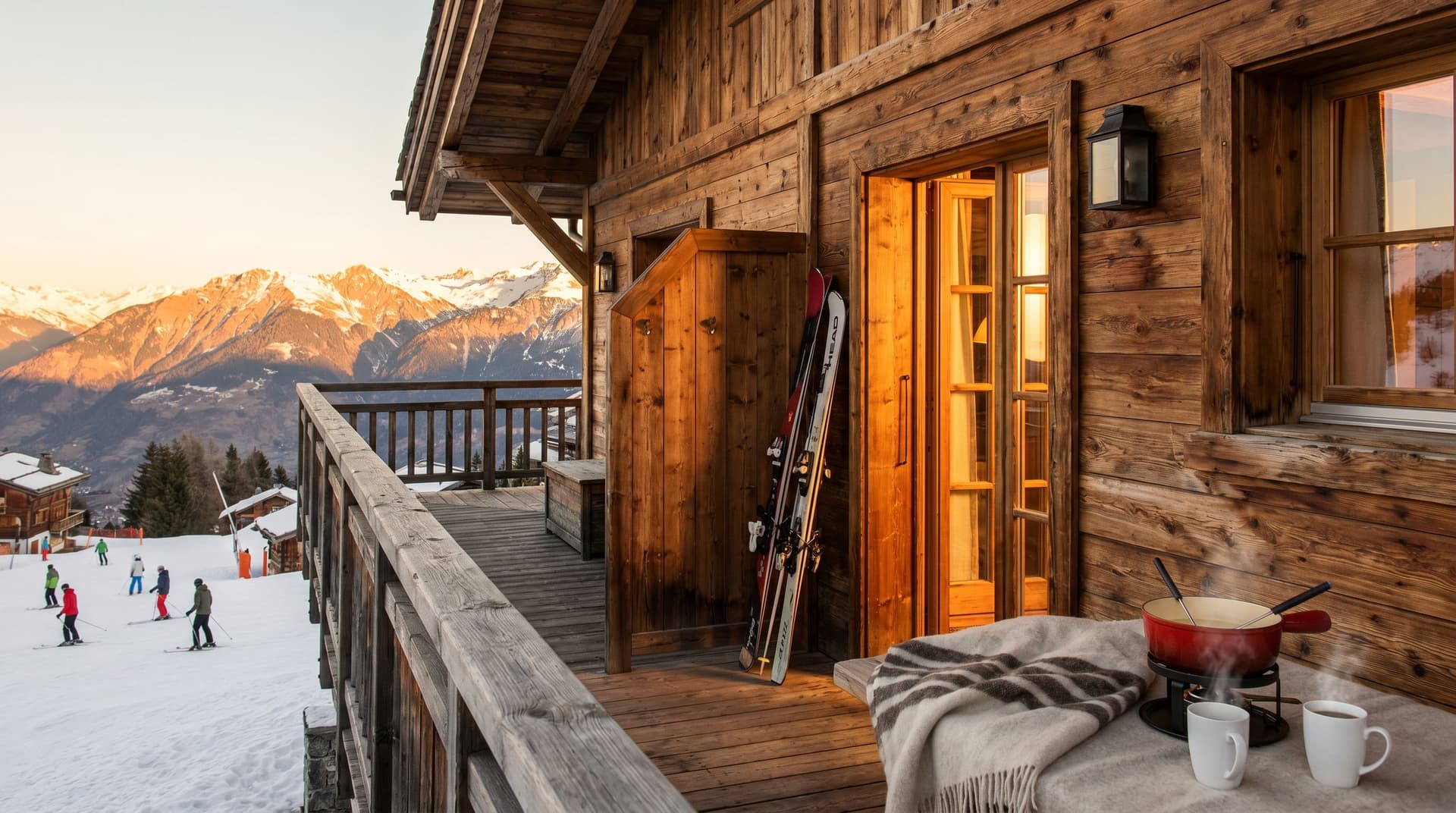
Une semaine au ski en famille n’a pas un prix : elle a un budget qu’on construit ligne par ligne. Six postes décident de presque tout, l’hébergement, les forfaits, les cours des enfants, la location du matériel, les repas et le transport, et chacun peut bouger de plusieurs centaines d’euros selon les choix que vous faites. Bien arbitrés, ils ramènent une semaine dans une petite station française au prix d’un séjour d’été ordinaire. Mal arbitrés, la même semaine double.
Voici le détail honnête. D’abord les Alpes françaises, parce que c’est là que se trouvent les vraies bonnes affaires et que la plupart des familles passent à côté. Ensuite les repères autrichiens et suisses pour comparer, la Suisse tournant environ 20 à 30 % au-dessus. Enfin les gestes précis qui font baisser le total sans abîmer le séjour. Les chiffres ci-dessous sont des fourchettes de travail, pas des devis, et chaque prix français porte la saison pour laquelle il a été publié. Vérifiez chaque montant sur le site de la station ou de l’opérateur avant de réserver.
Les six postes qui décident du total
Presque tout le coût d’une semaine au ski tient dans six lignes. Deux d’entre elles, l’hébergement et les forfaits, pèsent en général plus de la moitié du total : c’est là que l’effort de préparation rapporte le plus. Les autres montent plus vite que les familles ne l’imaginent.
- Hébergement : la plus grosse ligne, et celle dont l’écart est le plus large. L’appartement en résidence est presque toujours la voie la moins chère ; l’hôtel en demi-pension est plus confortable et nettement plus cher.
- Forfaits : le deuxième poids lourd. Une famille de quatre paie deux tarifs adultes et deux tarifs enfants ou juniors, et les réductions enfants comme les gratuités en dessous d’un certain âge changent beaucoup le total.
- Cours pour les enfants : difficilement négociable sur un premier ou un deuxième séjour, et une ligne sérieuse pour deux enfants sur cinq ou six matinées.
- Location skis et chaussures : par personne et par jour pour tous ceux qui n’ont pas leur matériel. Moins cher qu’acheter quand on skie une fois par an, mais loin d’être anecdotique.
- Repas : la ligne que vous maîtrisez le mieux. Dîners cuisinés contre restaurant, pique-nique contre déjeuner en altitude : plusieurs centaines d’euros d’écart sur la semaine.
- Transport et extras : voiture, carburant et péages ou train, plus les petits coûts (taxe de séjour, parking, cautions, un gant perdu) qui s’accumulent en silence.
Les petites stations françaises : là où les prix cassent
La France est absente de la plupart des conversations sur le budget ski en famille, et c’est une erreur fondée sur les noms célèbres. Val d’Isère, Courchevel et Tignes sont réellement chères : un calculateur de budget français situe une semaine en famille à Val d’Isère autour de 2 866 EUR, contre une moyenne nationale d’environ 1 450 EUR. Alors on raye le pays. Sauf que les petites stations françaises jouent dans une catégorie complètement différente, et que plusieurs d’entre elles passent sous les forfaits autrichiens de six jours.
Parlons vrai : lisez la saison avant de lire le prix. Les stations françaises publient la grille des forfaits de l’hiver suivant tard, souvent en septembre ou en octobre. En août 2026, la plupart des petites stations ci-dessous affichaient encore leur grille 2025-26, pour une saison terminée en avril 2026. Chaque chiffre porte donc ici la saison à laquelle il appartient. Quand il est indiqué 2025-26, prenez-le comme repère de préparation et attendez-vous à une grille 2026-27 un peu plus haute, en général de 2 à 5 %. Les Orres était la seule station à afficher une grille 2026-27 confirmée en ligne au moment de notre vérification.
- Les Orres, Hautes-Alpes : la seule du groupe avec une grille 2026-27 déjà confirmée, et les tarifs affichés les plus bas. En haute saison (du 19 décembre 2026 au 19 mars 2027), le six jours est à 239 EUR adulte et 199 EUR enfant de 5 à 11 ans, ou 227 EUR et 189 EUR avec la promotion en ligne. La moyenne saison descend à 203 EUR et 169 EUR, la basse saison à 179,50 EUR et 149,50 EUR. Le forfait Tribu, à partir de quatre forfaits réglés en une seule fois, revient à 220 EUR par adulte et 183 EUR par enfant pour six jours, et le six jours enfant comprend un jeton de luge offert.
- Pralognan-la-Vanoise, Savoie : toutes les sources consultées la placent nettement sous les autres, et nous n’allons pourtant pas vous donner de chiffre. Trois annonces différentes donnaient trois tarifs six jours 2025-26 différents, en mélangeant presque certainement basse saison et saison standard. Vérifiez la grille officielle du domaine skiable pour vos dates exactes plutôt que de faire confiance à un comparateur. Des articles locaux évoquent un pack famille d’environ 10 % pour deux adultes et deux enfants, et une réduction de 20 % pour les moins de 12 ans sur tous les types de forfaits. À confirmer, pas à considérer comme acquis.
- Valmorel (Le Grand Domaine), Savoie : 294 EUR adulte et 241 EUR enfant de 5 à 17 ans pour six jours en 2025-26 (du 20 décembre 2025 au 10 avril 2026), relevés sur le site de réservation de la station. Le Pass Tribu-Famille retire 10 % dès trois forfaits de six jours ou plus achetés en une seule transaction, ce qui est automatique pour une famille de quatre.
- La Rosière, Savoie : 295 EUR le six jours adulte et 221,50 EUR l’enfant de 5 à 12 ans en 2025-26 (saison du 13 décembre 2025 au 18 avril 2026), et ce forfait ouvre tout l’Espace San Bernardo : une famille à l’aise sur les skis peut basculer côté italien pour le déjeuner. À partir de quatre forfaits six jours achetés ensemble, une réduction groupe et famille de 8 % s’applique, soit environ 271,50 EUR par adulte et 204 EUR par enfant. Gratuit pour les moins de 5 ans. Attention : certaines annonces présentent ces tarifs remisés comme le prix standard, ce qu’ils ne sont pas.
- Montgenèvre, Hautes-Alpes : un comparateur français annonce le six jours adulte à 278,50 EUR et le six jours enfant (6 à 14 ans) à 223 EUR pour 2025-26. Nous n’avons pas pu le confirmer sur le site de réservation de la station : à traiter comme un ordre de grandeur, pas comme un tarif. Montgenèvre propose aussi un Family Pass pour deux adultes et deux à cinq enfants, mais il faut l’acheter au moins 12 jours avant l’arrivée, et le tarif famille lui-même n’est publié nulle part où nous ayons pu le vérifier. Un coup de fil s’impose avant de l’intégrer au budget. L’atout ici, c’est la montagne : une piste relie Montgenèvre directement au circuit de la Voie Lactée, en Italie.
Mettez ces chiffres en face du repère autrichien, environ 350 à 400 EUR le six jours adulte dans un grand domaine, et le calcul saute aux yeux. Une famille de quatre sur des forfaits basse saison aux Orres paie 658 EUR pour la semaine, soit moins que deux adultes seuls au tarif autrichien. Cet écart, c’est toute la thèse des petites stations françaises.
Cours ESF : ce que coûte vraiment la semaine
En France, l’école de ski, c’est l’ESF dans presque tous les villages, et sa grille est autrement plus lisible que celle des forfaits. Mieux : les systèmes de réservation de l’ESF ont de l’avance sur les sociétés de remontées. Plusieurs affichaient déjà des tarifs 2026-27 confirmés lors de notre vérification, en août 2026.
- La Rosière : le cours collectif enfants de six jours, une séance par jour, démarre à 230 EUR pour 2026-27, réservations déjà ouvertes. La version deux séances par jour démarre à 414 EUR. Les niveaux vont du Flocon à la 3ème Étoile. Le forfait et l’assurance ne sont pas compris.
- Pralognan-la-Vanoise : le cours collectif de cinq ou six leçons pour les 5 à 12 ans est à 149 à 163 EUR pour l’hiver 2026-27, selon que vous prenez la formule Ourson à Étoile d’Or ou Ourson à Team Étoiles. La médaille est comprise. Le forfait est obligatoire dès la première leçon et n’est pas inclus.
- Valmorel : le cours collectif enfants de six jours pour les 6 à 12 ans est affiché à partir de 203 EUR, mais la page ne précise pas la saison concernée. Confirmez l’année au moment de réserver.
- Montgenèvre : l’ESF locale publie la structure de ses cours (Cours Collectif 10, Cours Super 6) mais aucun tarif que nous ayons pu vérifier en ligne. Appelez l’école pour un devis plutôt que de supposer qu’elle s’aligne sur ses voisines.
Face aux 300 à 400 EUR par enfant que coûte couramment un cours collectif de cinq jours en Autriche, l’écart est réel : deux enfants sur une semaine de matinées ESF à Pralognan peuvent revenir à moins que ce que coûte un seul enfant dans une grande station autrichienne. Deux réserves honnêtes tout de même. Les cours collectifs français sont souvent plus courts que l’équivalent autrichien en journée complète, et le forfait n’est jamais inclus. Comparez les heures et ce qui est compris, pas les prix d’affiche.
La semaine en résidence : ce que l’appartement coûte vraiment
Le ski pas cher en France tourne autour de l’appartement en résidence, exploité à grande échelle par Pierre & Vacances, Odalys, MMV et leurs concurrents. Toute la structure des prix français part de ce format, et c’est une grande partie de la raison pour laquelle le pays peut être bon marché.
Obtenir un vrai tarif est la partie difficile. Les sites des opérateurs appliquent des tarifs dynamiques selon les dates et bloquent les relevés automatiques, et aucune des cinq stations ci-dessus ne publie de prix hebdomadaire fixe. Comme fourchette de préparation sur les Alpes du Nord, un appartement quatre personnes pour la semaine tourne autour de 500 à 700 EUR en janvier et sur les autres semaines creuses, et de 850 à 1 200 EUR sur les semaines de vacances de février. À prendre comme une indication de direction : ce sont des repères régionaux datés de 2026, pas une grille de saison publiée ni un devis pour l’une de ces cinq stations, et les semaines de février sont les plus disputées de l’hiver français.
Trois choses que le tarif affiché ne comprend presque jamais :
- La taxe de séjour : perçue par personne et par nuit, en plus du loyer.
- Le ménage de fin de séjour et le pack linge : en général des options que vous payez ou que vous assurez vous-même. Apporter ses draps et ses serviettes est une économie réelle sur un logement familial.
- Ce que « quatre personnes » veut dire : les résidences françaises comptent des couchages, pas des chambres. Un logement vendu pour quatre est souvent un studio avec un canapé-lit dans le séjour. Si vous voulez une chambre séparée pour les enfants, chiffrez la taille au-dessus et comparez les deux sérieusement.
Ensuite les frais courants, là encore sur des repères datés de 2026 et non sur le tarif d’une station précise. Comptez 12 à 20 EUR par adulte et par jour si vous cuisinez, et rappelez-vous que les supérettes de station tournent environ 20 % au-dessus des prix de la vallée : le gros des courses dans la dernière ville avant la montée vaut le détour. La location de matériel pour six jours se situe couramment autour de 95 à 110 EUR par adulte et 45 à 55 EUR par enfant, ce qui rejoint ou passe sous les 25 à 40 EUR par adulte et par jour pratiqués en Autriche une fois multipliés sur la semaine, même si les forfaits hebdomadaires autrichiens réduisent l’écart.
Bout à bout, le même calculateur français situe la moyenne nationale pour une famille de quatre autour de 1 450 EUR la semaine, les stations à petits prix des Alpes du Sud (la catégorie à laquelle appartiennent Les Orres et Montgenèvre) atterrissant plutôt entre 1 200 et 1 500 EUR. Sa répartition : environ 45 % d’hébergement, 25 à 30 % de forfaits, 10 à 15 % de nourriture, 10 % de location et 5 à 10 % de transport. C’est le modèle d’un agrégateur, pas une enquête : retenez les proportions plus que le total exact. L’hébergement et les forfaits représentent toujours plus des deux tiers de votre semaine, exactement comme en Autriche.
Laquelle des cinq choisir dépend de ce que vous cherchez à optimiser. Les Orres est la seule avec une grille 2026-27 confirmée et les tarifs les plus bas du groupe : c’est la semaine la plus facile à budgéter précisément aujourd’hui. Pralognan-la-Vanoise affiche l’école de ski la moins chère et les forfaits les plus bas sur toutes les annonces trouvées, c’est donc celle dont il faut aller vérifier la grille officielle. Valmorel publie ses tarifs sur son propre site de réservation et retire 10 % avec le Pass Tribu-Famille : ce que vous voyez est ce que vous payez. La Rosière coûte plus cher mais donne accès à un domaine à cheval sur deux pays et laisse passer les moins de 5 ans gratuitement. Montgenèvre se situe au milieu, avec le circuit de la Voie Lactée à une piste de là, en Italie.
Appartement ou hôtel en demi-pension : le choix qui fixe le plafond
Dès que vous regardez au-delà de la France, c’est ce choix qui fixe le plafond de tout votre budget. La vraie question est la souplesse de l’appartement contre le confort de l’hôtel, et l’écart de prix est large.
- L’appartement (Ferienwohnung en Autriche) : presque toujours l’option la moins chère, et il débloque la plus grosse économie sur les repas, puisque vous cuisinez vos dîners. Idéal pour les familles nombreuses et pour celles qui surveillent le total. La contrepartie : vous faites les courses, la cuisine et la vaisselle pendant vos vacances.
- L’hôtel en demi-pension : petit-déjeuner et dîner compris, pas de cuisine, souvent une piscine et des équipements pour enfants. Comme fourchette de préparation en Autriche, une semaine pour quatre dans un trois-étoiles de gamme moyenne se situe couramment autour de 1 300 à 1 600 EUR, et monte sur les semaines de pointe de février. La Suisse est nettement au-dessus à prestation équivalente.
- La prime à l’emplacement : les lits skis aux pieds et le centre du village se paient. Un logement à quelques minutes de navette ou de voiture est souvent bien moins cher pour la même semaine.
- Regardez ce qui est compris : taxe de séjour, ménage final, parking, et une carte d’hôte qui inclut parfois les navettes ou la piscine changent le prix réel. Lisez l’annonce en entier avant de comparer.
Forfaits : où se cachent les réductions enfants
Les forfaits sont la deuxième ligne du budget, et celle où les réductions famille changent vraiment le calcul. Prenez le six jours pour tout le monde et vérifiez les conditions enfants avant de supposer un prix.
- Le repère adulte : le six jours adulte dans un grand domaine autrichien se situe couramment autour de 350 à 400 EUR par adulte. La Suisse est au-dessus, souvent bien au-dessus, une fois les francs convertis.
- Tarifs enfants et juniors : les enfants paient bien moins que les adultes, et les ados tombent dans une tranche junior remisée. Les âges et les montants exacts varient d’un domaine à l’autre : vérifiez-les.
- La gratuité des plus jeunes : les plus petits skient souvent gratuitement en dessous d’un âge limite, et plusieurs grands domaines autrichiens proposent des bonus famille (troisième enfant gratuit, ou enfants gratuits sur les semaines de fin de saison). Ces offres bougent d’une année sur l’autre : vérifiez sur la page tarifs du domaine.
- Achetez en ligne et tôt : réserver sur le site officiel de la station avant la saison fait souvent gagner une part significative par rapport au prix en caisse, et vous évite la file à l’arrivée.
Cours, location et le piège du déjeuner en altitude
Ces trois lignes sont celles où les familles attentives économisent vraiment, ou perdent de l’argent sans s’en rendre compte. Les cours sont à peu près fixes ; la location et les repas dépendent presque entièrement de vous.
- Les cours pour enfants : en Autriche, un cours collectif de cinq jours par enfant se situe couramment autour de 300 à 400 EUR, davantage en journée complète avec déjeuner encadré. Pour deux enfants, c’est une ligne lourde, mais c’est ce qui fait tenir le séjour : les enfants apprennent en sécurité pendant que les parents skient.
- La location skis et chaussures : en Autriche, comptez environ 25 à 40 EUR par adulte et par jour, moins par enfant, et beaucoup de magasins proposent un forfait semaine sous le tarif journalier. La Suisse peut approcher le double. Réserver en ligne à l’avance bat souvent le prix au comptoir.
- Le piège du déjeuner en altitude : c’est le poste qui vous ruine en silence. Un déjeuner en restaurant d’altitude pour quatre, boissons comprises, peut monter à 60 à 100 EUR par jour, soit plusieurs centaines d’euros sur la semaine. Un pique-nique (sandwichs, fruits, thermos) ou un retour rapide à l’appartement au pied des pistes ramène cette ligne à presque rien.
Économique ou confort : une semaine pour quatre
| Poste | Version économique | Version confort | Le levier principal |
|---|---|---|---|
| Hébergement (1 semaine, 4 personnes) | Appartement en résidence, à quelques minutes des remontées | Hôtel trois étoiles en demi-pension au village | Appartement ou hôtel ; distance aux remontées |
| Forfaits (6 jours) | Domaine de taille moyenne, tarifs enfants et juniors, achat en ligne anticipé | Grand nom du ski au tarif plein en caisse | Choisir le domaine ; acheter tôt ; utiliser les gratuités enfants |
| Cours enfants (2 enfants, 5 jours) | Cours collectif en demi-journée | Cours en journée complète avec déjeuner encadré | Demi-journée ou journée complète |
| Location skis et chaussures | Forfait semaine réservé en ligne, matériel de base | Matériel haut de gamme, pris sur place | Réserver en ligne ; forfait semaine plutôt que journalier |
| Repas | Dîners cuisinés, pique-niques | Dîners en demi-pension, déjeuner en altitude tous les jours | Cuisiner le soir ; déjeuner hors des restaurants d’altitude |
| Transport | Voiture hors samedi, courses faites avant la montée | Dates flexibles, arrêts en route, samedi de pointe | Éviter les jours de pointe ; voiture ou train |
France, Autriche, Suisse : qui coûte quoi
Le pays est le plus gros levier du budget global, et pour une famille de quatre le schéma reste stable d’une année sur l’autre, même quand les prix exacts bougent.
- La France, deux pays en un : les stations célèbres sont chères, les petites ne le sont pas du tout. C’est le seul cas où le choix de la station pèse plus lourd que le choix du pays. Les cinq stations détaillées plus haut passent sous le repère autrichien, sur les forfaits comme sur les cours.
- L’Autriche, la valeur sûre : le meilleur rapport global sur les grands domaines reliés, une infrastructure familiale solide et des trajets courts depuis l’Allemagne du Sud. C’est là qu’atterrit la majorité des familles germanophones attentives au budget, et c’est là que sont ancrés les repères de comparaison de ce guide.
- La Suisse, la prime : comptez environ 20 à 30 % de plus sur les forfaits, la location et l’hébergement une fois les francs convertis. Superbe et parfaitement organisée, mais c’est le haut du marché. Chiffrez toujours en équivalent euros avant de vous engager.
- Les alternatives moins chères : les petits domaines autrichiens, français et italiens, et les logements à quelques minutes des remontées plutôt que skis aux pieds, passent nettement sous les grands noms pour une semaine comparable. Les semaines de fin de saison (à partir de la mi-mars) combinent souvent les meilleurs prix, les journées les plus longues et le plus d’offres enfants gratuits.
Y aller : voiture ou train
Le transport est une vraie ligne, pas un arrondi, surtout si vous visez l’Autriche ou la Suisse plutôt que les Alpes françaises. Le choix voiture ou train change à la fois le coût et le niveau de fatigue.
- La voiture, le réflexe par défaut : souple, et généralement la moins chère pour quatre. Si vous passez la frontière, prévoyez la vignette autrichienne à 12,80 EUR pour la version 10 jours (tarif 2026, généralement indexé chaque année, donc à revérifier avant de partir), ou la vignette suisse à 40 CHF valable l’année (la Suisse ne vend pas de vignette voiture de courte durée). Les pneus hiver sont obligatoires en Autriche du 1er novembre au 15 avril : vérifiez-le sur une voiture de location avant de franchir la frontière.
- Le samedi, jour de rotation : les samedis de changement de semaine se paient en heures de bouchons. Sur le corridor allemand vers le Tyrol, l’A8, l’A93, l’A12 et le Fernpass sont célèbres pour ça. Partez en semaine, ou très tôt.
- Le train et le train de nuit : le Nightjet des ÖBB dessert le Tyrol au départ de Munich, via Kufstein, Wörgl, Jenbach et Innsbruck, avec la gratuité pour les moins de 5 ans en couchette partagée et des réductions pour les 6 à 14 ans. Des offres combinées train plus forfait existent pour plusieurs domaines tyroliens. Vous supprimez la conduite et le parking, mais vous échangez la souplesse porte à porte contre les navettes locales de la station.
Les leviers d’économie, classés
Toutes les économies ne se valent pas. Une poignée de décisions déplace le total de plusieurs centaines d’euros, le reste est de l’arrondi. Tirez les leviers du haut d’abord.
- 1. Choisir le pays et le domaine : arbitrer entre une petite station française, un domaine autrichien de taille moyenne et une grande station suisse est de loin la plus grosse économie disponible. Elle écrase tous les codes promo.
- 2. Partir hors pointe : les semaines de vacances de février sont les plus chères de la saison. Si votre calendrier scolaire le permet, une semaine en janvier ou à partir de la mi-mars fait baisser nettement l’hébergement et les forfaits.
- 3. Cuisiner le soir et pique-niquer le midi : les repas sont la ligne que vous maîtrisez le mieux. Cuisiner vos dîners et éviter le déjeuner quotidien en altitude peut économiser plusieurs centaines d’euros sur la semaine.
- 4. Réserver tôt : l’hébergement en tarif anticipé et les forfaits achetés en ligne battent régulièrement les prix de dernière minute et de caisse. À titre de repère, les familles allemandes réservent en général 12 à 26 semaines à l’avance.
- 5. Comparer séjour tout compris et réservation séparée : un forfait d’agence (transport, logement, parfois le forfait de ski) bat parfois la réservation ligne par ligne, et parfois non. Chiffrez les deux avant de trancher, sans supposer que l’un est forcément moins cher.
Caler la semaine sur le calendrier scolaire
Le hors-pointe est le levier que la plupart des familles ne peuvent pas utiliser à fond, parce que le calendrier scolaire les cloue sur les semaines les plus chères. Savoir exactement où tombe votre semaine est le premier pas pour éviter le pic.
- Le pic, c’est février : les semaines de vacances d’hiver sont les plus chères de la saison. En France elles s’étalent sur plusieurs semaines selon les zones, ce qui étire le pic au lieu de le concentrer. Regardez le calendrier officiel de votre zone avant de choisir vos dates.
- La pression allemande sur l’Autriche : si vous visez le Tyrol ou le Salzbourgeois, ajoutez les vacances allemandes à votre calcul. En 2026, la Bavière et la Thuringe sont en congés du 16 au 20 février, la Saxe du 9 au 20 février, Berlin et le Brandebourg du 2 au 7 février. Ces semaines-là, les routes et les écoles de ski sont saturées.
- Les fenêtres plus calmes : le Bade-Wurtemberg, la Hesse et la Rhénanie-du-Nord-Westphalie n’ont pas de semaine d’hiver fixe, et les vacances de printemps de Hambourg tombent plus tard, vers début mars. Ces décalages ouvrent des semaines moins chères et plus calmes côté autrichien.
- Revérifiez toujours les dates : les dates de vacances comme les tarifs des stations bougent. Vérifiez le calendrier officiel et le site de la station avant de bloquer quoi que ce soit.
Questions fréquentes
Combien coûte une semaine au ski dans les Alpes pour une famille de quatre ?
La France est-elle moins chère que l’Autriche pour une semaine au ski en famille ?
Quelles stations des Alpes françaises sont les moins chères pour les familles ?
Combien coûte une semaine de cours ESF pour un enfant ?
Quel est le levier d’économie le plus efficace ?
Comment éviter d’exploser le budget repas sur la montagne ?
La Suisse est-elle vraiment plus chère que l’Autriche ?
Voiture ou train : qu’est-ce qui revient le moins cher ?
Recevez notre check-list gratuite pour skier en famille et un e-mail utile par mois.
Prêt à planifier votre séjour ?
Utilisez nos outils pour trouver la station idéale pour votre famille.
Plus de How-To Guides
Milan to Cortina With Kids: Complete Transportation Guide
Every option for getting from Milan to Cortina with children. Trains, buses, rental cars, and private transfers compared.
How-To GuidesThe Ultimate Family Ski Trip Checklist
Everything you need to pack for a stress-free family ski vacation, organized by timeline and age group.
How-To GuidesWhen to Book Your 2026-27 Family Ski Trip
A month-by-month booking timeline for the 2026-27 season, with the real pass deadlines, the 2027 school holiday collisions (English half-term splits across two weeks), and honest flags on what is reported versus confirmed.
Note de transparence : Ce contenu a été créé avec l'aide de l'IA et relu par Tom Meredith, notre rédacteur. Les prix, dates et disponibilités peuvent changer. Nous recommandons de confirmer les informations directement auprès de la station avant de réserver.